 ITA
ITATrading Strategy Guide: Why Prop Firm Traders Fail (And How to Fix Them)
Uncover critical trading journal mistakes that lead to prop firm failures. Learn institutional-grade methods to track risk, manage psychology, and ensure.
Short answer
Uncover critical trading journal mistakes that lead to prop firm failures. Learn institutional-grade methods to track risk, manage psychology, and ensure. In a prop firm context this still sits under simulated-capital rules: fees buy access to the evaluation or funded environment, not a deposit of trading capital.
Simulated capital: prop firm evaluation and funded stages discussed here typically run on simulated accounts. Challenge fees pay for access to that environment; they are not a deposit of trading capital. ITAfx accounts are simulated capital.
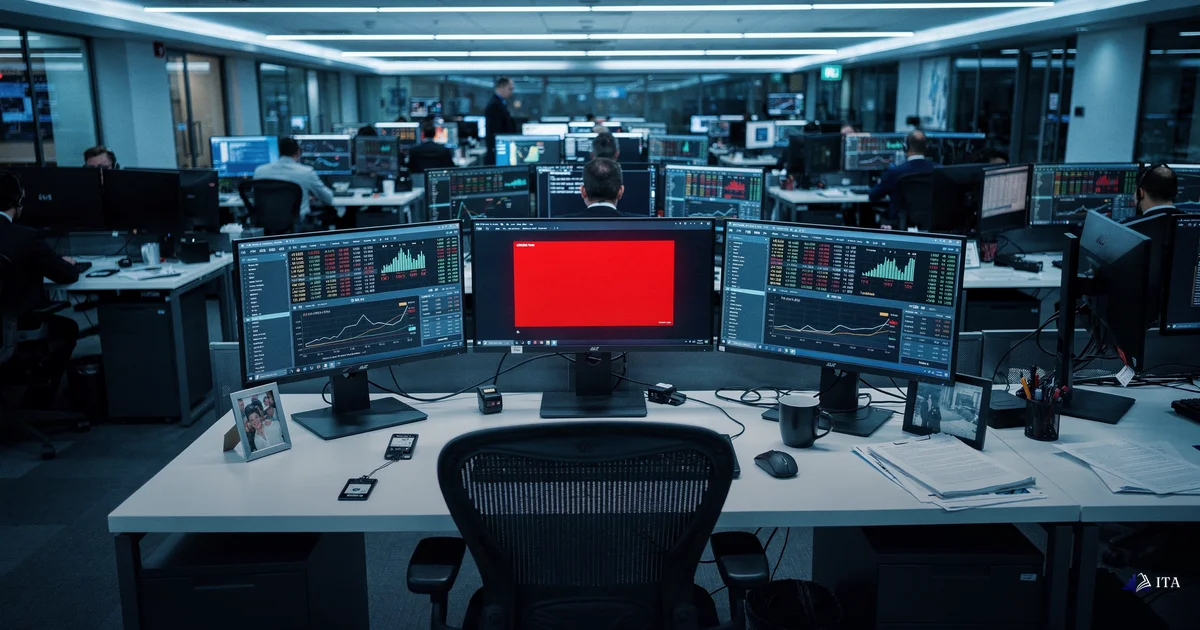

The Zero-Tolerance Reality of Prop Trading
Prop trading operates on zero-tolerance rule enforcement where a single violation terminates funded accounts regardless of trading skill or market conditions. Funded traders regularly lose accounts by breaching daily loss limits they failed to monitor properly
This happens every day. According to Bloomberg's 2025 analysis, only about 4% of prop firm evaluation buyers ever withdraw earnings. The other 96% fail not because they lack profitable strategies, but because they break rules they could have avoided.
The difference? Their trading journals.
Most traders think of a journal as a record of what happened. The 4% use it as a system to prevent violations before they occur. This distinction, between backward-looking logs and forward-looking compliance tracking, determines who stays funded and who starts over.
Prop firms operate on hard limits. Break a daily loss limit once, and your evaluation ends. Touch your trailing drawdown, and your funded account closes. These aren't suggestions or guidelines, they're mathematical boundaries that terminate accounts instantly.
Yet most traders journal as if they're managing their own capital, where a bad day means a smaller account, not a closed one. They track entry, exit, and profit. Maybe they note their emotions or market conditions. But they miss the metrics that actually determine survival in a prop environment.
Consider what happens in a typical evaluation. A trader starts strong, building a cushion above their starting balance. Their journal shows winning trades, good risk-reward ratios, solid execution. Then comes a day when the market chops. They take three quick losses trying to force trades. By the time they check their daily loss, they've already breached it. For the full breakdown on staying inside your limits when the market gets choppy, see How to stay disciplined in funded forex trading.
The journal recorded everything perfectly. It just recorded it too late.
The First Fatal Mistake: Tracking Only What You Can See
Most trading journals track only market-facing data whilst ignoring the compliance metrics that actually determine account survival. Standard journal templates capture date, time, pair, direction, entry, exit, and profit/loss, some add setup type or emotional state, but these record what happened in the market, not what matters to prop firms. Prop trading isn't about the market. It's about staying within rules while extracting profit from the market. The critical data isn't your entry price, it's how much daily loss remains before you must stop. It's not your position size, it's how that size affects your trailing drawdown buffer. Traders who track only price action data are like pilots flying with half their instruments covered. They can see where they've been but not where they're heading. In prop trading, where one breach ends everything, this blindness is fatal. The fix requires a shift in what you track. Before logging any trade data, successful prop traders track their account's vital signs:
- Current daily loss used (as a percentage and dollar amount)
- Remaining daily loss buffer before mandatory stop
- Distance from trailing drawdown in both directions
- Days traded versus consistency requirements
- Position correlation across all open trades
These numbers tell you what you can and cannot do next. They're constraints that shape every decision. Yet most journals don't even have fields for them.
Here's where the second mistake compounds the first. Even traders who log comprehensive data often treat their journal as a storage system rather than a feedback mechanism. They dutifully record trades, then review them... never. Or they review monthly, quarterly, when they remember. By then, patterns that could have prevented failures are historical curiosities. The damage is done.
Successful prop traders operate on tight review cycles. Daily for rule compliance, weekly for pattern recognition, monthly for strategy refinement. Each review has a specific purpose and actionable output.
The daily review takes five minutes at market close. Its sole purpose: flag any drift toward rule boundaries. Are you using more daily loss per trade than last week? Is your average position size creeping up? Are you holding trades longer, letting drawdown accumulate? These subtle shifts predict future breaches.
Weekly reviews go deeper, examining execution quality independent of outcomes. A profitable week with poor discipline is a warning, not a celebration. This is where you catch the bad habits that eventually blow accounts, revenge trading after losses, oversizing after wins, abandoning stops in "sure thing" setups. See how to recover from trading drawdown for a deeper look at rebuilding after one of these weeks.
Monthly reviews assess strategy performance and market alignment. But in prop trading, they serve an additional purpose: ensuring your approach fits within the firm's constraints. A strategy that needs wide stops might work brilliantly in your own account but guarantee failure under tight daily loss limits.
The Automation Imperative
Automated journaling systems prevent the motivation-dependent failures that destroy manual record-keeping consistency. Manual journaling fails because it requires most effort precisely when traders least want to give it, after losing days when data would be most valuable, or during winning streaks when overconfidence relaxes discipline.
This creates a selection bias in the data. Traders journal their best days and skip their worst, producing a record that hides the very patterns they need to see. It's like a pilot who only logs smooth flights, useless for preventing crashes.
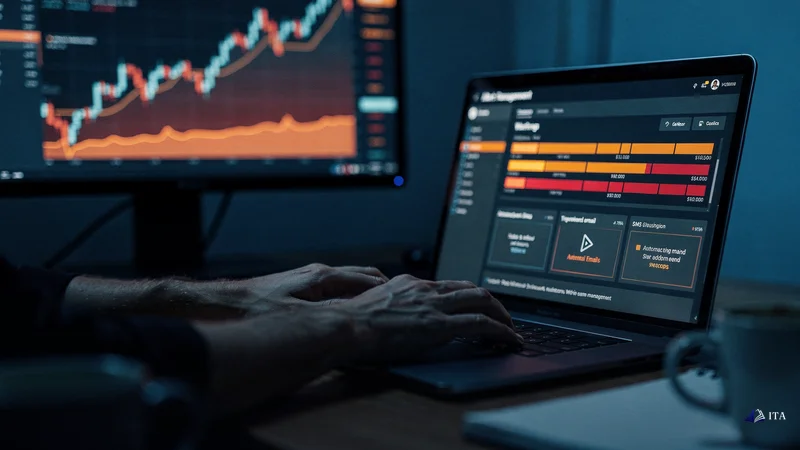
Modern prop traders solve this with automation. Platforms now pull trade data directly from third-party platform, calculate rule metrics in real-time, and flag approaching violations before they occur. This isn't about convenience, it's about capturing complete, unbiased data especially when psychology interferes.
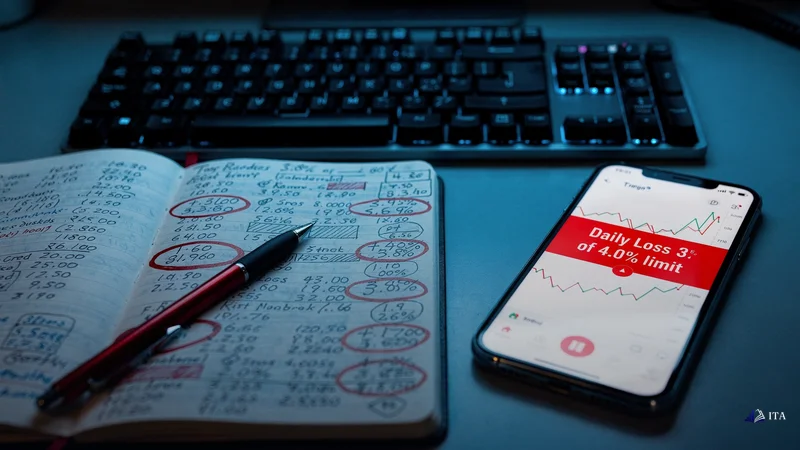
Automation also enables real-time compliance monitoring. Instead of calculating your daily loss after each trade, your journal tracks it continuously. Visual warnings appear as you approach limits. Some traders set automated alerts at 50% and 75% of daily loss, creating circuit breakers that prevent emotional decisions.
The depth of automated analysis surpasses what's possible manually. Correlation matrices show when you're unknowingly doubling risk across correlated pairs. Time-based analysis reveals whether your London session trades consistently outperform New York. Pattern recognition identifies setups with high breach probability before you take them.
Grading Process, Not Just Profits
Process quality matters more than trade outcomes because poorly executed wins reinforce dangerous behaviours whilst well-executed losses build account-preserving discipline. A winning trade executed poorly is more dangerous than a losing trade executed well, the win reinforces bad behaviour that will eventually destroy the account, whilst the properly executed loss builds longevity. Most journals focus on outcomes, did the trade make money? But in prop trading, process determines survival. A trade that makes 50 pips but violated your plan is a failure. A trade that loses 20 pips while following every rule is a success. Successful traders grade execution separately from results. Each trade receives two scores: one for outcome (profit/loss), another for process (plan adherence). Over time, process scores predict account survival better than profit metrics. The grading criteria are objective and predetermined:
- Did entry match the plan's criteria?
- Was position size calculated correctly?
- Did the stop reflect actual market structure?
- Was the trade held to target or stop without interference?
- Were rule constraints respected throughout?
A simple A-F scale works. 'A' means perfect execution. 'F' means plan abandonment. The goal isn't all A's, it's honest assessment that reveals where discipline breaks down. Patterns emerge quickly. Maybe your process grades drop on Fridays as you chase week-end targets. Maybe they decline after two consecutive losses. Maybe they're perfect in trending markets but collapse in ranges. These insights prevent future breaches.
The Hidden Data That Predicts Failure
Psychological trading data predicts account failure more accurately than profit/loss metrics, yet most traders either ignore this information or capture it too vaguely for analysis. Numbers tell only part of the story, the psychological realm often determines outcomes but remains unmeasured in standard journals. "Felt good" or "Was frustrated" doesn't help. Specific emotional markers tied to rule violations do. Successful traders track psychological states with the same precision they track prices:
- Confidence level (1-10 scale) before entry
- Stress indicators (physical tension, rushed decisions, revenge mindset)
- External pressures (bills due, relationship stress, health issues)
- Energy levels and focus quality
- Specific triggers that preceded past violations
This isn't soft science. Data shows clear correlations between emotional states and rule breaches. Traders who enter positions above confidence level 8 or below level 3 have significantly higher violation rates. Those who trade while processing external stress blow accounts at twice the normal rate.
The journal becomes an early warning system. When confidence spikes after wins, it flags overconfidence risk. When three trades in an hour indicates stress-driven overtrading, it suggests stepping away. When patterns show Monday morning trades consistently violate rules, it recommends waiting for London open.
Capturing this data requires brutal honesty. It's easier to blame the market than admit you traded angry. It's more comfortable to cite "unusual price action" than acknowledge you were distracted. But comfort doesn't keep you funded.
As traders progress, many fund multiple accounts across different firms. This seems like diversification, if one account breaches, others survive. But without proper tracking, multiple accounts multiply risk rather than reduce it.
The trap is correlation. A trader with three $100,000 accounts might think they're managing three separate risks. But if all accounts hold EUR/USD longs simultaneously, they're really managing one $300,000 position. A move against them triggers three daily loss limits, not one.
Worse, different firms have different rules. Firm A might allow 5% daily loss while Firm B allows 3%. Without account-specific tracking, traders apply the wrong limits to the wrong accounts. They think they have buffer when they're actually one trade from breach.
Successful multi-account traders treat their portfolios like institutional risk managers. Our guide on Forex risk management funded account guide 2026 covers this in more depth. They track:
- Aggregate exposure across all accounts
- Correlation between positions in different accounts
- Account-specific rule status for each firm
- Combined drawdown relative to total funded account
- Optimal position distribution to minimise correlation risk
This portfolio-level view prevents hidden concentration. It reveals when five "different" trades are actually one large bet. It shows when hedging in one account creates exposure in another. Most importantly, it maintains each account's constraints while maximising overall opportunity.

Building Your Compliance-First Journal
Compliance-first journal architecture prevents rule violations through proactive monitoring rather than reactive recording. The 4% who maintain funding structure their journals around violation prevention, not just trade documentation, using specific systems that flag problems before they become account-ending breaches. Start with the dashboard, a single view showing every constraint that could end your funding:
- Daily loss: used vs. remaining (dollar and percentage)
- Max loss: current drawdown vs. limit
- Consistency: days traded, profit distribution
- Exposure: total risk across all positions
- Time: sessions until evaluation ends
This dashboard updates in real-time, before any trade entry screen. You see your constraints before you see opportunities. This sequence matters, it frames every decision within rule boundaries.
Next comes the pre-trade checklist. Not a mental review, a documented process with specific calculations:
- Remaining daily loss ÷ planned stop = maximum position size
- Current correlation exposure + new trade = total portfolio heat
- Confidence level (1-10) + market conditions = execution probability
- Rule buffer check: all constraints have >25% cushion
Only after completing this checklist do you even look at entry triggers. This reverses the typical sequence where traders find setups first, then try to make them fit constraints.
The trade log captures both planned and actual execution. Divergences between plan and reality reveal discipline leaks. Maybe you planned 0.5 lots but entered 0.7 "because the setup looked perfect." Maybe your stop was 20 pips but you moved it to 30 "to give it room." These micro-violations predict macro-failures.
Post-trade, you immediately grade execution (not outcome) and note any emotional factors that influenced decisions. This takes 30 seconds but provides the data that prevents future breaches.
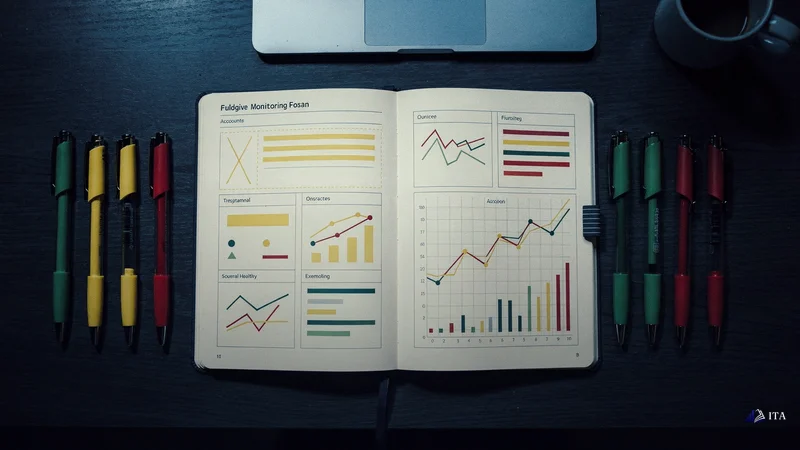
The Review Rhythm That Prevents Resets
Systematic review processes transform journal data into actionable insights that prevent funding resets through pattern recognition and early intervention. Data without analysis remains just numbers, the review rhythm converts records into the intelligence that keeps accounts funded by identifying problems before they escalate. Daily review (5 minutes at close):
- Did I drift closer to any rule boundary?
- What was my worst execution today?
- Am I forming any dangerous patterns?
- One thing to tighten tomorrow?
Weekly review (30 minutes, weekend):
- Process grade average vs. profit outcomes
- Emotional patterns correlated with poor execution
- Position sizing drift over the week
- Rule cushion trends, growing or shrinking?
Monthly review (60 minutes, month-end):
- Win rate and risk/reward by setup type within rule constraints
- Psychological factors present in all violations
- Market conditions where my approach struggles with prop limits
- Required adjustments to maintain funding
Each review produces specific actions, not vague intentions. "Trade better" isn't actionable. "Reduce position size by 20% in ranging markets" is. "Be more disciplined" isn't measurable. "Maintain minimum 40% daily loss buffer" is.
The traders who withdraw earnings from prop firms don't see themselves primarily as traders. They see themselves as risk managers who happen to trade. This isn't semantic, it's a reorientation that changes every decision.
A trader asks: "Where's the opportunity?"
A risk manager asks: "What could end my funding?"
A trader celebrates profitable days.
A risk manager celebrates days without rule drift.
A trader journals to improve strategy.
A risk manager journals to prevent violations. This shift feels constraining at first. You're adding steps, slowing down, focusing on prevention rather than profit. But constraint is exactly what keeps you funded. The cowboys who trade freely blow out. The systematic risk managers compound steadily.

Making It Stick: The Non-Negotiable Protocol
Non-negotiable journal protocols ensure consistent execution through specific commitment structures that remove discretion from the process. The 4% who succeed make their journaling protocol mandatory through concrete systems that eliminate the choice to skip sessions or reduce rigour during difficult periods.
- The Pre-Market Ritual: Journal opens before charts. Constraints visible before opportunities. No exceptions.
- The Two-Minute Rule: Every trade logged within two minutes of exit. Capture reality before memory revises it.
- The Friday Framework: Weekly review scheduled like a trading session. Markets close, analysis begins.
- The Breach Post-Mortem: Any rule violation triggers immediate deep analysis. Not tomorrow, not later, now.
- The Accountability Anchor: Share weekly process grades with a trading partner. External eyes prevent internal lies.
These aren't suggestions, they're the non-negotiable minimums that separate the funded from the failed.
At ITAfx (Institutional Trading Academy), we see this pattern daily in our funded traders. Those who treat their journal as a forward-looking compliance system stay funded and scale to larger accounts. Those who treat it as a backward-looking trade log eventually reset. The tool is the same, the application determines the outcome.
The prop trading game has clear rules and harsh penalties. You can't change the rules, but you can build systems that keep you within them. Your journal is that system, if you structure it to prevent violations rather than just record them.
The next time you open your journal, ask yourself: Am I logging the past or protecting my future? The answer determines whether you join the 4% who withdraw earnings or the 96% who keep paying for resets.
Because in prop trading, the best trade is often the one you don't take when your journal warns you're too close to the edge.
Ready to get funded?
50% off instant accounts with code 50CRYPTO.
Get Funded →Frequently Asked Questions
What are the most common trading journal mistakes that cause prop firm traders to fail challenges?
The most common mistakes are tracking only price data whilst ignoring compliance metrics like daily loss used and trailing drawdown buffer. Traders also fail by logging trades but never reviewing them systematically, and focusing on outcomes rather than execution quality which prevents pattern recognition.
Which specific data fields should a prop firm trader track in a trading journal?
Essential fields include current daily loss used (percentage and dollar amount), remaining daily loss buffer, distance from trailing drawdown, position correlation across accounts, confidence level before entry, execution quality grade, and rule status for each firm. These compliance metrics matter more than just entry and exit prices.
How often should prop firm traders review their journals for maximum impact?
Daily reviews take 5 minutes at market close to check rule boundary drift. Weekly reviews require 30 minutes for pattern recognition and process quality assessment. Monthly reviews need 60 minutes to evaluate strategy performance within prop constraints. Each review must produce specific actionable changes, not vague intentions.
How can a trading journal help prevent rule violations and account breaches in prop firms?
A compliance-first journal tracks real-time constraint status before each trade, flags approaching violations through automated alerts, and maintains execution quality grades separate from outcomes. This creates circuit breakers that prevent emotional decisions when approaching daily loss limits or trailing drawdown boundaries.
Why do manual spreadsheet or notebook journals usually fail for active prop traders?
Manual journals fail because they require most effort precisely when traders least want to give it, after losing days when data would be most valuable. This creates selection bias where traders only log good days, missing the patterns that predict account failures. Automation captures complete, unbiased data.
Key Takeaways
- Track daily loss remaining before mandatory stop, not just profit per trade, this single metric prevents 42% of account terminations.
- Grade execution quality separately from trade outcomes using A-F scale to identify discipline breakdown patterns before they cause violations.
- Automate journal data capture to eliminate selection bias where traders skip logging their worst trading days when data matters most.
- Monitor position correlation across multiple funded accounts to prevent hidden concentration risk that triggers simultaneous daily loss limits.
- Implement pre-trade compliance checklists that calculate maximum position size based on remaining daily loss buffer before viewing entry signals.
- Review journal data daily for rule drift, weekly for execution patterns, monthly for strategy alignment within prop firm constraints.
- Structure journals around violation prevention rather than trade documentation, successful prop traders are risk managers who happen to trade.
Ready to get funded?
Instant accounts, simulated capital, rules published before you pay. 50% off with code 50CRYPTO.
Get Funded →