 ITA
ITARebuilding Confidence After Prop Firm Failures: A 4-Week Protocol for Traders
Failed multiple prop firm challenges? Discover a 4-week protocol to rebuild self-trust, analyze past mistakes, and return to trading with a resilient mindset.
Short answer
Failed multiple prop firm challenges? Discover a 4-week protocol to rebuild self-trust, analyze past mistakes, and return to trading with a resilient mindset. In a prop firm context this still sits under simulated-capital rules: fees buy access to the evaluation or funded environment, not a deposit of trading capital.
Simulated capital: prop firm evaluation and funded stages discussed here typically run on simulated accounts. Challenge fees pay for access to that environment; they are not a deposit of trading capital. ITAfx accounts are simulated capital.


The Emotional Aftermath: Why Failed Challenges Shatter Trader Confidence
Failed prop firm challenges create a neurological trauma response that systematically undermines trader confidence through repeated exposure to financial loss and performance anxiety. The brain interprets each blown account as confirmation of incompetence, triggering protective mechanisms that sabotage future trading decisions even when technical skills remain intact.
The notification arrives at 2:47 AM. Not because you were trading the Asian session, because you couldn't sleep, checking your phone every twenty minutes, watching that drawdown percentage creep toward the limit. When the email finally comes, there's almost relief mixed with the shame.
Another $297 evaluation fee. Another "maybe this time" turned into "not this time. " Another screenshot you won't post in the trading community Discord.
The damage isn't financial. The real casualty is something far more expensive, your belief that you belong in this game.
Reliable data on how many traders who purchase evaluations ever successfully withdraw earnings is not publicly verified, but it is widely understood that only a small share succeed. That means most are cycling through the same loop you're in right now: hope, attempt, failure, shame, repeat.
But here's where the obvious answer, "just keep practicing and refining your strategy", misses the mark entirely.
The problem isn't your strategy. Internal prop firm data suggests 70-75% of evaluation breaches come from behavioral errors: oversizing, revenge trading, overtrading, breaking your own rules. Not because traders don't know better. Because something deeper is broken.
When you fail multiple evaluations, your brain doesn't file it under "learning experience. " Neuroscience research shows that financial losses activate the same brain regions as physical pain. Each failure literally hurts. And when that pain compounds across multiple attempts, your nervous system starts protecting you from it. Our guide on Comeback Story covers this in more depth.
How? By making you trade scared. By second-guessing setups that match your plan. By moving stops to breakeven too early. By taking profits at 0.5R because "at least it's not a loss. " By doing exactly the opposite of what consistent trading requires.
Phase 1: Emotional Reset & Reframing Failure as Data (Week 1)
Emotional reset after prop firm failure requires treating the psychological damage as measurable data rather than abstract feelings. Reframing failure as performance data involves documenting specific trigger patterns, quantifying emotional responses, and building evidence-based confidence through controlled exposure rather than motivational thinking. The traders who successfully return from multiple failures share three characteristics: they conduct forensic analysis of their failures (not vague "I need more discipline" conclusions), they rebuild through progressive evidence (not blind faith), and they implement external accountability systems (not willpower alone). Let me show you exactly how this works through a four-week protocol that's helped funded traders recover from failure cycles. Week 1: Emotional Reset and Data Mining The first move isn't to jump into another evaluation. It's to stop trading entirely. This isn't about "clearing your head. " It's about breaking the neurological loop between charts and pain. Your brain has learned that opening your platform leads to disappointment. That association needs to weaken before you can trade objectively again. During this week, you're not a trader, you're a forensic analyst investigating someone else's trading. Download every trade from your failed evaluations. Every single one. Tag them with:
- Time of day
- Market condition (trending/ranging)
- Emotional state (calm/frustrated/revenge)
- Setup quality (A+, B, C, or impulse)
- Position size relative to plan
- Rule adherence (followed/bent/broken)
What you're looking for aren't general patterns like "I trade badly when emotional." You're hunting for specific behavioral triggers. Maybe you oversize specifically after two winning trades. Maybe you revenge trade only in the afternoon session. Maybe you break rules specifically on Thursdays. Our guide on Building Resilience After Prop Firm Rejection covers this in more depth. Many traders discover their rule breaches cluster around specific times of day when attention fragments. One trader we coached found his breaches clustered every afternoon, not because of the market, but because that's when his kids came home from school and his attention fragmented. The solution wasn't "more discipline": it was not trading during those hours.

Phase 2: Forensic Analysis & Behavioral Pattern Identification (Week 2)
Week 2: Behavioral Pattern Identification Now you take that data and build your behavioral profile. This isn't about your trading strategy. It's about your trading behavior. Most traders who fail repeatedly have 3-5 consistent behavioral leaks. The most common:

- Progressive position sizing (starting at 0.5%, ending at 2% by day's end)
- Stop loss erosion (moving stops to accommodate price)
- Profit target greed (moving targets away as price approaches)
- Session extension ("just one more trade" syndrome)
- Recovery trading (trying to "get back to breakeven")
For each pattern you identify, you need two things: a specific trigger and a circuit breaker. Trigger: "After two consecutive losses, I increase position size"
Circuit breaker: "Platform automatically locks position size after any loss" Trigger: "When up more than 1%, I start overtrading"
Circuit breaker: "Daily profit cap at 1.2% forces platform logout" Notice these aren't mindset solutions. They're mechanical interventions. You're not trying to become a different person. You're building systems that protect you from predictable behaviors. Week 3: Evidence-Based Rebuilding traders jump straight back into funded evaluations, hoping that awareness of their patterns will be enough.
Phase 3: Rebuilding Self-Belief with Small Wins (Week 3)
Your confidence isn't low because you lack belief. It's low because you lack evidence. Week 3 is about manufacturing that evidence in a controlled environment.
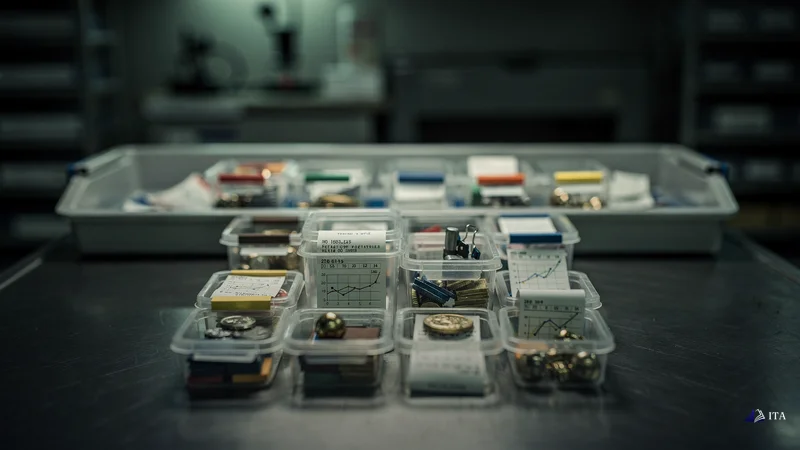
Open a demo account with identical rules to your target prop firm. But you're not trying to pass. You're trying to prove you can follow your rules for 15 trading days straight.
The metric isn't profit. It's process adherence.
Every day you follow your rules perfectly, regardless of P&L, gets logged as a win. Your goal is 15 consecutive wins. If you break a rule on day 12, you start over at day 1.
This does two things. First, it rebuilds the neural pathway between trading and success (rule following) instead of trading and failure (account breach). Second, it gives you objective evidence that you can maintain discipline when the only thing at stake is your own standard.
Most traders need 2-3 attempts to hit 15 consecutive days. That's normal. What matters is that when you finally do it, you have irrefutable proof that you can execute consistently.
Week 4: Systematic Re-Entry
You've reset emotionally. You've identified your behavioral patterns. You've proven you can follow rules for 15 days. Now it's time to re-enter the arena, but not the way you did before.
The traders who successfully recover from multiple failures approach their next evaluation completely differently:
Phase 4: Implementing Strict Rules & Accountability (Week 4)
Implementing strict rules and accountability during comeback attempts involves five non-negotiable protocols that successful traders follow religiously. These include trading at 50% normal position size for the first week, setting daily loss limits at 50% of prop firm maximums, implementing mandatory break days, using external accountability through shared trading journals, and passing evaluations using only 20-40% of allowed drawdown.

This isn't about being conservative. It's about building a track record of success that your nervous system can trust.
Remember: your brain has multiple data points saying "prop firm evaluation = failure. " You need to overwrite that with new data points saying "prop firm evaluation = controlled execution. "
The Circuit Breakers That Actually Work
Let's get specific about systems that prevent behavioral breaches:
The 20% Drawdown Rule: If the evaluation allows 6% drawdown, you operate as if it allows 1.2%. This isn't just margin for error, it's psychological breathing room. When you're only using 20% of allowed drawdown, your trades aren't life-or-death decisions.
The Time-Based Lock: After any losing trade, platform locks for 30 minutes minimum. After two consecutive losses, it locks until the next session. This prevents the downward spiral where one loss becomes five.
The Profit Cap Protocol: Set a daily profit target at 0.5% and a maximum at 0.8%. When you hit the maximum, platform locks for the day. This prevents the "give back" phenomenon where good days turn bad.
The External Verifier: Every trade entry requires a screenshot sent to an accountability partner before execution. Not after, before. This 30-second friction is enough to stop impulse trades.
Why ITA's Methodology Supports Your Comeback Journey
ITA's methodology supports trader comeback journeys through systematic risk management protocols that address both technical execution and psychological recovery. Our approach treats failed challenges as data points rather than personal failures, providing structured frameworks that rebuild confidence through measurable progress rather than motivational concepts.
Why Most Traders Stay in the Failure Loop
The uncomfortable truth about multiple failures is that most traders try to solve them at the wrong level. They focus on strategy refinement when the problem is behavioral. They focus on mindset when the problem is systematic. They focus on motivation when what they need is mechanism.
According to research on trading behavior, the most active traders underperform by 6.5 percentage points annually, not because they lack edge, but because overactivity destroys whatever edge they have.
The same principle applies to evaluation attempts. The traders who pass aren't necessarily better strategists. They're better at controlling their behavior long enough for their strategy to work.
This is why the four-week protocol focuses entirely on behavior and evidence. Week 1 strips away the emotional charge. Week 2 identifies the specific behaviors that need containing. Week 3 proves you can maintain discipline. Week 4 implements the systems that make discipline automatic.
What Success Actually Looks Like
Here's what happens when traders follow this protocol:
They stop seeing themselves as "failed traders" and start seeing themselves as "traders debugging their system. " They stop trying to prove they're good enough and start proving their process is solid enough. They stop trading from hope and start trading from evidence.
Conclusion: From Failure to Funded - A Resilient Trader's Path
Your failures aren't verdicts. They're data points. The traders who understand this distinction are the ones who eventually succeed. The protocol is simple. The execution requires discipline. But the alternative, staying in the failure loop indefinitely, requires something far worse: accepting a identity that isn't true. You're not a failed trader. You're a trader whose systems need debugging. The difference isn't semantic. It's everything.
Ready to get funded?
50% off instant accounts with code 50CRYPTO.
Get Funded →Frequently Asked Questions
How many prop firm challenges does the average trader fail before getting funded?
Most traders fail 3-5 prop firm challenges before getting funded, with industry data showing 80-90% of evaluations end in failure. The majority of breaches come from behavioral errors like oversizing and revenge trading rather than strategy flaws. Successful traders typically require multiple attempts to develop the psychological discipline needed for consistent execution.
How long should I wait before trying another prop firm evaluation after failing?
Wait at least 3-4 weeks before attempting another evaluation. Week 1 should focus on emotional reset and forensic analysis of your failures. Week 2 involves identifying behavioral patterns. Week 3 requires proving rule adherence on demo for 15 consecutive trading days. Only then should you consider re-entering with proper systems in place.
What is the best way to analyze my failed prop firm challenges to learn from them?
Download every trade from failed evaluations and tag each with time of day, market condition, emotional state, setup quality, position size, and rule adherence. Look for specific behavioral triggers like progressive position sizing or session extension. Focus on patterns, not general conclusions like 'I need more discipline', identify exact circumstances that lead to rule breaks.
How can I rebuild my trading confidence without risking more money on new challenges?
Use a demo account with identical prop firm rules and focus on process adherence rather than profit. Aim for 15 consecutive trading days of perfect rule following, regardless of P&L. This rebuilds the neural pathway between trading and success while providing objective evidence of your ability to maintain discipline under controlled conditions.
How do I know if my problem is my strategy or my psychology after multiple failures?
If 70% or more of your rule breaches involve position sizing, stop loss movement, or trading outside your plan, the issue is behavioral, not strategic. Strategy problems show up as consistent losses while following rules perfectly. Psychology problems manifest as good setups ruined by emotional decisions or rule violations during execution.
Key Takeaways
- Stop trading immediately after multiple failures and conduct forensic analysis of every trade to identify specific behavioral triggers.
- Use the four-week protocol: emotional reset, pattern identification, evidence-based rebuilding, and systematic re-entry with strict controls.
- Trade at 50% normal position size during comeback attempts and operate within 20% of allowed drawdown limits.
- Implement circuit breakers like 30-minute platform locks after losses and mandatory accountability partner verification before trades.
- Focus on process adherence over profit during the 15-day demo phase to rebuild neural pathways between trading and success.
- Multiple prop firm failures damage confidence through neurological trauma responses, not lack of trading skill or strategy knowledge.
- Rebuild through progressive evidence and external accountability systems rather than relying on willpower or motivational thinking alone.
Start Your Trading Evaluation
Simulated funded accounts up to $400K. Up to 95% profit split.
Get Funded