 ITA
ITABuilding Mental Resilience After Trading Setbacks: Proven Recovery Strategies
Master evidence-based strategies to rebuild mental resilience after trading losses. Discover micro-reset techniques, process vs. outcome analysis, and long-term behavioral guardrails.
Short answer
Master evidence-based strategies to rebuild mental resilience after trading losses. Discover micro-reset techniques, process vs. outcome analysis, and long-term behavioral guardrails. In a prop firm context this still sits under simulated-capital rules: fees buy access to the evaluation or funded environment, not a deposit of trading capital.
Simulated capital: prop firm evaluation and funded stages discussed here typically run on simulated accounts. Challenge fees pay for access to that environment; they are not a deposit of trading capital. ITAfx accounts are simulated capital.


The Psychological Impact of Trading Setbacks
Trading setbacks trigger a physiological stress response that impairs judgement, increases impulsivity, and leads to revenge trading behaviours. The traders who recover from losses understand they cannot think their way out of this biological reaction, instead, they use specific protocols to work with their stress response rather than against it.
But the most successful traders don't rely on mental strength. They rely on pre-programmed responses.
Think about emergency procedures in aviation. When an engine fails, pilots don't "stay mentally strong. " They execute a checklist. Aviate, navigate, communicate. The checklist exists because stress degrades decision-making. The same principle applies to trading, but almost no one teaches it this way.
The 5-minute micro-reset protocol isn't about calming down. It's about interrupting the stress response before it cascades into revenge trading. First, physically step away from your trading station. Not metaphorically, literally stand up and walk at least 20 feet away. Your brain needs a spatial reset to break the association between the screen and the pain.
The 5-Minute Micro-Reset Protocol for Traders
The 5-minute micro-reset protocol combines controlled breathing with bilateral movement to interrupt the amygdala hijack that follows trading losses. Bilateral movement, walking, stretching, or arm circles, activates both brain hemispheres and restores cognitive function faster than willpower alone.
Third, change your sensory input. Splash cold water on your face. Step outside if possible. The goal is to shock your nervous system into the present moment. You're not trying to feel better, you're trying to think clearer.
This biological reset is just the first layer. The real work happens when you return to your desk.
Here's where process versus outcome analysis becomes critical. Most traders ask the wrong question after a loss: "What went wrong? " The better question: "Did I follow my process? " These aren't the same thing. A trade can lose money despite perfect execution. A trade can make money despite terrible execution. If you judge by outcome, you'll "fix" things that aren't broken and repeat mistakes that happened to work.
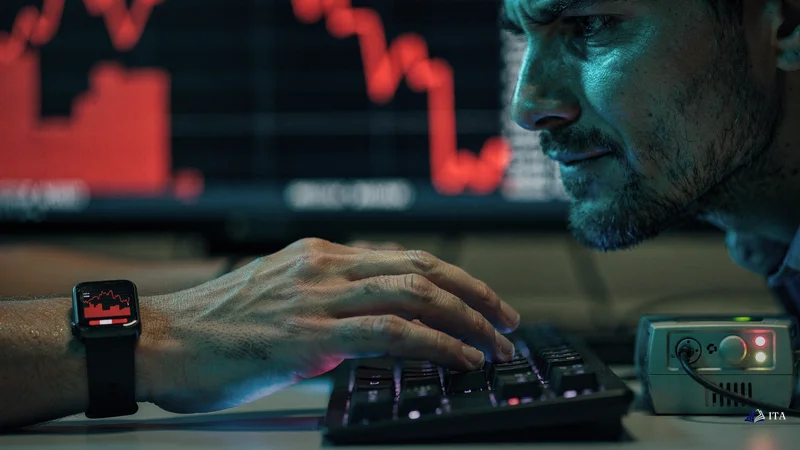
Process vs. Outcome: Objective Analysis of Trades
Process versus outcome analysis separates rule violations (which require system fixes) from valid setups that simply lost money (which require no changes). Breaking a rule demands a process adjustment, whilst a properly executed trade that loses requires maintaining the same approach, but distinguishing between these scenarios requires objectivity that's difficult to achieve immediately after a loss.
This is why the post-session review framework matters more than the in-the-moment response. Every trading day ends with three questions, answered in writing: What was my most challenging moment today? How did I respond in real-time? What's one specific thing I'll do differently tomorrow?
Notice what's missing: no judgment, no emotion, no grand revelations. Just data. The recommended journaling method isn't about feelings, it's about patterns. After 20 sessions, you'll see your triggers with clarity. Maybe you revenge trade after two consecutive losses. Maybe you oversize positions after a winning streak. Maybe you move stops during news events. The pattern doesn't matter. Seeing it matters. Our guide on Trading Psychology for Funded Accounts covers this in more depth.
But even perfect protocols fail without the right mental model. This is where long-term resilience strategies separate the professionals from the perpetual evaluators.

End-of-Session Journaling for Emotional Control
End-of-session journaling for emotional control focuses on process metrics rather than profit targets, recording what you can actually control rather than market outcomes. Effective journaling tracks adherence to trading rules, completion of analysis routines, and emotional state patterns, not the profit and loss figures that markets determine independently of your skill.
Resilience research from Mayo Clinic shows that people who set process goals recover faster from setbacks than those who set outcome goals. Why? Because process goals provide daily wins regardless of market behaviour. You can't control whether your trade hits target. You can control whether you follow your entry checklist.
The support network component gets dismissed as soft, but the data says otherwise. Traders who discuss their losses with other traders, not family, not friends, specifically other traders, show measurably better recovery patterns. Not because of emotional support. Because of perspective. When you hear that another funded trader just gave back a month of profits, your loss feels less personal. When someone shares how they recovered from a similar drawdown, you get tactical insights, not just sympathy. Our guide on Consistent prop firm trader mindset covers this in more depth.
Here's where behavioral guardrails become non-negotiable. The best recovery plan is not needing to recover.
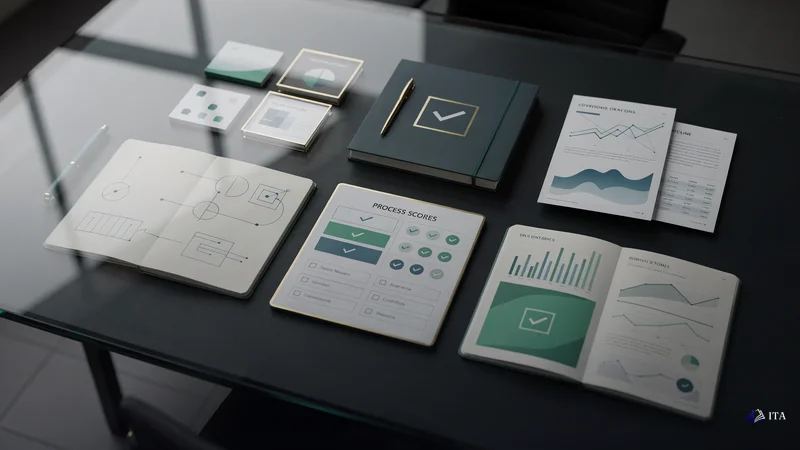
Long-Term Strategies for Mental Fortitude
Long-term mental fortitude develops through pre-committed risk management systems that remove emotional decision-making during stressful market moments. This approach involves setting stop-loss and position sizing rules during calm periods, then using automated orders and systematic processes to eliminate the temptation to override these decisions when trades move against you.
But the most effective guardrail isn't a stop-loss, it's a circuit breaker. Set a daily loss limit that forces you to stop trading. Not a suggestion, not a guideline, a hard stop. Many trading platforms allow you to set daily loss limits that literally lock you out. Use them. Your future self will thank your current self.
The advanced version: graduated circuit breakers. First loss limit: review your trades before continuing. Second limit: mandatory 30-minute break. Third limit: done for the day. This creates friction between you and revenge trading. Friction saves accounts.
The mindfulness component sounds soft until you understand what it actually means for traders.
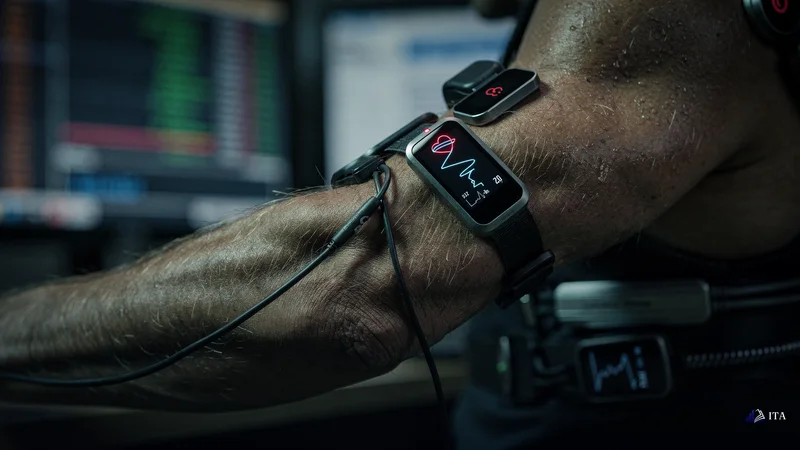
Behavioral Guardrails and Risk Controls
Behavioural guardrails and risk controls include physical awareness techniques that detect emotional trading before it occurs. Monitoring tension in shoulders, breathing patterns, and posture whilst trading provides early warning signals of stress responses that typically precede impulsive decisions and rule violations.
The practice is simple: every 30 minutes, do a body scan. Notice tension, breathing, posture. If you're physically stressed, you're about to make an emotional decision. The scan takes 15 seconds but prevents hours of regret.
Self-compassion after losses sounds even softer, but it's purely practical. Traders who beat themselves up after losses show higher cortisol levels for longer periods. Higher cortisol correlates with worse decision-making. Being harsh on yourself literally makes you a worse trader. The alternative isn't false positivity, it's neutral assessment. "I lost money today" is neutral. "I'm an idiot who can't trade" is self-sabotage.
The uncomfortable truth about resilience is that it's not a character trait, it's a skill set.
Mindfulness and Emotional Regulation for Traders
The funded traders who survive long-term don't have superior mental strength. They have superior systems. They've pre-decided their responses to common scenarios. They've automated their risk management. They've created friction between themselves and their worst impulses.
At Institutional Trading Academy, we see this pattern across our funded traders. The ones who last don't rely on willpower, they rely on workflows. They don't "stay strong", they follow protocols. The difference between a $50K evaluation failure and a $400K funded trader often comes down to what happens in the five minutes after a stop loss.
Your next losing trade is coming. That's not pessimism, that's mathematics. The question isn't whether you'll face another setback. The question is whether you'll have a system to handle it. The protocol is simple: reset physically, analyse objectively, journal consistently, guard behaviourally. Simple doesn't mean easy. But it does mean learnable.
The traders who recover don't have a different psychology. They have a different methodology. And methodology beats motivation every time.
Ready to get funded?
50% off instant accounts with code 50CRYPTO.
Get Funded →Frequently Asked Questions
How do traders stop revenge trading after a loss?
Traders stop revenge trading by implementing a mandatory 5-minute micro-reset protocol after any loss. This involves physically stepping away from the trading station, performing bilateral movement like walking or stretching, and changing sensory input before returning to analyse the trade objectively rather than emotionally.
What is the best routine after a bad trading day?
The most effective post-session routine involves answering three specific questions in writing: What was my most challenging moment today? How did I respond in real-time? What's one specific thing I'll do differently tomorrow? This creates objective data patterns rather than emotional processing.
How do you tell the difference between a bad setup and bad execution?
A bad setup violates your predefined entry criteria, whilst bad execution means you followed a valid setup but broke risk management rules during the trade. Process analysis focuses on rule adherence, not profit outcomes, since valid setups can lose money without requiring strategy changes.
Can mindfulness improve trading performance?
Yes, mindfulness improves trading performance by providing early warning signals of emotional stress. A 15-second body scan performed every 30 minutes helps traders detect physical tension, breathing changes, and posture shifts that typically precede impulsive decisions and rule violations during market stress.
How long should a trader wait before trading again after a loss?
Traders should implement graduated circuit breakers: first loss requires trade review before continuing, second loss mandates a 30-minute break, and third loss ends the trading day. This systematic approach creates friction between emotional impulses and revenge trading behaviours that destroy accounts.
Key Takeaways
- Use the 5-minute micro-reset protocol after losses: step away physically, practice controlled breathing, and change sensory input to interrupt the stress response.
- Focus on process versus outcome analysis by asking 'Did I follow my process?' rather than 'What went wrong?' after each trade.
- Set graduated circuit breakers with daily loss limits that force mandatory breaks and eventual trading cessation to prevent revenge trading.
- Maintain end-of-session journaling with three questions: What was my most challenging moment? How did I respond? What will I do differently tomorrow?
- Perform a 15-second body scan every 30 minutes to detect physical stress signals like shoulder tension and shallow breathing before they lead to emotional decisions.
- Build support networks specifically with other traders who understand the psychological challenges and can provide tactical recovery insights.
- Pre-commit risk management systems during calm periods using automated orders to eliminate emotional override temptations during market stress.
Start Your Trading Evaluation
Simulated funded accounts up to $400K. Up to 95% profit split.
Get Funded