 ITA
ITABuilding Resilience After Prop Firm Rejection: A Structured Recovery Guide
Transform prop firm rejection into systematic growth. Learn evidence-based strategies to rebuild confidence, identify patterns, and recover stronger.
Short answer
Transform prop firm rejection into systematic growth. Learn evidence-based strategies to rebuild confidence, identify patterns, and recover stronger. In a prop firm context this still sits under simulated-capital rules: fees buy access to the evaluation or funded environment, not a deposit of trading capital.
Simulated capital: prop firm evaluation and funded stages discussed here typically run on simulated accounts. Challenge fees pay for access to that environment; they are not a deposit of trading capital. ITAfx accounts are simulated capital.


The Psychological Impact of Prop Firm Rejection
The immediate response to failure determines everything that follows. Most traders do one of two things: they either jump immediately into another evaluation (revenge trading at the account level) or they abandon prop firms entirely. Both responses skip the most critical step, data extraction.
Here's the protocol that separates systematic recovery from emotional reaction:
First, statistical analysis. Before you process any emotions, before you make any decisions, you need numbers. Export your trading history. Calculate these specific metrics: win rate by day of week, average winner versus average loser, time in trade distribution, drawdown patterns by session. The goal isn't to judge yourself, it's to identify mechanical patterns.
One funded trader I interviewed failed four evaluations before passing. The breakthrough came when he discovered that 73% of his losses occurred in the first 30 minutes of the London session. He wasn't a bad trader, he had a specific execution gap during high-volatility openings. That's data, not identity. Our guide on Comeback Story covers this in more depth.
Second, pattern identification. Look for the failure signatures that prop firm educators see repeatedly: overleveraging after wins (the "house money effect"), revenge trading after losses, style drift under pressure, rule interpretation errors. According to prop firm evaluation data, these four patterns account for the majority of failures, not strategy inadequacy.
Immediate Recovery Protocol: Data-Driven Steps After Failure
Third, emotional decompression. This isn't about meditation or positive thinking. It's about creating space between the event and your response. The protocol is specific: no trading (demo or funded) for 72 hours minimum, written reflection on what you felt versus what actually happened, physical exercise to metabolise stress hormones. The goal is neurological reset, not motivation.
But data extraction is only the foundation. The real work is systematic confidence reconstruction.
Confidence after rejection isn't rebuilt through affirmations, it's rebuilt through progressive exposure with measured outcomes. Think of it like physical rehabilitation after injury. You don't immediately return to full intensity; you build capacity systematically.
The framework works in layers. Start with micro-stakes demo trading, not to practice strategy, but to rebuild execution confidence. Trade 0.01 lots with the sole goal of following your process perfectly for 20 trades. No profit targets. Process adherence is the only metric.
Next, introduce complexity gradually. Add one challenge at a time: position sizing calculations, multiple pairs, news events, drawdown recovery. Each layer must be stable before adding the next. This isn't slow, it's systematic. Most traders who rush back fail again because they haven't rebuilt the foundation.
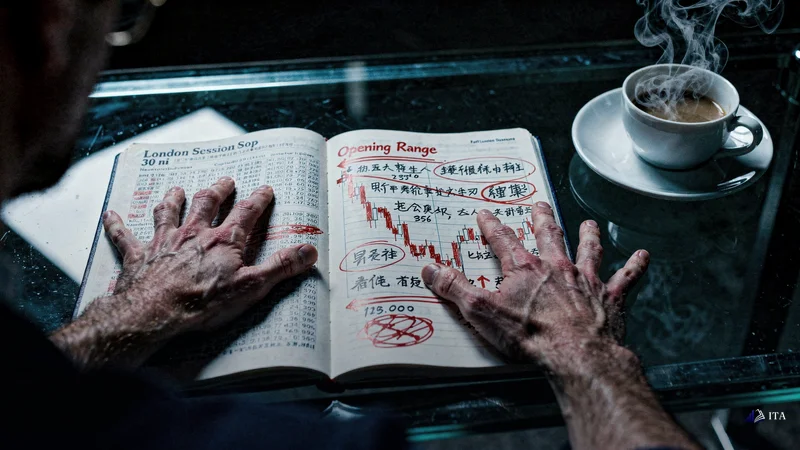
Systematic Confidence Reconstruction for Traders
The key insight is shifting from profit goals to process goals. Instead of "make 10% this month," the goal becomes "execute entry checklist on 100% of trades" or "maintain position size discipline for 50 consecutive trades." Process goals are completely within your control. Profit goals depend on market conditions.
At Institutional Trading Academy, we see this pattern consistently: traders who focus on process metrics during recovery show significantly higher success rates in subsequent evaluations. The market doesn't care about your profit goals, it rewards disciplined execution.
Now comes strategic preparation for your next attempt. This isn't about trying harder, it's about systematic optimisation.
First, prop firm selection becomes critical. Different firms have different psychological profiles. Some firms have tight daily drawdown limits that punish normal volatility. Others have longer evaluation periods that favour patient traders. Match the firm's rules to your proven strengths, not your aspirations. Our guide on Consistent prop firm trader mindset covers this in more depth.
One systematic approach: create a spreadsheet comparing firm rules against your historical trading metrics. If your average daily drawdown is 1.5%, don't choose a firm with a 2% daily limit, that's one standard deviation from failure. If your strategy typically takes two weeks to show results, avoid firms with one-week evaluations.

Strategic Preparation for Your Next Prop Firm Attempt
Second, pre-challenge conditioning. This means simulating the exact evaluation conditions before paying for another attempt. Same starting balance, same rules, same timeframe. Run three complete simulations. Only proceed when you pass two out of three. This isn't practice, it's risk management at the evaluation level.
But systematic preparation only takes you so far. The deepest transformation comes from adopting an institutional mindset about rejection itself.
Institutional traders don't view losses personally because they understand a fundamental truth: trading is a probability game with incomplete information. Every loss is data about market conditions, strategy fit, or execution quality, never about personal worth.
The shift happens when you start treating rejection as data collection. Each failed evaluation provides specific information: which rules challenge you, which market conditions break your discipline, which psychological pressures affect your execution. This isn't failure, it's expensive but valuable research.
The protocol for systematic improvement is mechanical. After each evaluation, document: specific trades that violated rules, emotional states before rule breaks, market conditions during losses, execution differences from your backtesting. Then create targeted improvements for each identified weakness.

Advanced Resilience: Adopting an Institutional Mindset
Building antifragility means becoming stronger through stress, not despite it. In trading terms, this means your evaluation failures make your eventual success more robust. Each rejection that you process systematically reduces future vulnerability.
But individual analysis has limits. The acceleration comes through strategic community leverage.
The power of professional networks isn't motivation, it's pattern recognition. When you discuss your evaluation failure with experienced traders, they can often identify your mistake pattern within minutes. What might take you weeks to discover through solo analysis becomes immediately obvious to someone who's seen it before.
Strategic mentorship differs from general coaching. You need someone who has specifically passed multiple prop firm evaluations, understands the psychological pressures, and can provide tactical guidance. The question isn't "How do I become a better trader?" but "How do I pass this specific evaluation structure?"
At ITA, our community includes traders who've collectively passed hundreds of evaluations. The patterns are remarkably consistent. The solutions are often mechanical, not motivational.

Leveraging Community and Mentorship in Your Recovery
Finally, preventing future rejections requires building systematic disciplines that transcend individual evaluations.
Risk management excellence isn't about small position sizes, it's about consistency regardless of psychological state. The traders who succeed long-term have mechanical rules that execute regardless of their emotions. Maximum position size calculated from account equity. Stop losses set before entry. Daily loss limits that force stepping away.
Emotional regulation systems matter more than emotional control. You don't need to feel calm, you need systems that function when you're not calm. Checklist before every trade. Mandatory break after consecutive losses. End-of-day review regardless of results. These aren't suggestions, they're mechanical protocols.
Continuous performance monitoring means tracking the right metrics. Most traders track profit. Funded traders track execution quality: percentage of trades following the plan, average risk per trade over time, emotional state rating before each session. These leading indicators predict future success better than past profits. Our guide on Motivation for traders starting over after blowing accounts covers this in more depth.
The truth about prop firm rejection is that it's not special, it's just trading failure with an audience. The recovery protocol isn't special either, it's the same systematic analysis and improvement that institutional traders apply to any performance gap.
Preventing Future Rejections: Long-Term Discipline
The traders who transform rejection into growth don't have more resilience or better motivation. They have better protocols. They treat trading like a professional discipline, not a personal journey. They understand that prop firm evaluation is a game with specific rules, not a judgment of their worth. Your next step isn't to feel better about rejection, it's to extract better data from it. Open your trade history. Calculate your metrics. Identify your patterns. Build your protocol. The path from rejection to funded isn't through your emotions, it's through your spreadsheet. Ready to approach your next evaluation with institutional discipline? Explore how ITA's systematic methodology transforms rejection into structured growth.
Ready to get funded?
50% off instant accounts with code 50CRYPTO.
Get Funded →Frequently Asked Questions
How long should I wait before retrying a prop firm challenge?
Wait minimum 72 hours for emotional decompression, then complete three full simulation runs under identical evaluation conditions. Only proceed when you pass two out of three simulations. This typically takes 2-4 weeks of systematic preparation, not arbitrary time limits.
What are the most common reasons traders fail prop firm evaluations?
Four patterns account for majority of failures: overleveraging after wins, revenge trading after losses, style drift under pressure, and rule interpretation errors. These are execution gaps, not strategy inadequacy. Statistical analysis of your trade history reveals which pattern caused your failure.
How do I stop revenge trading after a big loss?
Implement mechanical protocols that execute regardless of emotional state: mandatory 72-hour break after consecutive losses, maximum position size calculated from account equity before session starts, and end-of-day review regardless of results. Systems function when emotions don't.
How can I rebuild confidence after blowing a funded account?
Confidence rebuilds through progressive exposure with measured outcomes. Start with 0.01 lot demo trading focused solely on process adherence for 20 trades. Add complexity gradually: position sizing, multiple pairs, news events. Each layer must be stable before advancing.
Should I switch strategies after failing a prop firm evaluation?
Strategy changes are rarely necessary. Export your trading history and analyze win rate by day, average winner versus loser, and drawdown patterns by session. Most failures stem from execution gaps during specific market conditions, not fundamental strategy flaws requiring complete overhaul.
Key Takeaways
- Extract specific metrics from your failed evaluation: win rate by day, average winner versus loser, and drawdown patterns by session.
- Run three complete evaluation simulations before paying for another attempt, only proceed when you pass two out of three.
- Match prop firm rules to your proven trading strengths, not your aspirations, avoid firms with tight daily limits if your average drawdown is high.
- Focus on process goals rather than profit targets: execute entry checklist on 100% of trades instead of targeting monthly returns.
- Implement mechanical risk protocols that function regardless of emotional state: maximum position size calculated from equity, stop losses set before entry.
- Document specific failure patterns after each evaluation: rule violations, emotional states before breaks, and market conditions during losses.
- Build confidence through progressive exposure with micro-stakes demo trading, trade 0.01 lots focusing solely on process adherence for 20 trades.
Start Your Trading Evaluation
Simulated funded accounts up to $400K. Up to 95% profit split.
Get Funded