 ITA
ITAWhy Traders Hold Losing Trades and Cut Winners Early: The Behavioral Fix
Uncover the psychological traps behind holding losing trades and cutting winners short.
Short answer
Uncover the psychological traps behind holding losing trades and cutting winners short. In a prop firm context this still sits under simulated-capital rules: fees buy access to the evaluation or funded environment, not a deposit of trading capital.
Simulated capital: prop firm evaluation and funded stages discussed here typically run on simulated accounts. Challenge fees pay for access to that environment; they are not a deposit of trading capital. ITAfx accounts are simulated capital.
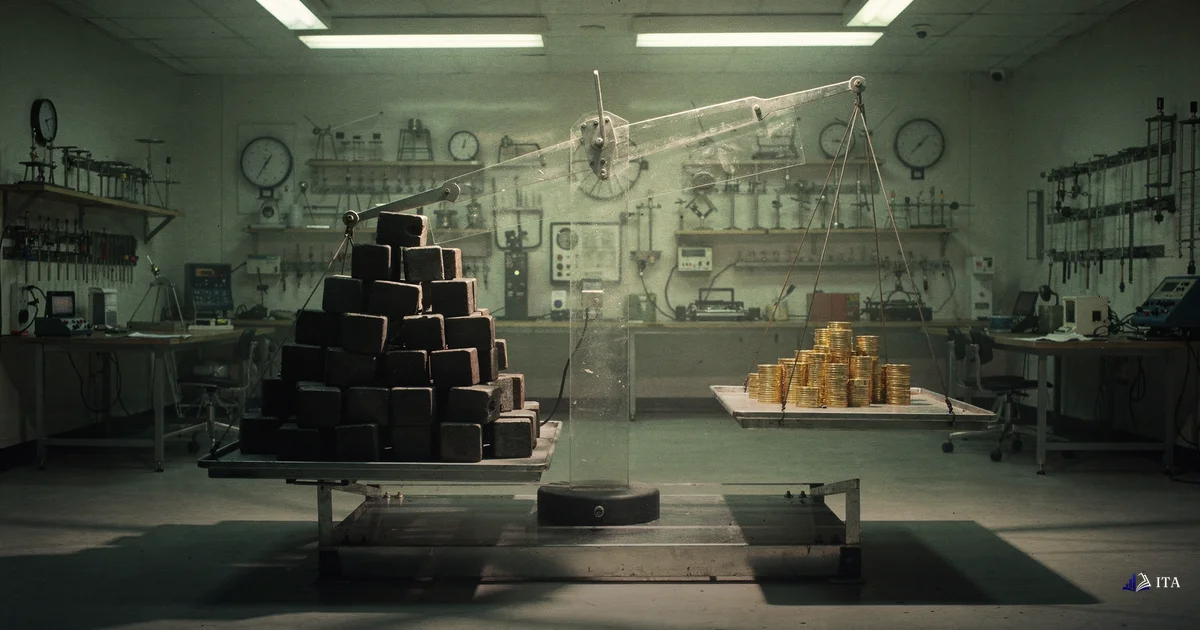

The Psychological Trap: Why You Hold Losers and Cut Winners Early
The disposition effect causes traders to hold losing positions too long whilst cutting winning positions too early, driven by loss aversion and the psychological need to avoid realising losses. When your trade moves against you twenty pips, then thirty, your reluctance to close stems from this cognitive bias, the same mechanism that made you exit last Tuesday's winner at +15 pips instead of riding it another hundred pips higher.
This pattern, holding losing trades while cutting winners short, destroys more trading accounts than any other behaviour. It's so universal that behavioural finance researchers gave it a name: the disposition effect. According to Odean's landmark study, investors are roughly 50% more likely to sell a winning position than a losing one. In trading, this translates to a toxic asymmetry: your losses expand while your wins stay small.
You already know this is happening. You've felt it. The question isn't whether you do it, the question is why your brain insists on this self-destructive pattern even when you know better.
The answer isn't weakness or lack of discipline. The answer lies in how your brain processes gains and losses at a fundamental level. Once you understand the mechanism, you can build systems that bypass it entirely.
The Science Behind It: Loss Aversion, Regret, and Sunk Costs
Your brain doesn't process losses and gains equally. Kahneman and Tversky's research revealed that losses feel approximately 2 to 2.5 times more painful than equivalent gains feel good. This isn't a personality flaw, it's how human brains evolved to survive. Losing resources (food, shelter, status) could mean death for our ancestors. Gaining extra resources was nice but not critical. Your trading brain inherited this wiring.
When you're down fifty pips, your brain doesn't see a number on a screen. It experiences a threat. The pain is real, brain imaging shows the same regions activated by physical pain light up during financial losses. To escape this pain, your brain generates a solution: don't close the trade. As long as the position stays open, the loss remains "paper", theoretical, reversible, not real yet. Closing the trade makes it real, and real losses hurt 2.5 times more than paper losses.
This creates the hold-and-hope cycle. But it gets worse. Three additional biases compound the problem:
First, the sunk cost fallacy whispers that you've already invested time and margin in this trade, closing now "wastes" that investment. Your brain treats the existing loss as a reason to continue, not a reason to stop.
Second, anticipatory regret haunts every decision. Before clicking close, your brain runs a simulation: "What if we close here and it reverses?" The imagined regret of missing the reversal feels unbearable. But your brain runs no equivalent simulation for the regret of letting a small loss become a large one. The asymmetry is built into the hardware.
Third, research on overconfidence shows that early trading success creates attribution errors. You credit wins to skill and losses to bad luck. This makes holding losers feel logical, it's not your analysis that's wrong, it's just temporary market noise.
Real Trading Scenarios: How Biases Play Out in the Market
Watch how these biases compound in a typical funded account evaluation:
You enter EUR/USD long at 1.0950 with a 30-pip stop. Price immediately drops to 1.0940. Down ten pips. Your brain starts negotiating: "It's just testing support. Normal pullback." Price continues to 1.0930. Now down twenty pips. The pain intensifies. Your stop is at 1.0920, but you remove it. "Just giving it room," you tell yourself. "Tight stops are for amateurs."
Price drops to 1.0910. You're down forty pips, beyond your original stop. But now the sunk cost fallacy kicks in: "we're already down so much, might as well wait for the bounce." Your risk management rules said 1% per trade. You're now down 2.7%. The position that should have cost you $300 on a $30,000 account now threatens $810.
Meanwhile, here's what happens to your winners:
You enter GBP/USD long at 1.2500. Price rises to 1.2520. Up twenty pips. Your brain immediately shifts to protection mode: "Lock it in before it disappears." You've been burned before by winners turning into losers. The pain of giving back profits registers as a loss in your brain, triggering that 2.5x pain multiplier. So you close at +20 pips. Five minutes later, price hits 1.2550. An hour later, 1.2600. You left eighty pips on the table because twenty pips of real profit felt better than a hundred pips of potential profit.
The market uncertainty amplifies every bias. When volatility increases, during news releases, at session opens, or during geopolitical events, your loss aversion intensifies. Your brain interprets uncertainty as danger. In danger, the priority becomes avoiding pain (losses) rather than seeking gains. You hold losers even tighter and cut winners even faster.

The Practical Protocol: Fixing Destructive Trading Habits
Fixing destructive trading habits requires removing emotional decision points through systematic automation. Pre-planned automation is widely considered an effective way to reduce emotion-driven exits, since it eliminates the moment-by-moment choice between holding and closing positions. Step 1: Automated Exit Orders Before entering any trade, set both stop-loss and take-profit orders. Not mental stops, actual orders in the platform. Your broker executes them regardless of what your brain wants in the moment. On third-party platform or any modern platform, use OCO (One-Cancels-Other) orders. Entry, stop, and target become one atomic decision made with a clear mind, not three separate decisions made under pressure. Step 2: The Circuit Breaker Protocol Create hard stops for your trading session, not just individual trades. Write these rules and post them on your monitor:
- Daily loss limit: -2% = screens off
- Consecutive losses: 3 trades = 1-hour break
- Weekly loss limit: -5% = no trading until next week
These aren't suggestions. They're circuit breakers. When triggered, you physically step away. Written if-then plans are commonly recommended to reduce revenge trading by creating a pre-committed response.
Step 3: Cognitive Reframing in Real-Time When you feel the urge to remove a stop or close a winner early, run this diagnostic: "Is this decision based on our original analysis or current emotion?" If the market invalidated your analysis, broke a key level, failed at resistance, then adjusting makes sense. But if your analysis remains valid and only your emotions changed, the original plan stands. Cognitive reframing means treating your emotional thoughts as hypotheses to test, not facts to obey. Write this question on a sticky note. Put it on your monitor. When you reach for the mouse to interfere with a trade, read it first.
Daily Practice: Building Discipline and Emotional Resilience
Building discipline requires shifting from outcome-based evaluation to process-based assessment of your trading performance. Your brain currently judges each trade by its result, winning trades feel good even when rules were broken, losing trades feel bad even when rules were followed. This reinforces the disposition effect cycle and prevents skill development. Shift to process-based evaluation. After each trading session, score yourself on process, not profit:
- Did we set stops before entry? (Yes = 1 point, No = 0)
- Did we let stops execute without interference? (Yes = 1, No = 0)
- Did we follow our position sizing rules? (Yes = 1, No = 0)
- Did we honor our circuit breakers? (Yes = 1, No = 0)
A perfect score is 4/4, regardless of whether you made or lost money. This isn't feel-good psychology, it's practical reprogramming. When you consistently score your process rather than your P&L, your brain learns a new pattern: following rules feels good, breaking rules feels bad. The post-trade review deepens this rewiring. For each trade, document:
- Entry reason (what did the chart show?)
- Exit reason (stop hit, target hit, or manual close?)
- Rule adherence (which rules followed, which broken?)
If you manually closed, write why. Was it analysis or emotion? Over time, patterns emerge. You'll see that manual interference consistently costs money while rule-following consistently makes money, even though individual trades vary. Finally, separate your identity from your results. You are not your P&L. A losing trade doesn't make you a loser. A winning trade doesn't make you a genius. You're a trader executing a system. The system produces outcomes over time. Judge the system, not yourself. ITAfx's funded trader data shows that traders who maintain systematic approaches, using consistent stop losses, honoring profit targets, avoiding emotional decisions, represent the majority of successful payouts across their 1,700+ funded traders. The difference isn't talent or market reading ability. It's process adherence.
Conclusion: Master Your Psychology, Master Your Trades
The disposition effect, holding losers while cutting winners, isn't a character flaw you need to overcome through willpower. It's a predictable output of how human brains process losses and gains. The research is clear: we're wired to feel losses more intensely than gains, to avoid regret, to throw good money after bad.
But wiring isn't destiny. The traders who succeed long-term don't have different brains, they have different systems. They've replaced in-the-moment decisions with pre-committed rules. They've automated what can be automated. They've created circuit breakers that protect them from themselves. Most importantly, they've shifted from judging outcomes to judging process.
Your next trade is an opportunity to implement one element of this protocol. Set your stop-loss and take-profit before entry. Let them execute without interference. Score yourself on process adherence, not profit. It's a small step that compounds into transformed results.
The market will still move against you sometimes. Losses are part of trading. But they don't have to expand while your winners shrink. Build the system, trust the system, and let your psychology work for you instead of against you.
Ready to get funded?
50% off instant accounts with code 50CRYPTO.
Get Funded →Frequently Asked Questions
What is the disposition effect in trading?
The disposition effect is the tendency for traders to sell winning positions too early while holding losing positions too long. This behaviour is a well documented pattern in behavioural finance, stemming from loss aversion, and it creates a toxic asymmetry where losses expand while wins stay small, ultimately destroying trading performance.
Why do traders refuse to take losses?
Traders refuse to take losses because the brain processes losses as approximately 2.5 times more painful than equivalent gains feel good. This pain triggers the hold-and-hope cycle where keeping a position open maintains the illusion that the loss isn't real yet. Closing the trade makes the loss concrete and activates intense psychological discomfort.
How can traders stop cutting winners early?
Traders can stop cutting winners early by setting automated take-profit orders before entering trades and using written if-then plans that remove emotional decision points. Pre-committed exit strategies eliminate the moment-by-moment choice between holding and closing. The key is making exit decisions with a clear mind before emotions take over during trading.
How do stop-loss orders improve trading discipline?
Stop-loss orders improve discipline by removing emotional interference from loss-taking decisions. When stops are automated through the platform rather than mental, they execute regardless of what your brain wants in the moment. This eliminates the psychological negotiation that leads traders to remove stops or let losses expand beyond their original risk tolerance.
What is the sunk cost fallacy in trading?
The sunk cost fallacy in trading occurs when traders continue holding losing positions because they've already invested time and margin in the trade. The brain treats the existing loss as a reason to continue rather than a reason to stop. This creates the dangerous logic of 'we're already down so much, might as well wait for the bounce' which often leads to catastrophic losses.
Key Takeaways
- Set both stop-loss and take-profit orders before entering any trade to eliminate emotional decision-making during market pressure.
- Use the 2.5x loss aversion rule: losses feel twice as painful as gains feel good, driving poor exit decisions.
- Implement circuit breakers: -2% daily loss limit forces screens off, preventing revenge trading and emotional spiral patterns.
- Score your process, not profits: rate rule adherence (stops, sizing, discipline) to rewire your brain's reward system.
- Remove stops manually only when analysis changes, never when emotions change - distinguish between valid invalidation and fear.
- Apply OCO orders on third-party platform to automate exit execution, removing the moment-by-moment choice between holding and closing.
- Document every manual close decision: was it analysis-based or emotion-based to identify destructive patterns over time.
Ready to get funded?
Instant accounts, simulated capital, rules published before you pay. 50% off with code 50CRYPTO.
Get Funded →