 ITA
ITAVWAP Institutional Trading Strategy: Master Execution for Funded Accounts
Unlock institutional VWAP trading strategies for funded accounts. Learn how smart money uses VWAP for optimal execution and enhanced profitability.
Short answer
Unlock institutional VWAP trading strategies for funded accounts. Learn how smart money uses VWAP for optimal execution and enhanced profitability. In a prop firm context this still sits under simulated-capital rules: fees buy access to the evaluation or funded environment, not a deposit of trading capital.
Simulated capital: prop firm evaluation and funded stages discussed here typically run on simulated accounts. Challenge fees pay for access to that environment; they are not a deposit of trading capital. ITAfx accounts are simulated capital.


Understanding VWAP: The Institutional Benchmark for Execution
You see VWAP on every institutional trader's screen. Yet most retail traders who add it to their charts use it completely wrong. The difference isn't knowledge. It's execution philosophy.
Most retail traders treat Volume Weighted Average Price as another indicator, a line that price bounces off, a support level, a mean reversion target. They wait for price to touch VWAP, enter their full position, set their stop, and hope. This is precisely why institutional traders consistently extract money from retail order flow. They're playing different games with the same tool.
VWAP isn't an indicator. It's an execution benchmark.
Volume Weighted Average Price represents the average price at which all shares have traded throughout the day, weighted by volume. Unlike a simple moving average that treats every price point equally, VWAP gives more weight to prices where more volume occurred. This makes it the truest representation of where the market actually transacted.
The calculation seems straightforward: multiply each price by its volume, sum these values, then divide by total volume. But this simplicity masks profound implications.
VWAP tells you where the majority of market participants are positioned. More importantly, it reveals whether current price offers value relative to the day's aggregate trading. Institutions don't use VWAP because it's sophisticated. They use it because it's accountable.
When a portfolio manager hands an execution trader an order to buy 500,000 shares, success isn't measured by whether price went up after entry. Success is measured by one metric: did you acquire those shares at or below VWAP? This benchmark determines whether the execution added or destroyed value relative to the market's average participant.
This accountability drives behavior. An institutional trader can't simply market-buy 500,000 shares at 10:30 AM and hope for the best. That size would move price against them, guaranteeing execution above VWAP. Instead, they must work the order throughout the day, buying weakness, scaling into dips, using limit orders to capture liquidity without chasing price. VWAP transforms from indicator to execution discipline.
Our guide on Trading Expectancy Formula covers this in more depth.
The components that drive VWAP matter as much as the line itself. Each transaction updates the calculation, but high-volume periods carry more weight. A surge of buying at 11:00 AM pulls VWAP higher for the rest of the day. Late-session volume can't overcome early positioning unless it's extraordinarily heavy. This path dependency means early movers set the benchmark that everyone else must beat.
Implementing VWAP: Visualizing Institutional Order Flow
Adding VWAP to your chart takes seconds. Understanding what you're seeing takes years, unless you know where to look.
On third-party platform, VWAP appears as a single line that resets each session. But institutional traders see three things retail misses: the slope, the deviation, and the interaction pattern.
The slope tells you whether buyers or sellers control the session. A rising VWAP means buyers are willing to pay progressively higher prices. This indicates bullish market internals regardless of price location.
The deviation between price and VWAP reveals immediate opportunity. Price trading 0.5% above VWAP suggests short-term overextension. Institutions often fade these moves.
The interaction pattern shows how price behaves when touching VWAP. This separates trending from ranging sessions.
Standard deviation bands around VWAP create an institutional roadmap. The first deviation typically contains most of the day's volume. The second deviation holds the vast majority. When price pushes beyond the second deviation, institutions take notice.
This isn't because of statistical theory. It's because their algorithms are programmed to execute more aggressively at extreme deviations, knowing mean reversion probabilities increase.
But VWAP isn't a support and resistance indicator. It's a magnet. Price doesn't bounce off VWAP, it gets pulled toward it.
Every transaction above VWAP creates pressure to revert. Every transaction below creates opportunity for patient buyers. This magnetic effect intensifies as the session progresses because the calculation includes more data, making the average harder to move.
Using VWAP for entry confluence requires understanding institutional intent. When price approaches VWAP from above in a downtrend, institutions aren't buying the touch. They're selling into any bounce toward their average exit price. When price approaches from below in an uptrend, they're adding to positions, improving their average entry. The same level, opposite behaviors, determined entirely by context.
Real Market Examples: VWAP in Action with Funded Capital
Let's examine how this plays out with actual institutional order flow, not theory, but mechanical execution that funded traders can replicate.
Large institutional orders require careful execution to minimize market impact. Consider a fund needing to buy 2 million EUR/USD. At current price 1.1437, that's $228.7 million in notional value. Market impact means they can't simply hit the bid. Instead, they implement a VWAP algorithm that breaks the order into smaller clips, executing throughout the session to achieve an average price at or below VWAP.
Institutional algorithms typically work orders gradually throughout the session to achieve better average prices than a single execution would produce. At the London open, VWAP initializes at this level.
As European traders enter the market, price rises to 1.1445, pulling VWAP up to 1.1432. The institutional algorithm begins working, but not aggressively. It places limit orders at 1.1430, 1.1428, and 1.1426, below the current price but above the session low. This is patient accumulation, not chasing.
By midday, price has oscillated between 1.1420 and 1.1450, with VWAP settling at 1.1436. The fund has acquired 800,000 units at an average of 1.1433, beating VWAP by 3 pips.
But now comes the challenge: they need 1.2 million more units, and US traders are entering the market.
The algorithm adjusts, becoming more aggressive within the VWAP deviation bands but never chasing price beyond the first standard deviation. A news spike pushes EUR/USD to 1.1465. This is nearly 30 pips above VWAP.
Retail traders chase the breakout. The institutional algorithm does the opposite: it stops buying entirely. Why? Because executing here would destroy their VWAP performance.
Instead, they wait. Twenty minutes later, price reverts to 1.1448, and the algorithm resumes accumulation.
By session close, they've acquired all 2 million units at 1.1439. This beats VWAP (1.1442) by 3 pips despite the volatile session.
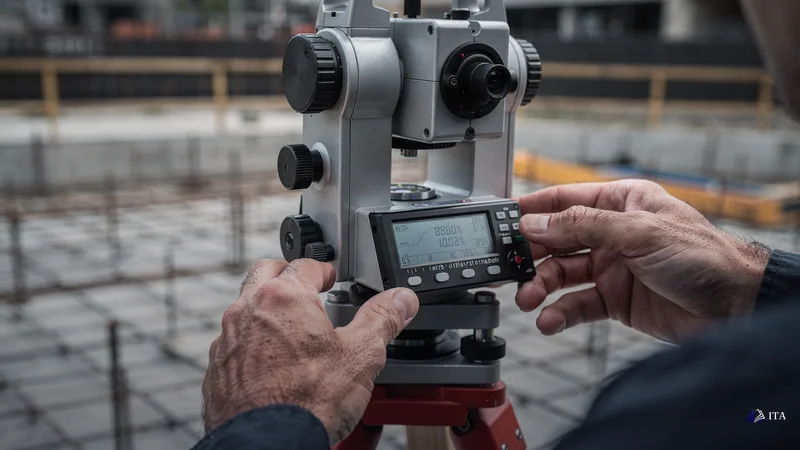
This isn't luck. It's systematic execution that retail traders using funded accounts can replicate at smaller scale. The key insight: institutions don't predict where price will go. They execute patiently around a benchmark, letting market volatility work in their favor rather than against them. Like a surveyor taking precise elevation readings before a single foundation is poured, the measurement comes first, the position second.
Common Mistakes: Avoiding Pitfalls in VWAP Trading
The gravest error retail traders make with VWAP is treating it as a standalone signal generator. They see price touch VWAP and immediately enter, expecting a bounce. This works until it doesn't, catastrophically.
VWAP is context, not signal. In a trending market, price can ride one side of VWAP for hours.
Shorting every touch of VWAP in an uptrend is a recipe for destruction. The institutional traders driving that trend are using VWAP as their execution benchmark, systematically buying every minor dip toward it. You're literally trading against their order flow.
Ignoring volume profile while using Volume Weighted Average Price seems paradoxical, yet it's surprisingly common. VWAP's strength comes from volume weighting, but traders often forget to examine where that volume occurred.
A VWAP level established by massive opening volume carries different implications than one shaped by steady accumulation throughout the day. The volume profile tells you whether VWAP represents genuine business or just algorithmic noise.
The third mistake: fighting institutional bias. When major funds need to execute large orders, they create directional pressure that retail traders feel as "unfair" price action.
Price keeps grinding higher despite being "overextended" above VWAP. This isn't manipulation, it's the mechanical result of patient institutional accumulation.
Trading against this flow because price is above average is like standing in front of a glacier. You might be right eventually, but you'll be crushed first.
Timing matters more than levels. A VWAP touch at 10:00 AM carries different weight than one at 3:00 PM. Early session VWAP interactions often get overwhelmed by subsequent volume.
Late session touches, when most volume has already occurred, tend to be more reliable. Yet retail traders treat every VWAP interaction identically, missing the temporal dynamics that institutions exploit. It's the same coordination problem a logistics command center solves when it times cargo movements to the hour rather than dispatching everything at once.

Practical Application: Mastering VWAP for Funded Account Trading
Implementing institutional VWAP methodology in your funded trading starts with a shift: stop looking for entries and start thinking about execution.
Begin each session by identifying the probable VWAP trajectory. This isn't prediction, it's preparation. If overnight inventory is imbalanced (visible through futures positioning), early session volume will likely push VWAP in that direction. If major economic data releases at 8:30 AM, VWAP will reprice around that volatility.
Understanding these dynamics helps you anticipate where patient execution zones might develop.
Your daily trading routine should incorporate VWAP as context, not trigger. Before placing any trade, ask: where is price relative to VWAP? What's the deviation? Where has volume concentrated? Is institutional flow likely aligned with or against our direction?
These questions transform VWAP from a line on your chart to a framework for understanding market positioning.
Developing a VWAP-based trading plan means defining specific scenarios, not just levels. For example: "If price opens above yesterday's VWAP and today's VWAP slopes higher with price holding above it, institutional flow is bullish. We'll look for pullbacks to VWAP or the first deviation band for long entries, targeting the second deviation band. If price breaks below VWAP with increasing volume, the bias shifts and we'll stand aside or look for shorts on retests."
Risk management with VWAP requires understanding that it's a dynamic level. A stop loss placed just beyond VWAP at 10:00 AM might be 20 pips. By 2:00 PM, as VWAP migrates with price, that same stop distance could be 35 pips.
Position sizing must account for this drift. Calculate your risk based on reasonable VWAP movement, not its current location.
Our guide on EUR/USD Breakout Trading covers this in more depth.
The power of VWAP in funded account trading isn't just technical, it's psychological. When you execute around an institutional benchmark rather than chasing price, you naturally avoid the retail trap of buying tops and selling bottoms.
You develop patience, waiting for price to come to your levels rather than market-ordering in fear of missing out. This discipline alone separates funded traders who last from those who blow evaluation accounts. It's the same map-first mindset a river guide uses, marking the danger zones before the run so the crossing is made on your terms.

Leveraging VWAP with ITA's Institutional Methodology
At ITAfx, VWAP integration goes beyond adding an indicator. It's woven into the institutional methodology that traders learn from day one.
The framework transforms VWAP from a passive average into an active execution tool that funded traders use to compete with institutional efficiency. The methodology starts with recognizing that a $200,000 funded account can't trade like a $500 retail account.
With significant simulated capital comes the responsibility of proper execution. ITAfx traders learn to build positions gradually around VWAP, mimicking institutional behavior at a smaller scale. Instead of risking 2% on a single entry, they might risk 0.5% across four entries, achieving better average prices through patient execution.
Accessing capital through ITAfx's instant account model removes the pressure that destroys VWAP discipline. When you're trading a $400,000 funded account with proper risk parameters, you don't need to chase every move.
You can wait for price to come to your VWAP-based levels, execute partially, and build positions like institutions do. The psychological shift from scarcity to abundance changes everything.
The ITAfx advantage extends beyond capital to education. While other firms focus on basic strategy rules, ITAfx's curriculum includes institutional execution tactics that most retail educators ignore. You learn why market makers quote differently around VWAP, how to read the tape for institutional flow, and when to be aggressive versus patient based on VWAP dynamics.
This isn't theoretical knowledge, it's practical methodology proven across thousands of funded traders. But the emphasis on consistency over home runs.
Institutional VWAP trading isn't about catching massive moves. It's about systematically extracting small edges through superior execution. A funded trader who beats VWAP by just 2-3 pips per trade, compounded over hundreds of trades, generates the kind of steady returns that earn regular payouts.
This alignment between methodology and business model creates sustainable success. Like a diamond cutter breaking one large stone into several smaller, more valuable cuts, execution discipline turns one large order into a series of well-priced fills.

Ready to get funded?
50% off instant accounts with code 50CRYPTO.
Get Funded →Frequently Asked Questions
How do institutions use VWAP for large order execution?
Institutions break large orders into smaller pieces and execute them throughout the trading session, aiming to achieve an average price at or below VWAP. They use algorithms that adjust aggressiveness based on price deviation from VWAP, time remaining in the session, and volume patterns. The goal isn't to predict price direction but to systematically accumulate or distribute positions while minimizing market impact.
What timeframes work best for VWAP trading strategies?
VWAP resets each trading session, making it inherently an intraday tool. The most effective timeframes are 5-minute to 1-hour charts for execution, though institutions monitor tick-by-tick data. Longer timeframes like 4-hour or daily can show multi-day VWAP for swing positioning, but the standard daily VWAP provides the clearest institutional benchmark.
How can funded traders implement VWAP effectively?
Start by using VWAP as context rather than a signal. Build positions gradually when price offers favorable deviation from VWAP. Focus on the first standard deviation band for entries and the second deviation for targets. Most importantly, align your execution with probable institutional flow rather than fighting it.
What are the risks of trading against VWAP levels?
Trading against VWAP levels without considering institutional flow is extremely risky. When large orders push price away from VWAP, that deviation can persist longer than retail traders expect. The biggest risk is fighting institutional accumulation or distribution campaigns that systematically push price in one direction regardless of VWAP location.
Can VWAP strategies be automated for consistent execution?
Yes, VWAP execution is particularly well-suited for automation. Simple algorithms can be programmed to execute when price reaches certain deviations from VWAP, adjusting position size based on the extremity of the move. However, successful automation requires understanding the nuances of volume distribution and session dynamics that pure mechanical rules might miss.
Key Takeaways
- Use VWAP as an execution benchmark, not a signal generator, institutions measure success by beating VWAP, not predicting price direction.
- Build positions gradually around VWAP deviations rather than entering full size at single touches, this mimics institutional order flow patterns.
- Focus on the first standard deviation band for entries and second deviation for profit targets in your funded account trading strategy.
- Avoid trading against institutional bias when large orders create sustained VWAP deviations, fighting this flow destroys retail accounts systematically.
- Monitor VWAP slope and volume concentration to identify whether buyers or sellers control the session before placing any trades.
- Scale position sizes based on VWAP deviation extremity, larger positions at greater deviations where mean reversion probabilities increase significantly.
- Combine VWAP with volume profile analysis to distinguish genuine institutional business from algorithmic noise in your execution decisions.
Ready to get funded?
Instant accounts, simulated capital, rules published before you pay. 50% off with code 50CRYPTO.
Get Funded →