 ITA
ITATrader Burnout: Signs, Recovery, and a 5-Step Protocol to Break Free
Identify the signs of trader burnout and implement a proven 5-step recovery protocol. Learn how to regain focus, discipline, and consistent performance.
Short answer
Identify the signs of trader burnout and implement a proven 5-step recovery protocol. Learn how to regain focus, discipline, and consistent performance. In a prop firm context this still sits under simulated-capital rules: fees buy access to the evaluation or funded environment, not a deposit of trading capital.
Simulated capital: prop firm evaluation and funded stages discussed here typically run on simulated accounts. Challenge fees pay for access to that environment; they are not a deposit of trading capital. ITAfx accounts are simulated capital.
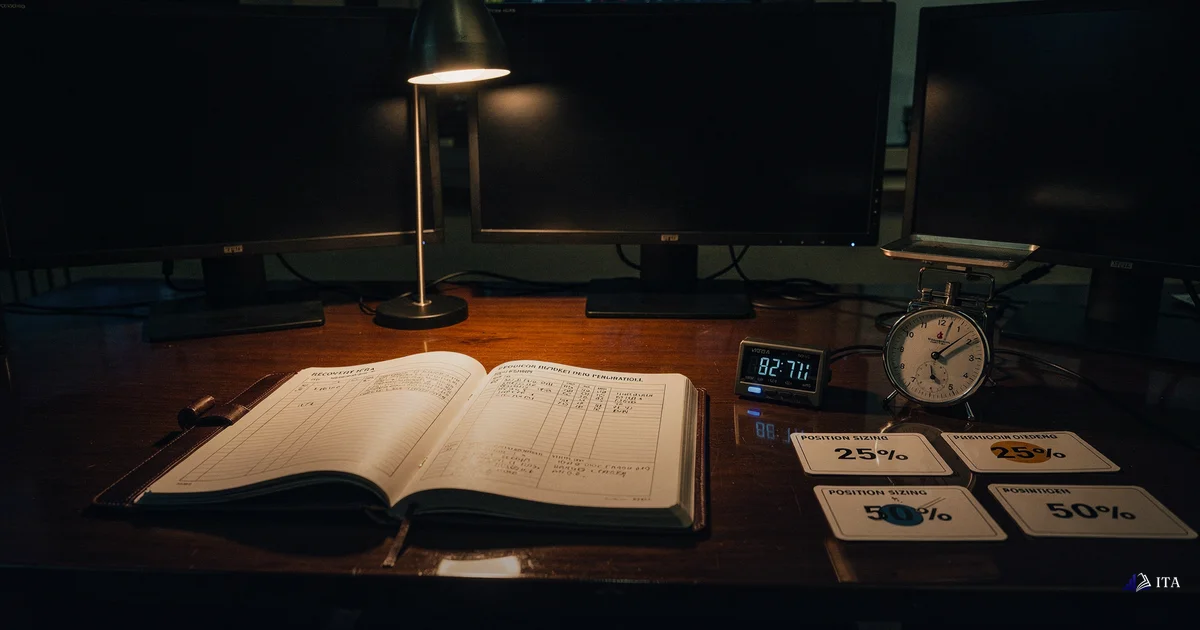

The Silent Battle: Recognizing the Early Warning Signs of Trader Burnout
Trader burnout manifests through specific behavioural patterns that appear weeks before complete psychological exhaustion sets in. The compulsive chart-checking at 3:47 AM, the mental replay of closed positions, and the endless recalculation of missed opportunities signal the early stages of a condition that affects most active traders within their first two years of consistent market participation.
This is how burnout begins. Not with a dramatic explosion or a massive loss, but with these quiet moments when trading colonises every corner of your consciousness. The early warning signs are behavioural, not emotional, and they're measurable.
Many day traders experience significant stress symptoms during their trading careers. But the real revelation comes from tracking what happens in the 30 days before a major drawdown: trade frequency climbs significantly above baseline, hold times shorten, and journal entries, if they exist at all, become single-line justifications rather than analytical reflections.
The behavioural metrics tell the story before you feel it. Your average daily trade count rises from four to seven. Your typical 45-minute hold time compresses to 15 minutes. You start checking positions during dinner, during conversations, during moments that used to be sacred. The most insidious part? Performance doesn't improve with this increased activity. It deteriorates.
Emotional exhaustion differs from normal trading stress in its persistence. Regular stress peaks during volatile sessions and dissipates after market close. Burnout stress follows you home, sits with you at breakfast, turns every non-trading moment into an anxious calculation of opportunity cost. When a losing day triggers not disappointment but rage, when a winning day brings not satisfaction but immediate pressure to repeat it, these emotional inversions signal that stress has shifted from acute to chronic.
The psychological traps multiply in this state. Revenge trading becomes not an occasional lapse but a default response. Every loss demands immediate redemption. Every missed move requires compensation through larger positions. The market becomes an adversary to be conquered rather than a probability distribution to be navigated. This adversarial mindset creates a feedback loop: the harder you fight the market, the more it seems to fight back, validating your belief that only more effort can break the cycle.
Why Trading Harder Doesn't Fix Burnout: The Cycle of Depletion
When performance declines, the instinct is to work harder. If results aren't coming, spend more time analysing. If discipline is slipping, double down on rules and systems. This is the trap that transforms temporary exhaustion into chronic burnout, the belief that the solution to depletion is more extraction.
Neuroscience helps explain why this approach fails catastrophically. Sustained trading stress can affect decision-making and risk assessment over time. When cortisol remains elevated, as it does during burnout, it impairs the prefrontal cortex, the brain region responsible for executive function, impulse control, and probability assessment. You're literally trying to make complex decisions with compromised hardware.
Burnout creates systematic performance inversion. A burned-out trader doesn't just make poor decisions, they make inversely correlated decisions. Where patience is needed, they act impulsively. Where aggression might pay, they hesitate. Where small losses should be accepted, they average down. Where winners should run, they close prematurely. It's not random poor performance; it's systematically inverted judgment.
Amplified risk-taking becomes the signature of late-stage burnout. Position sizes increase precisely when judgment deteriorates. A trader who normally risks 0.5% per trade starts risking 2%, justifying it as "making up for lost time." The stop loss that would typically sit 20 pips away gets placed at 50 pips because "the market needs room to breathe." These aren't calculated adjustments, they're desperation masquerading as strategy.
The illusion of control intensifies with screen time. Burned-out traders often report spending 12-14 hours monitoring markets, believing that constant vigilance equals edge. But research consistently shows diminishing returns after 90 minutes of focused attention. Beyond that point, you're not gaining information, you're manufacturing noise. Every tick becomes significant. Every fluctuation demands interpretation. The signal-to-noise ratio inverts, and you end up trading phantoms of your own exhausted perception. Our guide on Loss Aversion covers this in more depth.
This creates the depletion cycle: poor decisions lead to losses, losses demand more screen time to recover, more screen time degrades decision quality further, creating larger losses. The trader, convinced that effort equals edge, interprets each failure as evidence of insufficient dedication rather than recognising it as symptomatic of systemic breakdown.
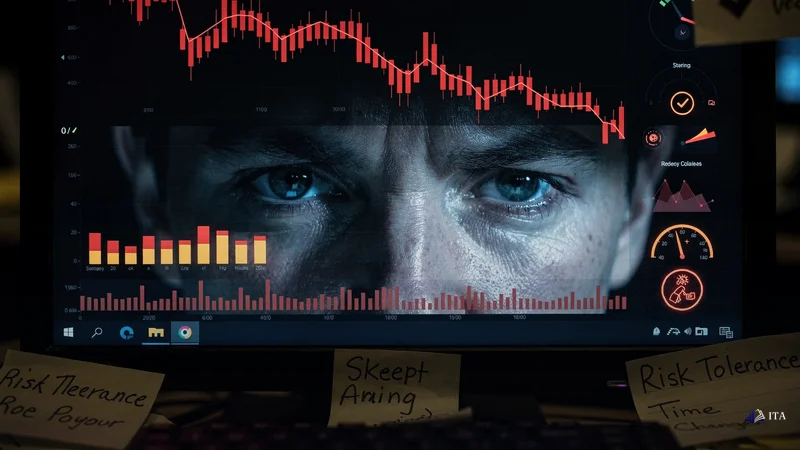
The 5-Step Recovery Protocol: A Structured Approach to Rebuilding
Recovery from burnout isn't a rest day or a weekend off. It's a structured medical-grade protocol that treats cognitive depletion with the same seriousness as a sports injury. The evidence is unequivocal: mandatory full pause from markets for 5-21 days minimum, with no charts, no P&L checks, and no trading-related social media.
Step 1 begins with mandatory market disconnect. This isn't a suggestion or a guideline, it's a non-negotiable cessation of all market contact. Delete trading apps from your phone. Block financial websites on your computer. Inform your trading community that you're taking medical leave. The minimum effective dose is 5-7 days, but severe burnout often requires 14-21 days for cortisol levels to normalise and cognitive function to restore.
Step 2 involves diagnostic journaling, but not about trades, about patterns. What triggered the burnout cycle? Was it a specific loss, a missed opportunity, or accumulated pressure over months? Write without judgment, focusing on behavioral patterns rather than emotional states. When did you first notice sleep disruption? When did you start checking charts during non-trading hours? These behavioral markers become your early warning system for future prevention.
Step 3 implements staged re-entry with radical position reduction. A common approach for recovery is returning at 25-50% of normal position size, capping daily trades at 2, and maintaining these limits for 10-14+ days. This isn't about making money, it's about rebuilding neural pathways. Success is measured by compliance, not profit. Ten consecutive trades within your rules, regardless of outcome, signal readiness to gradually increase exposure.
Step 4 establishes circuit breakers and behavioral gates. If you hit maximum daily loss or break key rules, mandatory 24-48 hour trading cessation. No exceptions, no "just one more trade to get back to breakeven." These circuit breakers function like safety mechanisms in industrial equipment, they prevent catastrophic failure by enforcing systematic shutdown when risk parameters are exceeded. Our guide on Building Resilience After Prop Firm Rejection covers this in more depth.
Step 5 integrates holistic self-care as performance infrastructure, not lifestyle choice. Sleep becomes as important as strategy. Exercise becomes part of your edge. Nutrition affects decision quality as much as market analysis. This isn't wellness culture infiltrating trading, it's recognition that cognitive performance depends on physiological state. A trader operating on four hours of sleep and caffeine is as impaired as one trading intoxicated.
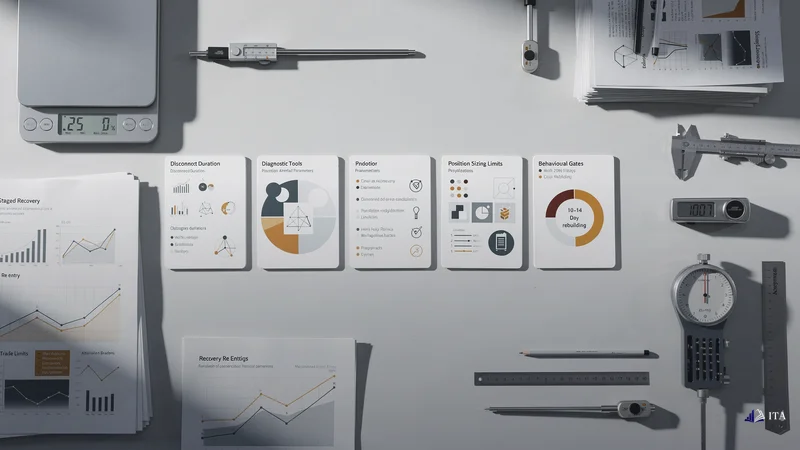
Re-Engaging with Purpose: Building a Burnout-Resistant Trading Practice
Returning to markets after burnout recovery requires fundamental restructuring of how you engage with trading. The old patterns that created burnout will recreate it unless you build different foundations. This means aligning your trading with biological realities rather than fighting them.
Ultradian rhythms govern cognitive performance in 90-minute cycles. Research on sustained performance indicates working in focused 60-90 minute blocks followed by 10-20 minute true breaks away from screens. This isn't arbitrary, it's how the human brain maintains decision quality over time. Structure your trading day around these rhythms: intensive analysis for 90 minutes, then step away completely. Not to another screen, not to financial media, genuine disconnection that allows cognitive restoration.
The fundamental shift involves transitioning from P&L focus to process metrics. Instead of measuring success by daily profit, measure it by adherence to rules. Did you take only A+ setups? Did you respect position sizing? Did you honour stop losses without exception? A day with zero trades that maintains discipline is more successful than a profitable day achieved through rule-breaking. This isn't semantic games, it's rewiring your reward system to reinforce sustainable behaviors rather than unsustainable results.
Community support transforms from optional to essential. Isolation amplifies burnout; connection diffuses it. Share your recovery journey with trusted trading peers. Join accountability groups where process adherence, not profit, is celebrated. Consider working with a trading psychologist who understands the unique pressures of performance-based careers. The myth of the lone wolf trader succeeds only in creating lone wolf casualties.
The most successful traders returning from burnout report a phenomenon: their edge actually improves. Forced simplification during recovery, trading less frequently, with smaller size, following stricter rules, often reveals that their previous complexity was noise, not signal. The discipline required for recovery becomes the discipline that drives sustainable performance.

Long-Term Prevention: Strategies for Sustainable Trading Success
Prevention requires structural changes that make burnout mathematically improbable rather than relying on willpower to avoid it. The most effective preventive measure is fixed trading hours with automatic shutdown. If you trade the London session, your platform closes at noon regardless of open positions or market action. This isn't about missing opportunities, it's about recognising that cognitive capital, like financial capital, is finite and must be preserved.
Consistent position sizing acts as a burnout firewall. When position size remains constant regardless of recent performance, you eliminate the primary mechanism through which burnout accelerates losses. A burned-out trader with fixed 0.5% risk can only damage themselves so much. A burned-out trader with variable sizing can destroy months of progress in days. The rule is simple: position size is determined by system parameters, never by emotional state.
The deepest prevention involves decoupling self-worth from account balance. This isn't philosophical abstraction, it's practical protection. When your identity depends on daily P&L, every loss becomes an existential threat requiring immediate redemption. When trading is a skill practiced within limits, losses become data points in a probability distribution. The market doesn't know your name, doesn't care about your mortgage, doesn't respond to your need. Trading it as if it does guarantees eventual burnout.
Recognising when professional help is needed requires honest self-assessment. If you've attempted recovery protocols twice and returned to burnout patterns, if trading thoughts intrude into every non-trading moment, if relationships are deteriorating due to market-related stress, these signal that burnout has progressed beyond self-management. Trading psychologists specialise in performance-related stress and can provide tools beyond what self-directed recovery offers.
Funded traders face unique pressures from hard drawdown rules and performance targets, requiring modified prevention strategies. The recommendation is to focus on process goals, cap daily trades and losses, and implement mandatory 3-5 day breaks after intense evaluation periods. The psychological weight of trading "other people's money" (even in simulation) adds layers of pressure that retail traders don't experience. Acknowledge this additional burden and adjust recovery protocols accordingly.
Conclusion: Your Path to a Resilient and Profitable Trading Journey
Trader burnout isn't a character flaw or a sign of weakness, it's a predictable physiological response to sustained performance pressure without adequate recovery infrastructure. The traders who build long careers aren't those who never experience burnout, but those who recognise it early, respond with structured protocols, and build practices that make recurrence unlikely.
Your next step depends on where you are in the burnout cycle. If you're experiencing early warning signs, increased trade frequency, shortened hold times, checking charts during off-hours, implement immediate circuit breakers. Schedule a 5-day market disconnection within the next two weeks. If you're in active burnout, stop trading today and begin the full protocol. If you're recovering, honour the staged re-entry process without rushing.
The market will be there tomorrow, next week, next year. Your cognitive capital might not be if you continue depleting it without restoration. The highest ROI trade you can make might be stepping away from the screen, not toward it. In a profession where everyone glorifies grinding harder, the edge often belongs to those who know when to stop.
At ITAfx, we've seen hundreds of traders transform their performance not by trading more, but by trading sustainably. The path to consistent profitability runs through disciplined recovery, not relentless depletion. Your future self, the one trading calmly with clear judgment and consistent results, is waiting on the other side of proper recovery. The only question is whether you'll give them the chance to emerge.
Ready to get funded?
50% off instant accounts with code 50CRYPTO.
Get Funded →Frequently Asked Questions
What are the most reliable early warning signs of trader burnout before performance collapses?
Trade frequency climbs 40-50% above normal baseline in the 30 days before major drawdowns, with shorter hold times and thinner journal entries. Other key signs include compulsive chart checking at odd hours, revenge trading after losses, and inability to step away from markets even during off-hours.
How long should a trader step away from markets to recover from serious burnout?
Evidence-based recovery requires a mandatory 5-21 day complete market disconnection, with no charts, P&L checks, or trading-related social media. Most traders need 14-21 days for full cognitive restoration, while severe burnout may require 30+ days for cortisol levels to normalise.
What is the structured re-entry process after burnout recovery?
Return at 25-50% of normal position size, cap daily trades at 2, and maintain these limits for 10-14 days. Success is measured by 10 consecutive rule-compliant trades, not profits. Circuit breakers must trigger 24-48 hour trading cessation if daily loss limits or key rules are broken.
How do ultradian rhythms help prevent trading burnout?
Working in focused 60-90 minute blocks followed by 10-20 minute true breaks away from screens maintains decision quality over time. This aligns with natural cognitive performance cycles and prevents the mental exhaustion that leads to poor trading decisions and eventual burnout.
What makes ITAfx different for traders recovering from burnout?
ITAfx provides instant funded accounts up to $400K with no evaluation pressure, removing the performance anxiety that often triggers burnout cycles. Our institutional methodology focuses on process over P&L, with up to 95% profit splits that allow sustainable trading without the capital constraints that create desperation.
Key Takeaways
- Recognise burnout early through behavioural metrics: increased trade frequency, shortened hold times, and compulsive chart checking at non-trading hours.
- Implement mandatory 5-21 day complete market disconnection for recovery, partial measures fail because neurological stress patterns remain active.
- Return with 25-50% reduced position size for 10-14 days, capping daily trades at 2 to rebuild neural pathways through compliance, not profit.
- Structure trading around 90-minute ultradian rhythms with genuine breaks to maintain cognitive performance and prevent depletion cycles.
- Establish fixed trading hours with automatic shutdown, when cognitive capital is finite, structural limits prevent extended stress exposure.
- Decouple self-worth from daily P&L by measuring success through rule adherence rather than profit, rewarding sustainable behaviours over unsustainable results.
- Seek professional help if recovery protocols fail twice or if trading thoughts intrude into all non-trading moments and relationships.
Ready to get funded?
Instant accounts, simulated capital, rules published before you pay. 50% off with code 50CRYPTO.
Get Funded →