
Revenge Trading Psychology Funded Accounts: How to Protect Your Funded Account
Learn how to identify and eliminate revenge trading psychology to protect your funded account. Discover proven strategies to maintain trading discipline.


What is Revenge Trading and Why Is It Dangerous?
Picture this: You've just taken a perfectly calculated trade. Stop loss set. Position sized correctly. Then the market turns. Your $500 loss hits, and suddenly something shifts. The next trade isn't calculated. It's double the size, entered hastily, chasing the market to "make it back." Within minutes, that $500 loss becomes $2,000.
Not a discipline problem. This is revenge trading, and it destroys more funded accounts than any other psychological pattern.
Here's what makes it particularly dangerous: revenge trading feels rational in the moment. Your brain convinces you that aggressive action is the solution, not the problem. You're not thinking emotionally. You're thinking tactically. Get back to breakeven. Restore the balance. Fix the mistake.
But that tactical thinking? Precisely the trap. The numbers speak.
Psychological Triggers for Revenge Trading
Conventional wisdom says revenge trading happens because traders are "too emotional" or "lack discipline." Trading educators prescribe meditation, cold showers, or walking away from the screen. "Just follow your rules," they say, as if the problem is simply choosing not to follow them.
This misses the neurological reality entirely.
Revenge trading is triggered by loss aversion bias. A cognitive pattern so deeply embedded that Nobel laureate Daniel Kahneman called it one of the most reliable findings in behavioural economics: losses trigger roughly twice the emotional response of equivalent gains. When you lose $500, your brain doesn't process it as "minus 500." It processes it as pain requiring immediate relief.
Exactly why standard "discipline" advice fails. You can't out-discipline your amygdala.
How Revenge Trading Affects Funded Accounts
The amygdala (your brain's alarm system) activates within milliseconds of a loss. It floods your system with cortisol and adrenaline before your prefrontal cortex (responsible for rational decision-making) can even assess the situation. By the time you're thinking about your next trade, your neurochemistry has already shifted into threat-response mode.
Here's where it gets interesting.
Institutional trading desks discovered something crucial: the most effective way to prevent revenge trading isn't psychological. It's mechanical. They don't train traders to "be less emotional." They build systems that make revenge trading structurally impossible.
At ITA, we see this pattern constantly in funded account data. Traders who fail challenges rarely blow out on their first loss. They blow out on the third or fourth trade after a loss. The revenge sequence. The initial loss is usually within risk parameters. The revenge trades violate every rule.
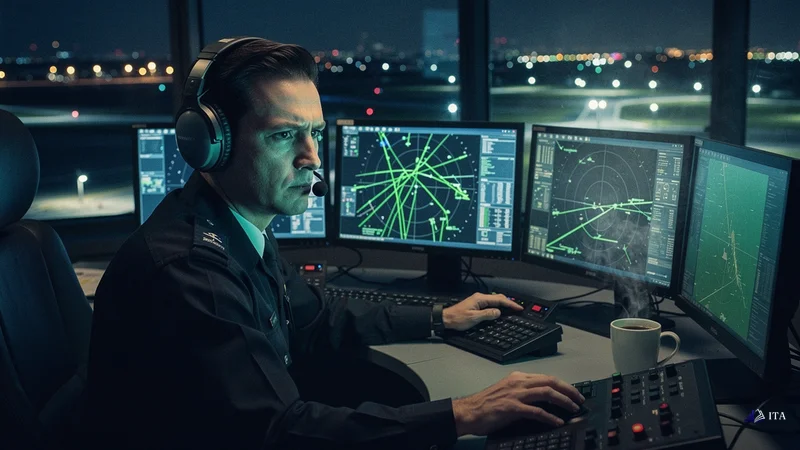
Proven Strategies to Stop Revenge Trading
Psychological triggers follow a predictable sequence. First comes loss aversion: the immediate pain of the red number. Then cognitive dissonance kicks in: "I'm a good trader, good traders don't lose, therefore this loss is a mistake I must correct." This creates urgency bias. The false belief that you must act NOW to fix the situation.
Each bias compounds the others, creating what neuroscientists call a "hot state." A temporary rewiring where short-term impulses override long-term planning.
For funded accounts, this pattern is particularly destructive. Unlike personal accounts where you might revenge trade with $200, funded accounts offer larger position sizes. A moment of neurochemical hijacking can breach drawdown limits that took weeks to respect. One five-minute revenge sequence can end a $100,000 opportunity.
But here's the revelation: Once you understand the mechanism, you can interrupt it. The key to stopping revenge trading lies in implementing circuit breakers before emotions take control. Successful traders use pre-planned cooling-off periods after losses. They set maximum daily loss limits that automatically lock their accounts. Most importantly, they recognize the physical symptoms of revenge trading mode: elevated heart rate, tunnel vision, and the overwhelming urge to "get even" with the market.
Practical strategies that work:
• The 15-minute rule: After any loss, step away from screens for exactly 15 minutes. No exceptions.
• Position size reduction: Cut your next trade size by 50% after a loss. This limits damage while emotions stabilize.
• Daily loss limits: Set a hard stop at 2% daily drawdown. When hit, trading stops until tomorrow.
• Physical circuit breakers: Place your mouse in another room after hitting daily limits. Create friction between impulse and action.
These aren't just tips. They're neurological interventions designed to give your prefrontal cortex time to regain control from your amygdala's threat response.

Maintaining Trading Discipline
The most effective strategies for maintaining trading discipline in funded accounts don't fight the neurological response. They redirect it. Think of it like martial arts: you don't oppose the force, you channel it differently.
First, the pre-trade protocol. Before entering any position, institutional traders complete a written checklist. Not mental. Written. This engages the prefrontal cortex and creates what psychologists call "implementation intention." A pre-committed response to a specific situation. When the loss occurs, you already have a programmed next action that isn't "trade again."
Second, the position sizing ladder helps maintain trading discipline. Instead of fixed risk per trade, use a stepped-down approach after losses. First trade: normal size. If it loses, next trade is 50% size. This satisfies the urge to trade while structurally preventing revenge escalation. Your brain gets the action it craves without the catastrophic risk.
The third strategy is counterintuitive but powerful: the mandatory profit target reset. After any loss, your next trade's profit target must be no more than half of normal. This forces your brain to accept that you won't "make it back" on the next trade, interrupting the revenge fantasy.
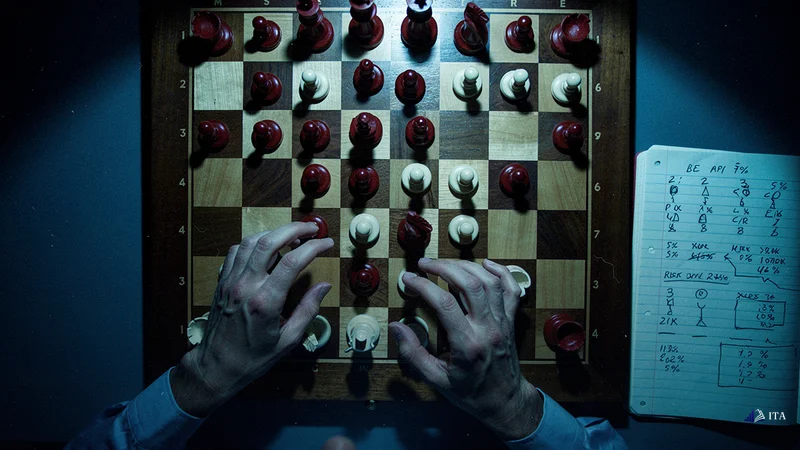
The Role of Risk Management
Trading discipline isn't about willpower. It's about architecture. You don't become disciplined by trying harder. You become disciplined by building systems that make undisciplined behaviour impossible.
This extends to your broader trading plan. Rigid rules like "never trade after a loss" often backfire because they create additional psychological pressure. Instead, build flexibility with constraints. "After a loss, I can trade, but only at 50% size and only after completing my written checklist." This acknowledges human psychology while maintaining protection.
Risk management becomes your architectural foundation. Key insight: calculate position size from maximum drawdown backwards, not from entry forward. If your funded account allows 5% daily drawdown and you're already down 2%, your maximum position size must assume you could lose the entire trade. This mathematical reality overrides emotional impulses.
Most successful funded traders share a common trait: they've shifted from reactive to proactive psychology. They don't wait for emotions to arise and then manage them. They build systems that prevent destructive emotions from having destructive consequences.

Improving Trading Psychology
Here's the framework: Understand your triggers (loss aversion is universal but manifests personally). Build mechanical interrupts (checklists, position sizing rules, mandatory breaks). Create accountability systems (trading journals that track emotional state, not just P&L). Most importantly, normalise losses as data, not failures.
The final piece is often overlooked: community. Revenge trading thrives in isolation. When you're alone with your screen and your loss, your brain has no alternative narrative. Professional trading floors understood this. Traders work in teams precisely because isolation amplifies psychological biases.
At ITA, funded traders who engage with the community tend to show far fewer revenge-trading incidents than those who trade alone. Not because the community provides emotional support (though it does), but because it provides alternative perspectives in real-time. When your brain screams "double down," another trader's voice saying "step back" can be the interrupt you need. It also helps to know exactly which prop firm rules you are trading under.
The path forward is clear: Stop treating revenge trading as a character flaw to overcome. Recognise it as a predictable neurological pattern to interrupt. Build mechanical systems that acknowledge your humanity while protecting your funded account. Remember: every professional trader has revenge traded. The difference is they've built systems to ensure it doesn't happen twice.

Conclusion
Revenge trading psychology in funded accounts isn't about lacking discipline. It's about understanding that your brain's loss aversion response hijacks rational decision-making within milliseconds of a drawdown.
The strategies that work aren't motivational. They're neurological. Pre-commitment rules, cooling-off protocols, and position sizing frameworks bypass the amygdala's threat response entirely. They don't fight your psychology. They work with it.
At ITA, we've built these psychological safeguards directly into our institutional methodology. Our funded accounts come with pre-configured risk parameters that make unchecked revenge trading much harder to act on. See how funded accounts work and how to grow them.
Ready to trade with psychological protection built in? Explore ITA's instant funded accounts and see how institutional risk management eliminates revenge trading before it starts.
Frequently Asked Questions
What is revenge trading and why does it destroy funded accounts?
Revenge trading occurs when traders increase position sizes or take impulsive trades after a loss to "make back" money quickly. It destroys funded accounts because it bypasses risk management rules, often turning small losses into account-ending drawdowns within minutes.
How does loss aversion bias trigger revenge trading psychology?
Loss aversion bias makes losses feel twice as painful as equivalent gains, according to Kahneman's research. This triggers the amygdala's threat response, flooding the brain with cortisol and adrenaline before rational decision-making can occur, leading to impulsive revenge trades.
What mechanical systems prevent revenge trading in funded accounts?
Effective systems include pre-trade written checklists, position sizing ladders that reduce size after losses by 50%, mandatory profit target resets, and cooling-off protocols. These interrupt the neurological response rather than relying on willpower alone.
Why do standard discipline techniques fail to stop revenge trading?
Standard advice like "be less emotional" fails because revenge trading is neurological, not psychological. The amygdala activates within milliseconds of a loss, hijacking decision-making before the prefrontal cortex can engage rational thinking processes.
How can traders build accountability systems to prevent revenge trading?
Successful accountability systems include trading journals that track emotional state, community engagement with other traders, and pre-commitment rules with mechanical interrupts. Professional traders show far fewer revenge-trading incidents when part of trading communities versus trading alone.
Key Takeaways
- Implement position sizing ladders after losses — reduce next trade to 50% size to satisfy action urge without catastrophic risk.
- Use written pre-trade checklists to engage prefrontal cortex and create implementation intention before entering any position.
- Calculate position size from maximum drawdown backwards, not entry forward — if 2% down with 5% limit, size for potential total loss.
- Build mandatory profit target resets — after any loss, next trade target must be 50% normal to interrupt revenge fantasy.
- Recognise loss aversion triggers twice the emotional response of equivalent gains within milliseconds of drawdown hitting your account.
- Join trading communities to provide alternative perspectives in real-time — isolation amplifies psychological biases.
- Create cooling-off protocols with flexible constraints — trade after losses allowed but only at reduced size with completed checklist.
Start Your Trading Evaluation
Simulated funded accounts up to $800K. Up to 95% profit split. Backed by a regulated broker.
Get Funded