 ITA
ITARevenge Trading: Why Funded Account Losses Lead to Self-Sabotage (And the Fix)
Understand the psychology of revenge trading after funded account losses. Learn why it happens and discover practical protocols to prevent self-sabotage.
Short answer
Understand the psychology of revenge trading after funded account losses. Learn why it happens and discover practical protocols to prevent self-sabotage. In a prop firm context this still sits under simulated-capital rules: fees buy access to the evaluation or funded environment, not a deposit of trading capital.
Simulated capital: prop firm evaluation and funded stages discussed here typically run on simulated accounts. Challenge fees pay for access to that environment; they are not a deposit of trading capital. ITAfx accounts are simulated capital.
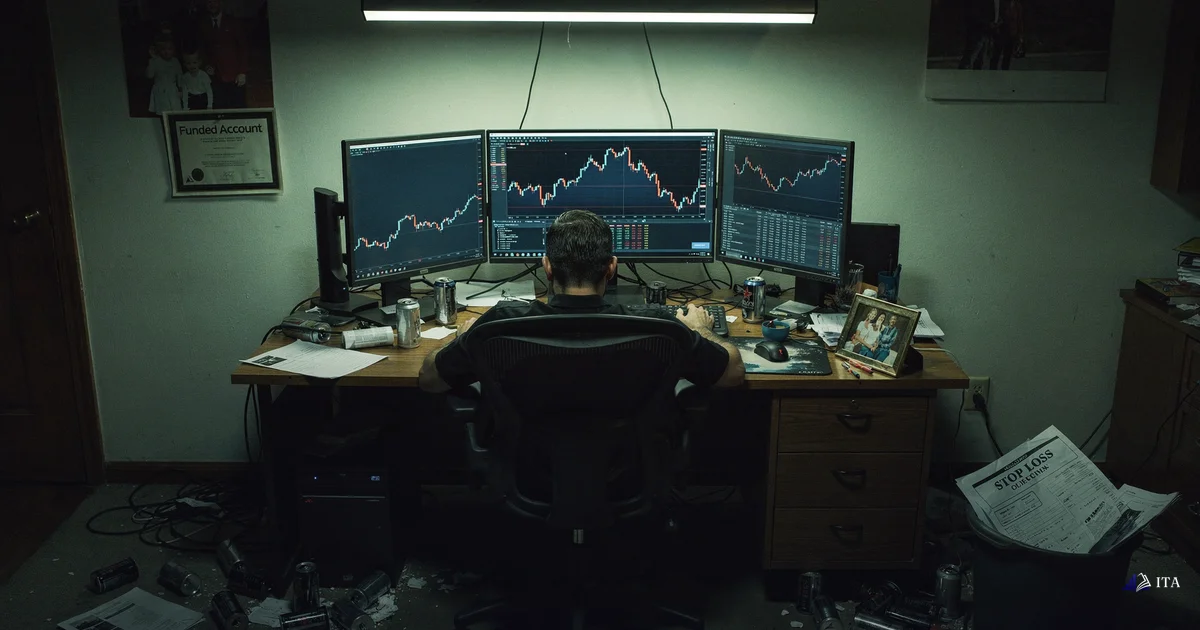

The Anatomy of a Revenge Trade: How One Loss Spirals Into Account Failure
Revenge trading is what happens when a single loss on a funded account stops being a data point and starts feeling like a personal insult. Instead of logging the outcome and moving to the next setup, you feel compelled to fix it immediately, usually with a bigger position, a tighter timeframe, and none of the analysis that got you funded in the first place.
The pattern rarely announces itself. It starts with the ordinary sting of a stop-loss doing its job. Then something shifts: disbelief that the trade could have gone against you, frustration that curdles into anger at yourself rather than the market, and finally a quiet rationalization that this loss doesn't count, that the next trade will put things right. That rationalization is the moment discipline ends and revenge trading begins.
What makes this dangerous specifically on a funded account is the compounding effect. Loss-triggered impulsivity is a well-documented pattern in behavioral finance, and it plays out the same way on a funded account as anywhere else: capable traders more often lose funded accounts not for lack of skill or a flawed strategy, but because of the emotional aftermath of a loss they hadn't planned for. Loss aversion, the tendency to feel a loss more intensely than an equivalent gain, is a well-documented feature of ordinary human decision-making. Under pressure, it can override risk rules that felt unbreakable an hour earlier.
The mechanics are simple to describe and hard to stop once in motion: one revenge trade begets a slightly larger one, stops get moved "to give the trade room," and within a single session an account that took months to build can be gutted in an afternoon. None of this requires a character flaw. It requires an unmanaged moment.
The Neuroscience of Loss: Cortisol, Dopamine, and a Prefrontal Cortex Going Offline
Your brain does not read a losing trade as a line on a statement. It reads it as a threat. The amygdala, the small structure responsible for detecting danger, fires first, and it fires the same way whether the threat is a loss on your platform or something considerably more primal.
That alarm has consequences. Cortisol, the body's primary stress hormone, rises quickly and stays elevated longer than most traders expect. Cortisol is useful for genuine physical threats, it sharpens reflexes and narrows focus, but it is corrosive to the kind of patient, probabilistic thinking that trading requires. At the same time, the sudden absence of an expected reward drags dopamine down, and the brain, trying to correct that deficit, starts hunting for a fast win. Kahneman and Tversky's prospect theory put a number on the asymmetry decades ago: losses are felt roughly twice as intensely as equivalent gains. A losing trade of $1,000 registers, emotionally, closer to $2,000.
Layered on top of the hormonal response are cognitive shortcuts that make bad decisions feel reasonable in the moment. The sunk cost fallacy argues that because you've already lost money, you're owed a chance to win it back on the very next trade. Research by Odean found that investors are considerably more likely to exit winning positions early than losing ones, the disposition effect, which under acute stress can flip into holding losers too long and doubling down on them instead.
None of this is a moral failing. It's what an ordinarily functioning brain does under a specific kind of pressure, which is exactly why the fix has to be mechanical rather than motivational. You cannot out-willpower a hormone.
Case Study: How a Funded Account Unravels in a Single Session
Picture a trader three months into a $100K funded account, up 11% and trading exactly to plan. A surprise data release causes a sharp spike against an open position; the stop-loss fires, but slippage turns what should have been a clean $1,800 loss into $4,200. On its own, that's an ordinary cost of doing business. It's what happens in the next ninety minutes that decides whether the account survives the week.
The instinct is to get straight back in, same pair, bigger size, to make it back faster. The market doesn't cooperate. The next loss is $7,500. Now the trader is running on adrenaline rather than analysis: three positions open at once, each near the account's maximum allowable size, stops widened "to give the trade room to breathe." Two hours later the day's drawdown has reached $19,000, and the daily loss limit, the one safeguard specifically designed to stop this exact sequence, is already a memory rather than a rule.
This is the part of revenge trading that rarely gets discussed honestly: it doesn't look reckless from the inside. Every individual decision, taken in isolation, can be argued for in the moment. It's only the sequence, the compounding of slightly-too-big, slightly-too-loose, slightly-too-fast decisions, that turns one bad trade into a blown account. And it happens to traders with genuine track records, not only beginners.

The Protocol: Mechanical Safeguards That Interrupt Revenge Trading Before It Starts
The single most useful shift in mindset is to stop treating revenge trading as a willpower problem and start treating it as an equipment problem. Airline pilots don't try to "stay calm" through severe turbulence, they run a checklist, because they know in advance that judgment degrades under stress. Funded trading needs the same kind of pre-built response: decided while you're calm, executed without negotiation while you're not.
Start with a hard rule on the trigger itself: after any single loss exceeding roughly 1% of account equity, step away from the platform, screens off, for a minimum of 60 to 90 minutes. This isn't a productivity break, it's a biochemical one. Cortisol takes time to clear, and no amount of insight substitutes for that reset time. Use the window deliberately, a short walk, paced breathing, or simply leaving the room clears the nervous system faster than staring at the chart waiting to "feel ready."
Add a session-level circuit breaker on top of the single-loss rule: after two consecutive losing trades in one session, trading stops entirely until the next trading day, no exceptions and no "just one more to end on a better note." Two losses in a row is exactly the point where the brain starts hunting for a rescue trade, and a hard stop removes the option before it becomes tempting.
When you do return to the screen, re-entry should be smaller and slower than normal, not equal to it. A useful floor: your first trades back are sized at 25% of your standard position, calculated the same rigid way every time, lots equal to account balance multiplied by risk percentage, divided by stop distance in pips multiplied by pip value. Doing the arithmetic on paper, every time, keeps sizing a mechanical output rather than an emotional guess.
Finally, build a written pre-trade checklist that has to be completed, on paper, before any position goes on: your current emotional state rated honestly on a 1-10 scale, time elapsed since the last loss, the position-size calculation, and a specific exit plan. If your self-rated stress crosses 7/10, or you've already taken two losses that session, the checklist itself tells you to stop. The goal of every one of these rules is the same: to put a system between the impulse and the order ticket. Our guide on how to stay focused during high-volatility news events covers related ground on managing decisions under pressure.
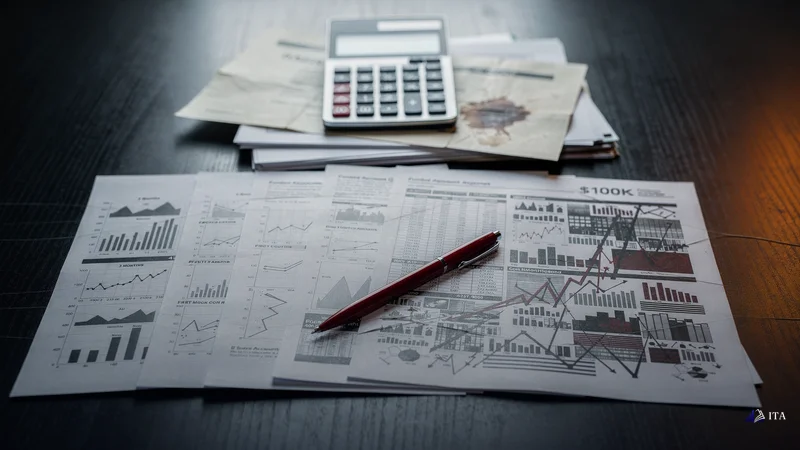
Building Long-Term Resilience: Journaling, Identity, and the Morning After a Loss
Prevention only goes so far if the underlying pattern never gets addressed. The traders who stop revenge trading for good tend to build three habits that operate below the level of any single trade.
The first is a journal that tracks more than entries and exits. Log your emotional state before and after each trade, and don't stop there: log sleep quality, caffeine intake, and how rushed you felt sitting down to trade. These physiological details aren't incidental. Patterns tend to emerge quickly, many traders discover they're far more vulnerable to revenge trading after a short night's sleep, or in the last hour of a session when fatigue has quietly eroded judgment. Once you can see the pattern, you can schedule around it.
The second habit is disciplined review timing. Reviewing a loss in the minutes after it happens means reviewing it with the same impaired brain that just took the loss, so the "lessons" you draw are unreliable. Review the next day instead, once cortisol has had time to clear, and ask three specific questions: what was the actual market context, what was your mental state going into the trade, and did you follow your own protocol or break it. Then sort every loss into one of three categories, a strategy failure that needs backtesting, a risk-management failure that needs a sizing fix, or a behavioural failure that needs a protocol change. Treating all three as the same problem is why so many post-mortems change nothing.
The third habit is a shift in identity rather than technique. Traders who see themselves primarily as "someone who's supposed to win" experience every loss as a threat to who they are, which is exactly the setup for revenge trading. Traders who instead see themselves as risk managers whose job is process adherence experience the same loss very differently: a day with two losses taken exactly to plan is a good day, and a profitable day built on broken rules is not. This isn't a semantic trick, it changes what a loss means to you, and what it means to you changes what you do next. Sharing your daily emotional ratings with a trading partner or mentor, not your profit and loss, adds a layer of external accountability that reinforces the same shift. ITAfx's trader community is one place to build that kind of accountability.
It's also worth planning, in advance, for the worst outcome. If an account is fully breached despite every safeguard, resist the urge to immediately fund another challenge in an attempt to "win back" the loss at the account level, that's revenge trading wearing a different disguise. Give yourself a genuine reset, a week or two away from any evaluation, and return with tighter self-imposed limits than before, a smaller daily loss cap, a stricter version of your own checklist, until the new account has earned your trust the way the old one once did.
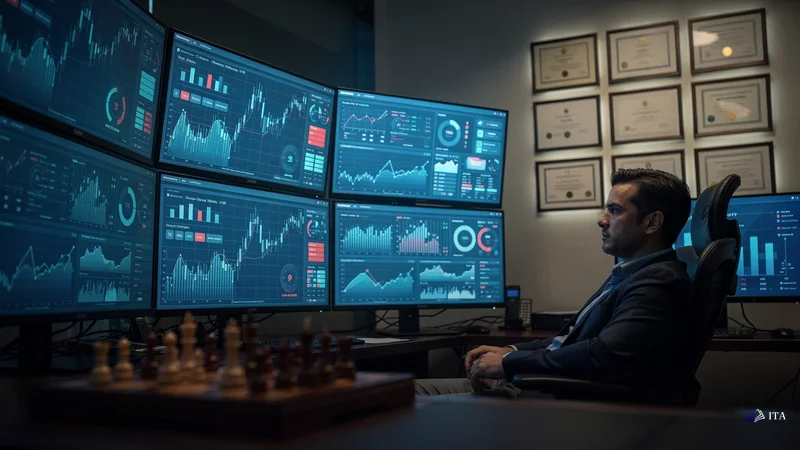
Conclusion: Systems Beat Willpower Every Time
Revenge trading isn't evidence that you're undisciplined. It's evidence that you're human, reacting the way a stressed nervous system is built to react. Trying to solve a hormonal response with a pep talk is why "just be more disciplined" fails as advice almost every time it's given.
What actually works is deciding, in advance and while calm, exactly what happens after a loss, then removing your own judgment from the moment it's least trustworthy. The cool-down, the two-loss stop, the smaller re-entry size, the written checklist, the next-day review: none of these are clever. They work precisely because they don't ask you to feel differently, only to act differently, on a schedule set before the losing trade ever happened.
Every funded trader will eventually sit in front of a loss that makes revenge trading feel like the obviously correct move. The traders who keep their accounts aren't the ones who never feel that pull. They're the ones who built a system strong enough to survive feeling it.
Ready to get funded?
50% off instant accounts with code 50CRYPTO.
Get Funded →Frequently Asked Questions
What is revenge trading and why does it happen after a funded account loss?
Revenge trading is the urge to immediately try to recoup a loss with a larger or faster trade instead of following your plan. It happens because a loss triggers a genuine stress response, cortisol rises and dopamine drops, that measurably impairs the same rational judgment you rely on to trade well.
How long should I stay away from the platform after a loss?
Treat any loss over roughly 1% of account equity as a trigger for a minimum 60-90 minute break with the platform closed. That's approximately how long it takes cortisol to begin normalising, and no strategy insight substitutes for that biological reset time.
What is the two-loss rule and how does it prevent revenge trading?
After two consecutive losing trades in a single session, stop trading for the rest of that day. Two losses in a row is exactly when the urge to chase a rescue trade peaks, so the rule removes the decision before it becomes tempting.
How should I review a loss so I actually learn from it?
Wait until the next day, once your stress response has settled, then sort the loss into one of three categories: a strategy failure, a risk-management failure, or a behavioural failure. Each needs a different fix, backtesting, a sizing change, or a protocol change, so treating them as the same problem rarely produces real improvement.
What should I do if I fully blow a funded account despite these safeguards?
Don't immediately buy another challenge to try to win it back, that's revenge trading at the account level. Take a deliberate one-to-two week reset, then return with tighter self-imposed limits than you had before, until the new account earns the same trust the old one had.
Key Takeaways
- Treat any loss over roughly 1% of account equity as an automatic trigger for a 60-90 minute break with your platform closed, not a suggestion.
- Apply a two-loss rule: after two consecutive losing trades in one session, stop trading until the next day.
- Re-enter at 25% of normal position size and calculate every lot size mathematically rather than intuitively.
- Complete a written pre-trade checklist, including an honest emotional-state rating, before every position.
- Review losses the next day, not the same day, and sort each one into a strategy, risk-management, or behavioural failure before deciding on a fix.
- Shift your identity from a trader who's supposed to win to a risk manager whose job is process adherence, a disciplined losing day beats an undisciplined winning one.
- If an account is fully breached, take a genuine one-to-two week reset before starting a new evaluation, and return with tighter limits than before.
Ready to get funded?
Instant accounts, simulated capital, rules published before you pay. 50% off with code 50CRYPTO.
Get Funded →