 ITA
ITARecency Bias Affecting Trade Decisions: How Recent Events Sabotage Decisions
Discover how recency bias impacts trading decisions, leading to poor position sizing and strategy abandonment. Learn practical strategies to overcome this.
Short answer
Discover how recency bias impacts trading decisions, leading to poor position sizing and strategy abandonment. Learn practical strategies to overcome this. In a prop firm context this still sits under simulated-capital rules: fees buy access to the evaluation or funded environment, not a deposit of trading capital.
Simulated capital: prop firm evaluation and funded stages discussed here typically run on simulated accounts. Challenge fees pay for access to that environment; they are not a deposit of trading capital. ITAfx accounts are simulated capital.


What is Recency Bias in Trading and How it Manifests
Recency bias in trading is the cognitive error of giving disproportionate weight to recent market events when making trading decisions. The OECD's review of investor behaviour identifies recency bias as one of the most common cognitive errors affecting portfolio decisions. In trading, recency bias doesn't just affect your confidence, it systematically dismantles your risk management.
When you overweight recent events, whether it's your last few trades or the market's last few days, you're making decisions based on noise, not signal. A 3-trade winning streak tells you nothing about your strategy's edge. A 5-trade losing streak doesn't mean your system is broken. Yet this is often exactly when traders abandon profitable strategies or dangerously increase position sizes.
The availability heuristic compounds this effect. Those recent trades aren't just weighted more heavily, they're more vivid, more emotionally charged, more available to your memory. A spectacular loss from last week feels more real than 50 profitable trades from last quarter. Your brain treats intensity as importance.
This creates what researchers call the hot-hand effect. After wins, you attribute success to skill and expect it to continue. After losses, you either chase recovery or become paralysed. Both responses ignore the fundamental truth of trading: outcomes are randomly distributed, even with a positive edge.
The Psychology Behind Recency Bias: Availability and Hot-Hand Effect
The psychology behind recency bias stems from two interconnected cognitive mechanisms: the availability heuristic and the hot-hand effect. When recency bias takes hold, four specific behaviours destroy trading accounts. First, inappropriate position sizing, increasing size after wins, desperately cutting size after losses. Second, strategy abandonment, ditching profitable systems after short-term drawdowns.
The numbers are brutal. Active traders influenced by recent price movements consistently underperform buy-and-hold investors, with research showing significant performance gaps. That's not a few basis points of slippage. That's the difference between compounding wealth and slowly bleeding capital.
Consider two traders, both using the same trend-following strategy. Trader A experiences five consecutive losses, a normal occurrence in any trend system. Overwhelmed by the recent pain, they abandon the strategy just before a major trend emerges. Trader B, reviewing 12 months of data showing positive expectancy, maintains position sizing through the drawdown and captures the trend. Same strategy, same market, completely different outcomes.
Or take the trader who just banked three winners. Feeling invincible, they double their typical position size. When the inevitable loss comes, and probability guarantees it will, it wipes out not just the recent gains but weeks of patient accumulation. They weren't wrong about their edge. They were wrong about what three trades mean. The image below illustrates how that recent-memory bias forms in the brain.

Measurable Impact: How Recency Bias Destroys Trading Performance
The interaction with other cognitive biases creates a particularly toxic cocktail. Recency bias feeds confirmation bias, you seek information that supports your recent experience. It amplifies loss aversion, recent losses feel twice as painful, making you either too conservative or desperately aggressive. It inflates overconfidence after wins and triggers anchoring to recent price levels that have no statistical significance.
Institutional traders have developed specific protocols to counter this. They evaluate strategies over minimum 6-month windows. They use systematic position sizing that cannot be manually overridden. They conduct performance attribution analysis to separate luck from skill. They implement structured review processes that weight all data equally, not just recent outcomes.
The most effective protocol is surprisingly simple: extend your analysis timeframe. Before changing anything about your trading, position size, strategy, or market selection, review at least 6-12 months of trades. Not the last week. Not the last month. The last 50-100 trades minimum.
Implement cooling-off periods. After any trade that generates strong emotion, whether a big win or painful loss, wait 24-48 hours before making strategy decisions. This isn't about calming down. It's about letting recent vividness fade to appropriate statistical weight. Below, a forensic-style review of the raw performance data drives that point home.
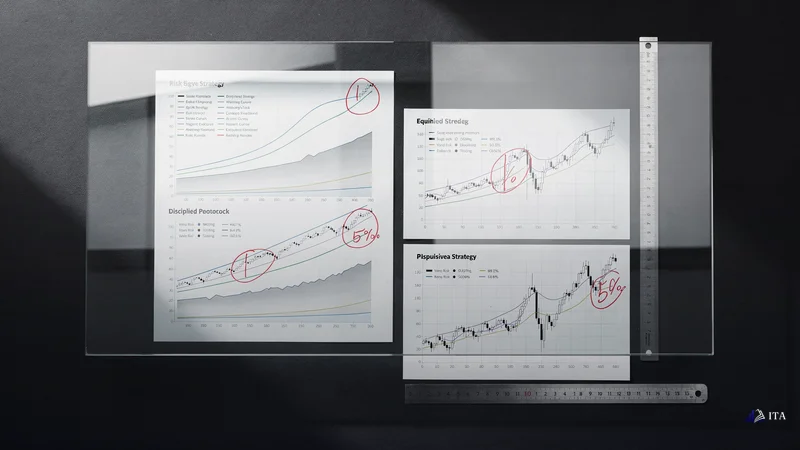
Real-World Scenarios: Recency Bias in Action
Real-world recency bias scenarios typically involve traders abandoning proven risk management after short winning or losing streaks. Adopt fixed position sizing rules based on account equity, not recent performance. If your risk per trade is 1% of account equity, it stays 1% whether you just won five trades or lost five trades.
Track rolling performance metrics that smooth out noise. Instead of looking at this week's P&L, track 20-trade moving averages. Instead of daily win rates, calculate 50-trade expectancy. These longer windows reveal true edge while filtering recent randomness.
Maintain a detailed trading journal, but review it systematically, not reactively. Schedule weekly reviews where you analyse all trades equally, not just the memorable ones. Weight every trade the same, whether it was yesterday or last month.
Schedule systematic strategy reviews at predetermined intervals, monthly or quarterly, not after losing streaks. If a strategy has positive expectancy over 100 trades, a 5-trade losing streak is meaningless noise. But recency bias makes it feel like system failure. Fixed position sizing, shown below, is what keeps that noise from changing your risk.

Interactions with Other Biases: A Complex Web
Recency bias interacts with confirmation bias, overconfidence bias, and loss aversion to create complex decision-making errors that compound trading losses. The uncomfortable truth is this: your last five trades contain almost no information about your edge. Your last fifty trades begin to hint at it. Your last hundred trades start to reveal it.
Every professional trader learns this lesson, usually expensively. The path to consistent profitability isn't about predicting the next move or perfecting entries. It's about making decisions based on statistically significant sample sizes, not emotionally significant recent events.
Your next trade doesn't know about your last five trades. The market doesn't track your personal winning or losing streaks. Probability doesn't change based on your recent P&L. The only thing that changes is your perception, and that's exactly what recency bias exploits.
The fix isn't psychological. It's mathematical. Build systems that force you to weight all data appropriately. Create protocols that prevent recent events from hijacking your decision-making. Because in trading, the most expensive decisions are often based on the smallest sample sizes. The web of interacting biases below shows why one blind spot rarely travels alone.

Institutional Strategies to Counter Recency Bias
Stop trading your last five trades. Start trading your edge. Below, that shift from reactive habits to engraved protocol.

Practical Protocols: Overcoming Recency Bias in Your Trading
Recency bias thrives on short-term memory and emotional intensity. The solution isn't willpower, it's systematic processes that force you to zoom out and see the complete picture. Here are six protocols that institutional traders use to neutralize this cognitive trap.
Extend Your Analysis Timeframe (6-12 Months)
Stop evaluating your strategy based on last week's results. Minimum viable data: 6 months or 100 trades, whichever comes first. This isn't arbitrary, it's the threshold where statistical patterns emerge from noise.
Open your trading journal right now. Count back 6 months. That's your real performance baseline, not yesterday's P&L.
Implement Cooling-Off Periods (24-48 Hours)
After any 3-trade streak (wins or losses), enforce a mandatory 24-hour trading pause. No analysis, no chart watching, no position adjustments. This breaks the neurological feedback loop that drives recency-based decisions.
The hardest part? Sitting out when you feel "hot." That's exactly when you need it most.
Adopt Fixed Position Sizing Rules
Your position size formula stays constant for minimum 30 days. No adjustments based on recent performance. If you risk 1% per trade, it stays 1% whether you're up 10% or down 5% this week.
Write your position sizing rules on paper. Tape it to your monitor. The visual reminder overrides emotional impulses.
Track Rolling Performance Metrics (20-50 Trades)
Forget daily P&L. Track 20-trade rolling windows instead. This sample size smooths out variance while remaining current. Update after every trade, but make decisions based on the full window, not the last 3 results.
Maintain a Detailed Trading Journal
Record pre-trade reasoning, not just results. When reviewing, you'll see that your "hot hand" was random variance, not skill improvement. The journal becomes your reality check against overconfidence bias after winning streaks.
Include: entry reasoning, market conditions, emotional state, position size rationale. Review weekly, not daily.
Schedule Systematic Strategy Reviews
Monthly strategy audits, not daily tinkering. Set a recurring calendar reminder. During review, analyze the full dataset, not recent highlights. If considering changes, implement them at month-end only, never mid-streak.
These protocols work because they replace emotional decision-making with systematic processes. Start with one, preferably the cooling-off period. Add others as they become habit. The goal isn't perfection; it's creating enough friction to prevent recency bias from hijacking your process-focused trading mindset.
Ready to test these protocols with funded account? At ITA, our instant funded accounts provide the perfect environment to implement disciplined trading systems. With up to $400K in simulated capital and performance-based payouts, you can focus on process over short-term results. Explore ITA's institutional approach.
Ready to get funded?
50% off instant accounts with code 50CRYPTO.
Get Funded →Frequently Asked Questions
How does recency bias differ from other trading biases like loss aversion and overconfidence?
Recency bias specifically overweights recent events when making decisions, while loss aversion makes losses feel twice as painful as gains, and overconfidence leads to excessive risk-taking after wins. Recency bias can trigger both other biases, recent losses activate loss aversion, recent wins fuel overconfidence. The key difference is recency bias distorts your data sample size, making you judge systems by the last few trades rather than long-term performance.
What are the most common ways recency bias shows up in day trading versus swing trading?
Day traders experience recency bias through rapid position sizing changes after winning or losing streaks, often doubling down after three quick wins or cutting size dramatically after losses. Swing traders typically abandon profitable strategies after short drawdowns or chase new setups based on last week's performance. Both suffer from the same core problem, making decisions based on recent noise rather than statistical significance.
How many trades should a trader review to reduce the impact of recency bias on strategy changes?
Experts recommend reviewing at least 6-12 months of trades or a minimum of 50-100 trades before making any strategy changes. This sample size begins to reveal true edge while filtering out random variance. Never judge a trading system by the last week's results, that's exactly what recency bias exploits. Professional traders use rolling 50-trade performance windows to smooth out noise.
Can algorithmic trading fully eliminate recency bias in trading decisions?
Algorithmic trading can eliminate recency bias from execution and position sizing, but traders often introduce it when adjusting system parameters after recent performance. The bias shifts from trade-by-trade decisions to system modification decisions. Successful algo traders implement structured review processes with minimum time intervals between parameter changes, typically 30-90 days regardless of recent results.
What practical protocols most effectively reduce recency bias in trading?
The most effective protocols include: 24-48 hour cooling-off periods after emotional trades, fixed position sizing rules that cannot be changed for 30 days, tracking 20-trade rolling performance instead of daily P&L, and scheduled monthly strategy reviews rather than reactive changes. At ITA, our institutional methodology emphasizes process consistency over recent outcomes, helping traders maintain discipline through inevitable variance.
Key Takeaways
- Evaluate your trading strategy over minimum 6-12 months or 100 trades, never base decisions on last week's results.
- Implement mandatory 24-48 hour cooling-off periods after any 3-trade winning or losing streak to break emotional decision loops.
- Use fixed position sizing rules based on account equity that stay constant for 30 days, regardless of recent performance.
- Track 20-trade rolling performance windows instead of daily P&L to smooth out variance while staying current with your edge.
- Maintain detailed trading journals with pre-trade reasoning and conduct systematic weekly reviews, not reactive daily analysis.
- Schedule monthly strategy audits at predetermined intervals, never make system changes mid-streak based on recent emotions.
- Remember that your last five trades contain almost no statistical information about your edge or future performance.
Ready to get funded?
Instant accounts, simulated capital, rules published before you pay. 50% off with code 50CRYPTO.
Get Funded →