 ITA
ITARebuilding After Prop Firm Evaluation Failure: A 4-Week Recovery Guide
Failed your prop firm evaluation? Discover a proven 4-week recovery framework. Turn setbacks into a competitive advantage with structured analysis.
Short answer
Failed your prop firm evaluation? Discover a proven 4-week recovery framework. Turn setbacks into a competitive advantage with structured analysis. In a prop firm context this still sits under simulated-capital rules: fees buy access to the evaluation or funded environment, not a deposit of trading capital.
Simulated capital: prop firm evaluation and funded stages discussed here typically run on simulated accounts. Challenge fees pay for access to that environment; they are not a deposit of trading capital. ITAfx accounts are simulated capital.
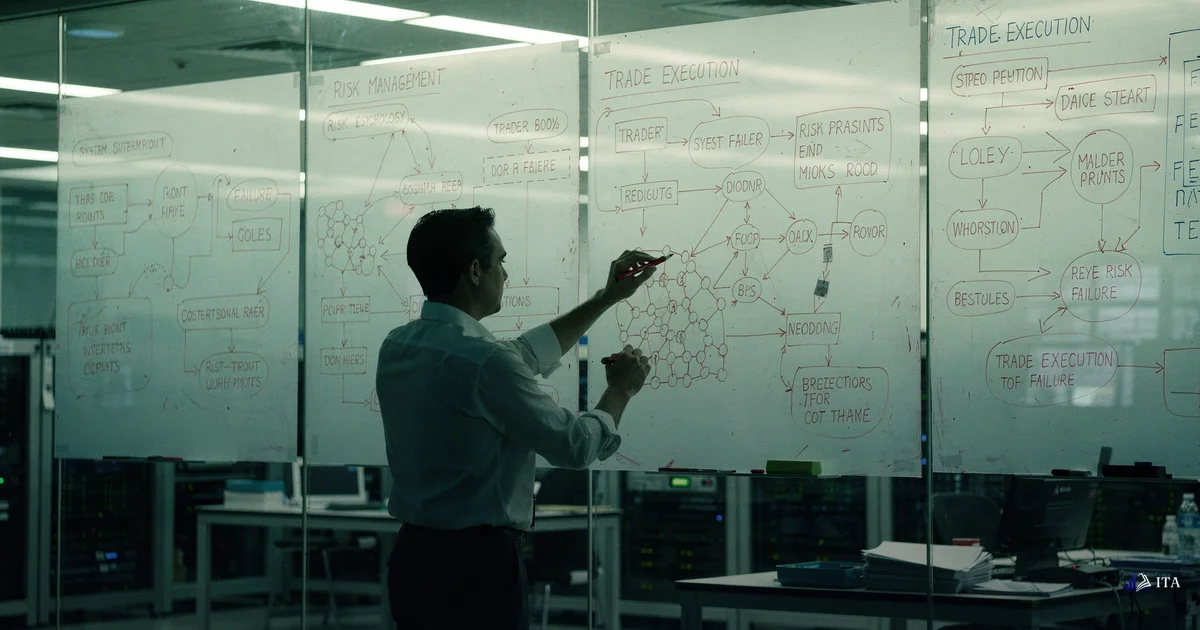

Why Most Prop Firm Evaluations Fail (It's Not Your Strategy)
You've just blown your third evaluation account. The email arrives at 2:47 AM, account breached, evaluation terminated. Your phone screen glows in the darkness as you stare at the drawdown chart, that brutal red line plunging through the maximum loss threshold. Again.
You know your strategy works. You've backtested it across 18 months of data. You've forward-tested it profitably on demo. Your risk management spreadsheet is colour-coded and comprehensive. Yet somehow, when it matters, when there's a funded account on the line, everything falls apart.
The industry data is sobering. According to What to Do After Failing a Prop Firm Challenge, most traders fail their first prop evaluation. But the failure rarely stems from technical incompetence. Your strategy isn't broken. Your analysis isn't flawed. The problem runs deeper.
Prop firm evaluations compress months of psychological pressure into weeks. They create what performance psychologists call "evaluation anxiety", a state where the very act of being assessed degrades the skills being assessed. Think about it: when did you last revenge-trade on demo? When did you last move your stop loss on a backtest? Never. Because those environments lack the psychological weight that makes prop evaluations so uniquely challenging.
The hidden cost compounds this pressure. Most traders enter evaluations with what we call "small account psychology", the mindset formed by years of trading $500 accounts where every loss threatens account survival. Even when the evaluation provides $100,000 in simulated capital, your brain still operates from scarcity. You overtrade to "make the most" of the opportunity. You cut winners early because profit feels fragile. You hold losers because admitting defeat feels final.
This psychological mismatch, between the capital you're given and the mindset you bring, creates a perfect storm. Psychology of Prop Firm Challenge Failure identifies the primary culprits: overtrading, revenge trading, and rule-breaking. Notice what's missing? Strategy failure. Technical incompetence. Market analysis errors. The evaluation doesn't test your trading ability, it tests your ability to trade under evaluation.
Week 1: The Analysis Phase (Days 1-7)
The analysis phase requires a systematic review of every failed trade within 24-48 hours of challenge completion. Your instinct screams to jump back in immediately, to "get back on the horse" whilst the pain is fresh. This instinct is precisely wrong, as neuroscience shows emotional decision-making peaks immediately after losses.
Emotional arousal literally impairs analytical thinking. The amygdala hijack that follows failure floods your system with cortisol and adrenaline, making objective analysis impossible. You need 48 hours for these chemicals to metabolise. Use this time for physical activity, sleep, anything except trading or analysis. The evaluation data isn't going anywhere.
Once the emotional fog clears, begin the four-dimension post-mortem. This isn't a casual review, it's forensic analysis. Open every trade from the failed evaluation. For each position, document four elements:
Risk Management: What was the position size? Where was the stop? Did you follow your pre-trade sizing rules? Most revealing: did position sizes increase after losses? The data often shows progressive position inflation, 0.5 lots becoming 0.8, then 1.2, then 2.0 as desperation mounts.
Strategy Execution: Was this an A+ setup according to your rules? Or was it a B- setup you convinced yourself was good enough? Document the setup quality score you would have given it in calm conditions versus what you told yourself in the moment.
Discipline Markers: Did you follow your entry checklist? Did you take the exit signal when it appeared? Count the "almosts", the trades you nearly took but didn't, and the exits you nearly took but overrode. These reveal your discipline under pressure.
Environmental Factors: What time did you trade? How many hours of sleep did you have? Were you trading during high-impact news? What else was happening in your life? Performance doesn't exist in a vacuum.
The root cause rarely matches your initial assumption. You think you failed because you "got unlucky" or "the market was choppy." The data reveals you traded 47 times in 3 days when your plan called for 2-3 trades daily. You increased position size after every loss. You traded through Non-Farm Payrolls with full size. You abandoned your trading hours to chase the Asian session at 3 AM. Our guide on Comeback Story covers this in more depth.
This isn't about self-flagellation. It's about pattern recognition. The same breaks in discipline appear in evaluation after evaluation. Once you see them clearly, with data, not emotion, you can address them systematically.

Week 2: Controlled Practice (Days 8-14)
Week 2 marks the shift from analysis to reconstruction. Most traders focus on results when they should focus on process. You don't need profitable trades yet. You need clean execution.
Set up your demo account to mirror evaluation conditions exactly. Same starting balance. Same leverage. Same instruments. But you're not measuring profit. You're measuring process adherence.
Create three process metrics that matter more than P&L:
Setup Quality Score: Rate each trade setup from A+ to C- before entry. Only A+ setups count as successful execution, regardless of outcome. An A+ setup that loses money scores higher than a C+ setup that profits. This reverses your brain's natural tendency to judge quality by outcome.
Rule Adherence Rate: Create a binary checklist, followed rules or broke rules. No partial credit. Track this as a percentage daily. Your target is 90% or higher. One rule break in ten trades means you're not ready.
Emotional Neutrality Rating: After each trade, rate your emotional state from 1-10, where 5 is completely neutral. Scores of 3 or below indicate fear. Scores of 7 or above indicate greed or euphoria. You want boring 4-6 ratings. Excitement is the enemy.
The A+ setup discipline transforms your trading. Most traders take 10-15 trades daily during evaluations, chasing every minor move. A+ discipline limits you to 1-3 exceptional setups. How To Pass Prop Firm Evaluations confirms this approach, elite performers wait for premium setups rather than manufacturing mediocre ones.
Confluence of your three best signals, occurring at a major level, with clear risk definition, during your optimal trading hours, with no high-impact news within 60 minutes. Everything else is noise.
Week 2 isn't about making money. It's about proving you can follow a process under simulated evaluation conditions. If you can't maintain 90% rule adherence on demo, you're not ready for another funded evaluation. The market doesn't care about your timeline.
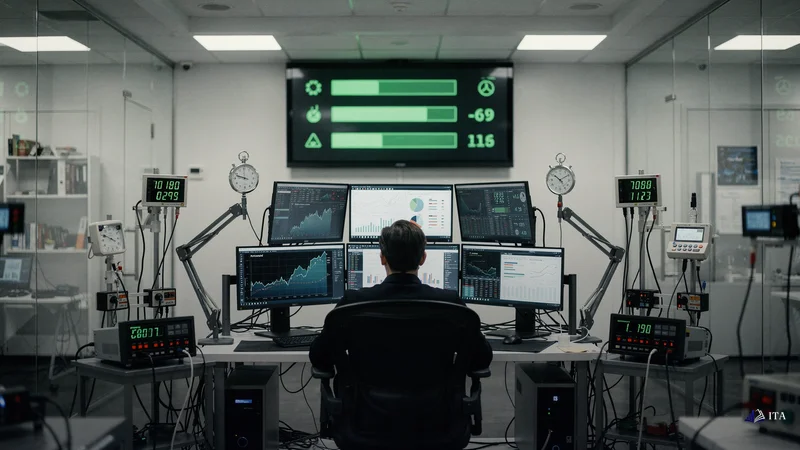
Week 3: System Reinforcement (Days 15-21)
System reinforcement transforms trading rules into automatic responses through deliberate practice and psychological conditioning. Process adherence isn't enough, Week 3 builds the psychological infrastructure that makes good decisions automatic under pressure through implementation intentions rather than willpower.
Implementation intentions follow a simple format: "If X happens, then you will Y." But the power lies in specificity. Not "If you feel emotional, you'll take a break." Instead: "If you feel your heart rate increase after a loss, then you will close all charts and walk for exactly 10 minutes."
Create implementation intentions for your five most common failure points:
Revenge Trading: "If you lose 1% in a day, then you will close the platform and not reopen until tomorrow's session."
Chasing Entries: "If price moves 20 pips from your ideal entry, then you will remove the pair from your watchlist for that session."
Moving Stops: "If you feel tempted to widen your stop, then you will close 50% of the position at market immediately."
Overtrading: "If you've taken 3 trades in a session, then you will switch to replay mode for education only."
Size Inflation: "If you're calculating position size above your standard, then you will halve whatever number you calculated."
These aren't suggestions, they're pre-committed responses. The decision is made in advance, removing in-the-moment discretion. You're programming your future self to act correctly when current self is impaired by emotion.
The pre-trade checklist becomes your external brain. Not a mental checklist, a physical document you complete for every trade. Include objective criteria: "Major support/resistance within 10 pips? News in next 60 minutes? Setup quality score A+?" If any answer is no, the trade doesn't happen. The checklist doesn't care about your opinion.
Real-time journaling revolutionises your self-awareness. Not end-of-day summaries, live documentation. Before entry: "Taking EUR/USD long. Feeling confident but noting slight FOMO as price approaches resistance." After exit: "Closed at target. Noticed urge to move target higher but followed plan." This creates a real-time emotional map of your trading psychology.
Week 3 proves you can not only follow rules but enforce them automatically. Your implementation intentions fire without conscious thought. Your checklist becomes as natural as checking mirrors while driving. Your journal captures patterns before they become problems.
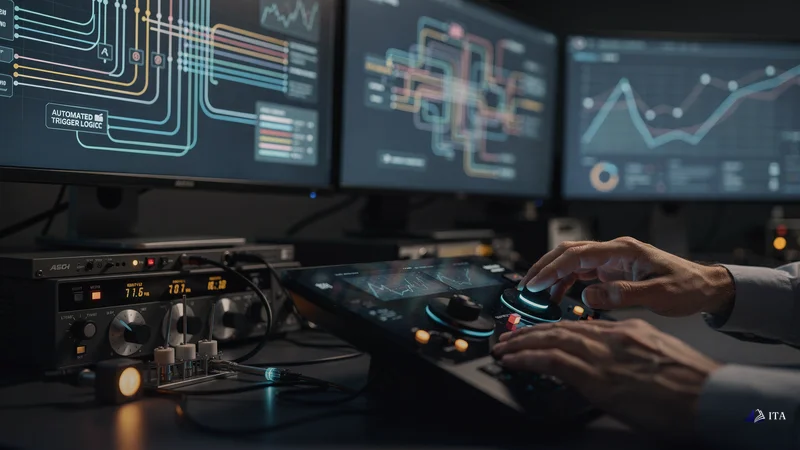
Week 4: Re-Entry Preparation (Days 22-28)
Re-entry preparation requires objective benchmarks that measure genuine readiness, not emotional confidence. Most traders return to funded evaluations based on feelings: "we feel ready," "we've learned our lesson," "This time will be different." Feelings are not readiness criteria.
Readiness Criterion 1: Ten consecutive demo sessions with 90%+ rule adherence. Not nine good sessions and one breakdown. Ten perfect executions. This proves consistency under evaluation-like conditions.
Readiness Criterion 2: Average emotional neutrality rating between 4-6 across all trades. You're not excited about winners or devastated by losers. Trading has become boring, a positive sign.
Readiness Criterion 3: A+ setups only for five consecutive sessions. You've proven you can wait for premium opportunities rather than forcing marginal trades.
Readiness Criterion 4: Implementation intentions triggered successfully 100% of the time. When the "if" occurred, the "then" followed automatically. Your safeguards work.
Readiness Criterion 5: Complete post-mortem documentation from the failed evaluation, plus written system improvements implemented during recovery. You can articulate exactly what broke and how you've fixed it.
If you meet all five criteria, you're ready. If not, extend Week 3 activities until you do. The market offers infinite evaluations, rushing back prematurely wastes money and reinforces failure patterns.
Conservative sizing becomes your secret weapon. Start the new evaluation at 50% of your normal position size. Yes, this means slower progress toward profit targets. It also means dramatically reduced psychological pressure. You can always increase size after building confidence. You can't recover from another blown evaluation as easily.
Activate your support network before re-entering. Tell three people about your new evaluation: a trading peer who understands the pressure, a non-trading friend who provides perspective, and ideally a mentor or coach who's passed multiple evaluations. Daily check-ins create external accountability when internal discipline wavers.
The re-entry mindset shifts from "we need to pass this time" to "we're going to execute our proven process and let results follow." You're not trying to prove yourself. You're implementing a system you've already proven works.

Advanced Recovery Techniques for Sustained Success
Beyond the 4-week protocol, three advanced techniques separate traders who fail once from traders who build careers:
Reframing failure as incomplete learning changes everything. Each blown evaluation provides data worth thousands of dollars, if you extract it properly. The trader who fails five evaluations and extracts maximum learning from each outperforms the trader who passes on luck and learns nothing.
Think of evaluations as expensive education with immediate feedback. A university course costs thousands and provides theoretical knowledge. A failed evaluation costs hundreds and provides visceral, personalised performance data. Which teaches more about your actual trading behaviour under pressure?
Pressure inoculation training prepares you for evaluation stress by creating it deliberately. Trade demo with artificial constraints: a timer counting down, someone watching over your shoulder, or a commitment to donate $100 to a cause you dislike for every rule break. This manufactured pressure reveals breaking points before real evaluations.
Start with mild pressure and increase gradually. Week 1: trade with a 60-minute countdown timer. Week 2: have someone audit your trades live. Week 3: commit funded account to charity for rule breaks. By the time you face evaluation pressure, your system has already survived worse.
Market condition adaptation recognises that different environments require different approaches. The strategy that thrives in trending markets might hemorrhage in ranges. Document your performance across market conditions: trending, ranging, volatile, quiet. Most evaluation failures coincide with traders forcing strategies in unsuitable conditions.
Create condition-specific rules: "In ranging markets, we trade only from extremes with 2:1 minimum reward." "During news volatility, we reduce size by 50% or stand aside." "In trending conditions, we hold runners with trailing stops." Your evaluation survival depends on recognising and adapting to conditions, not forcing one approach universally.
The Institutional Trading Academy (ITA) Approach to Recovery
At ITAfx (Institutional Trading Academy), the approach to evaluation failure differs fundamentally from industry norms. Where others see failure as weakness, ITA recognises it as incomplete system development.
Process documentation forms the foundation. Every decision matters, not just entries and exits, but the thinking behind them. ITA's methodology emphasises creating a decision audit trail. Before risking evaluation capital, you must prove consistent process execution. This isn't about perfection, it's about transparency and improvement.
Risk-first thinking reverses typical trader psychology. Instead of asking "How much can I make?" ITA traders ask "How much can I lose and survive?" This shift, from optimising for profit to optimising for survival, transforms evaluation performance. The maths is simple: you can't profit from a blown account.
Emotional regulation through systematic protocols replaces "mental toughness" rhetoric. ITA provides structured frameworks: pre-trade breathing protocols, position-sizing algorithms that remove discretion, and mandatory cool-down periods after losses. These aren't suggestions, they're system components as essential as your strategy.
The path from failure to funded isn't linear. It's iterative, systematic, and data-driven. Each evaluation attempt, pass or fail, generates performance data that refines your approach. ITA's framework ensures this refinement happens systematically, not haphazardly.
Ready to transform your evaluation approach? Visit ITAfx to explore how institutional methodology can revolutionise your trading journey. The difference isn't just capital, it's the systematic approach to developing traders who can handle it.
Remember: evaluation failure isn't verdict, it's data. The traders who succeed long-term aren't those who never fail. They're those who transform each failure into systematic improvement. Your next evaluation isn't just another attempt. With proper recovery, it's your graduation from reactive trading to systematic execution.
The market will test you again. But this time, you'll have more than hope, you'll have a proven recovery system that turns setbacks into setups for success.
Ready to get funded?
50% off instant accounts with code 50CRYPTO.
Get Funded →Frequently Asked Questions
Why do most traders fail prop firm evaluations on their first attempt?
Most traders fail because prop firm evaluations test psychological discipline under pressure, not trading strategy. The evaluation compresses months of psychological pressure into weeks, creating evaluation anxiety that degrades performance. Overtrading, revenge trading, and rule-breaking account for the majority of failures rather than technical incompetence.
How long should I wait before starting another prop firm challenge after failing?
Wait 24-48 hours before analyzing your failed evaluation to allow emotional arousal to subside. The complete recovery process takes 3-4 weeks: Week 1 for analysis, Week 2 for demo practice, Week 3 for system reinforcement, and Week 4 for re-entry preparation with measurable readiness criteria.
What is a good post-mortem framework for analyzing a failed prop firm evaluation?
Use a four-dimension analysis: risk management (position sizing, stops, daily limits), strategy execution (setup quality scores), discipline markers (rule adherence rate), and environmental factors (sleep, news, trading hours). Document every trade forensically rather than relying on memory or emotion to identify patterns.
How can I rebuild my confidence after blowing multiple prop firm accounts?
Focus on process metrics rather than profit during recovery. Track setup quality scores, rule adherence rates, and emotional neutrality ratings on demo accounts. Achieve ten consecutive sessions with 90% rule adherence before attempting another funded evaluation. Confidence rebuilds through proven consistency, not positive thinking.
What specific psychological techniques help prevent revenge trading after losses?
Use implementation intentions: pre-committed responses like 'If we lose 1% in a day, then we will close the platform until tomorrow's session.' Create mandatory cool-down periods, real-time journaling of emotions, and physical checklists that remove discretionary decisions when emotional arousal peaks after losses.
Key Takeaways
- Wait 48 hours after evaluation failure before analysis, emotional arousal impairs objective decision-making and pattern recognition.
- Document four dimensions per failed trade: risk management, strategy execution, discipline markers, and environmental factors for systematic improvement.
- Measure process adherence over profit during recovery, track setup quality scores, rule adherence rates, and emotional neutrality ratings.
- Create implementation intentions for failure points: 'If I lose 1% in a day, then I close platform until tomorrow's session.'
- Meet five readiness criteria before re-entry: ten consecutive 90%+ rule adherence sessions, emotional neutrality 4-6, A+ setups only.
- Start new evaluations at 50% position size to reduce psychological pressure whilst building confidence through conservative execution.
- Use pressure inoculation training, trade demo with artificial constraints like countdown timers or real-money charity commitments for rule breaks.
Ready to get funded?
Instant accounts, simulated capital, rules published before you pay. 50% off with code 50CRYPTO.
Get Funded →