 ITA
ITAProp Firm Challenge Mental Preparation: The Psychology That Separates Winners
Master the mental game of prop firm challenges. Learn evidence-based psychological strategies, risk management protocols, and pre-trade routines that help.
Short answer
Mental preparation for a prop firm challenge is process control: risk per trade, max daily loss, and when to stop. You are trading simulated capital under a pass/fail contract, not depositing trading capital.
Simulated capital: prop firm evaluation and funded stages discussed here typically run on simulated accounts. Challenge fees pay for access to that environment; they are not a deposit of trading capital. ITAfx accounts are simulated capital.


The Psychological Trap That Destroys Most Challenges
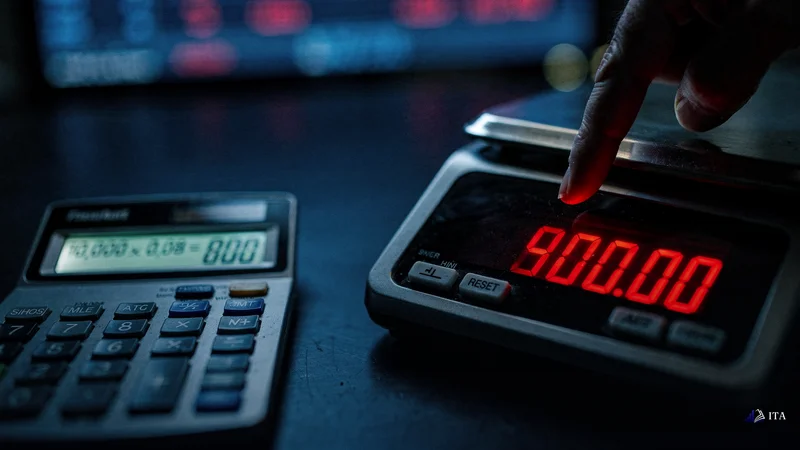
You see that profit target, maybe it's 8% or 10% of the account. Your brain immediately calculates: "I need to make $800 on this $10,000 account." From that moment, you're psychologically compromised. Every trade becomes about the gap between where you are and where you need to be. Every small loss feels catastrophic. Every small win feels insufficient.
Kahneman and Tversky's prospect theory proved that losses feel approximately twice as painful as equivalent gains feel good. In a prop firm challenge, this coefficient gets amplified. Why? Because every loss brings you closer to two failures: missing the profit target AND hitting the drawdown limit.
Your brain processes this as a double threat. The amygdala doesn't understand percentages, it understands survival. When you're down 2% on day three of a challenge, your primitive brain interprets this exactly like a predator stalking you. Heart rate spikes. Pupils dilate. Rational thought evaporates. Our guide on Prop Firm Trader Interview Preparation covers this in more depth.
But here's what changes everything: you can pre-engineer your psychology before the challenge starts.
The traders who consistently pass challenges don't have superior emotional control. They have superior preparation protocols. They've converted every percentage rule into absolute dollar amounts before they begin. They've rehearsed their drawdown response before they experience it. Most importantly, they've installed circuit breakers that make emotional trading physically impossible.
Pre-Challenge Mental Architecture: Building Psychological Resilience
Psychological resilience in prop firm challenges requires converting abstract rules into concrete mental frameworks before trading begins. Rule internalisation means thinking "$500 is my absolute limit on this $10,000 account" rather than "5% maximum drawdown" to create actionable psychological boundaries. Then stress-test your psychology on a demo account, but here's the twist.
Trade it exactly like your funded challenge for two weeks. Same times. Same pairs. Same risk parameters. When you hit a 2% drawdown in demo, notice everything: your breathing changes, your shoulders tense, you start calculating how many trades you need to recover. This is inoculation therapy. You're training your nervous system to recognise these sensations as familiar, not threatening.
The pre-market routine is your psychological armour. Not meditation or affirmations, practical steps that prevent impulsive decisions:
- Calculate today's maximum dollar loss (your personal cap, not the firm's)
- Set physical alerts at 50% and 75% of that number
- Write down your only two acceptable trade setups for the day
- Pre-set all position sizes, remove the decision from the moment
- Set a hard stop time ("I will close all positions at 3 PM regardless")
This isn't about being calm. It's about making emotional trading impossible through environmental design.
The Daily Mental Framework: Pre and Post-Trade Protocols
The daily mental framework becomes your operating system.
Every morning, before markets open, you run the checklist. Not in your head, on paper or screen. Physical documentation engages different neural pathways than mental review. You're not just thinking about risk management; you're physically interacting with it.
Post-market review isn't about profit and loss. It's about process adherence. Did you follow your pre-set position sizes? Did you respect your personal daily cap? Did you stop at your predetermined time? Score yourself on process, not profits. This rewires your dopamine response from outcome-based to process-based rewards.
The drawdown response plan is pre-scripted behaviour. At 1% daily loss: reduce position size by half. At 1.5% daily loss: switch to observation mode for 30 minutes. At 2% daily loss: close all positions and shut down for the day. These aren't suggestions, they're non-negotiable protocols you've committed to before emotional hijacking occurs.
When the intraday meltdown begins, you need emergency protocols.

Handling Intraday Meltdowns: The Emergency Protocol
Intraday meltdowns follow predictable psychological patterns that destroy prop firm accounts when traders lack emergency protocols. The critical moment occurs when you're down 0.8% and your brain whispers "this one trade could erase the loss"the psychological fork where challenges are won or lost. The emergency protocol:
- Physical intervention first, stand up, walk away from the screen for 60 seconds
- State out loud: "I am in drawdown response mode"
- Check your pre-written rules (they must be visible, not remembered)
- If taking the trade, use 50% of normal position size
- If stopped out, mandatory 24-hour trading pause
This isn't weakness. This is pre-programmed damage control. Military training emphasizes executing drilled responses under pressure rather than relying on emotional control.
Risk management becomes psychological scaffolding. Position sizing for mental stability means never risking an amount that changes your breathing. If 1% makes your chest tight, your real risk tolerance is 0.5%. The funded traders who withdraw consistently often risk just 0.25-0.5% per trade during evaluations. Not because rules require it, because their psychology survives it.
Risk Management as Psychological Support
Risk management functions as psychological support when personal limits trigger before firm limits create account termination fear. Setting your daily loss cap at 2-2.5% when the firm allows 5% daily drawdown creates a psychological buffer that prevents the terror of approaching elimination thresholds.
The consecutive loss protocol: after two straight losses, position size drops to 50%. After three straight losses, mandatory pause until the next day. This isn't about the money, it's about preventing the spiral where each loss makes the next loss more likely.
The neuroscience reveals why this works.
Under stress, your amygdala triggers a cascade: cortisol floods your system, your prefrontal cortex dims, your time horizon shrinks to seconds. You literally cannot think long-term when your brain believes you're under threat.
But pre-set rules bypass this system. When your position sizing is predetermined, when your daily cap is non-negotiable, when your protocols are written down, you're not making decisions under stress. You're executing decisions you made when your prefrontal cortex was fully online.

The Neuroscience of Trading Discipline Under Pressure
Trading discipline under pressure deteriorates when cognitive load theory principles are ignored during simultaneous decision-making processes. Processing price action, risk calculations, and emotional responses concurrently reduces decision quality, which pre-deciding position sizes and response protocols can prevent by freeing cognitive resources for market analysis.
The dopamine trap is particularly vicious in funded challenges. Wins trigger dopamine, but because you're chasing a target, the dopamine hit diminishes with each profit. You need bigger trades to feel the same reward. This is why traders increase position size after winning streaks, not greed, but neurochemical tolerance.
Advanced preparation uses visualization, but not how you think.
Don't visualise success. Visualise drawdown survival. Spend five minutes daily imagining: you're down 3% on day seven. See the P&L. Feel the chest tightness. Then visualise yourself executing your protocol: checking your rules, reducing size, maintaining process.
This is stress inoculation. When real drawdown arrives, your brain recognises the pattern. Instead of panic (novel threat), you get recognition (familiar challenge). The physiological response dampens because you've rehearsed this exact scenario.

Advanced Mental Preparation: Visualization and Scenario Planning
The worst-case scenario plan must be written, specific, and rehearsed. If you blow the challenge: How long before you retry? What will you review? How will you fund it? Remove uncertainty. Uncertainty amplifies fear.
Success scenario planning prevents overconfidence. You hit 5% profit in week one. The temptation: increase size, accelerate toward target. The protocol: maintain exact same risk, extend timeline. Early success is statistically more dangerous than early drawdown because it triggers overconfidence bias.
At ITAfx, we see this pattern constantly. Traders who pass instant account aren't calmer, they're better prepared. They treat the mental game like the technical game: systematic, documented, rehearsed.
Your brain will betray you under drawdown. Accept this. Engineer around it. The solution isn't emotional control, it's environmental design that makes emotional trading impossible.
Ready to test your psychological preparation? Start with an ITAfx instant funded account, where your biggest challenge isn't the market, but the six inches between your ears.
Ready to get funded?
50% off instant accounts with code 50CRYPTO.
Get Funded →Frequently Asked Questions
What specific psychological biases cause traders to fail prop firm challenges?
Loss aversion and the disposition effect are the primary culprits. According to Kahneman and Tversky's prospect theory, losses feel twice as painful as equivalent gains, causing traders to hold losing positions too long and cut winners too early. Under prop firm pressure, this bias amplifies because every loss threatens both the profit target and drawdown limit simultaneously.
How should I mentally prepare in the week before starting a prop firm challenge?
Convert all percentage rules into absolute dollar amounts and write them down. Practice your drawdown response protocol on a demo account using identical risk parameters. Rehearse worst-case scenarios through visualisation, imagine being down 3% and executing your emergency protocol. This stress inoculation trains your nervous system to recognise drawdown as familiar rather than threatening.
What does a good pre-market mental routine look like for a prop firm evaluation?
Calculate your personal daily loss cap in dollars, set alerts at 50% and 75% of that limit, write down your only two acceptable trade setups, pre-set all position sizes, and establish a hard stop time. This removes emotional decision-making from trading by making all critical choices when your prefrontal cortex is fully online.
How can I handle drawdown psychologically during a prop firm challenge without revenge trading?
Use the emergency protocol: stand up and walk away for 60 seconds, state aloud 'I am in drawdown response mode,' check your pre-written rules, reduce position size by 50% if continuing, and implement a mandatory 24-hour pause after being stopped out. This bypasses emotional hijacking through pre-programmed responses.
What risk management rules best support mental stability under prop firm drawdown limits?
Risk only 0.25-0.5% per trade and set your personal daily cap at 2-2.5% when firms allow 5% maximum. After two consecutive losses, reduce position size by half. After three losses, stop trading until the next day. These buffers prevent the psychological terror of approaching elimination thresholds.
Key Takeaways
- Set personal daily loss limits at 2-2.5% when firms allow 5% to create psychological buffer zones before elimination fear triggers.
- Pre-calculate all position sizes and daily caps before markets open to remove emotional decision-making from trading pressure.
- Use the emergency protocol: stand up, walk away for 60 seconds, state 'drawdown response mode' when losses exceed 0.8% daily.
- Practice stress inoculation by trading demo accounts exactly like funded challenges for two weeks to familiarise your nervous system.
- Implement consecutive loss protocol: reduce position size by 50% after two losses, mandatory pause after three straight losses.
- Convert all percentage rules into absolute dollar amounts before trading begins to create concrete psychological boundaries instead of abstract limits.
- Visualise drawdown survival scenarios daily for five minutes rather than success to build recognition patterns for real stress situations.
Start Your Trading Evaluation
Simulated funded accounts up to $400K. Up to 95% profit split.
Get Funded