
Position Sizing Calculator for Funded Accounts: Master Risk in 2026
Maximize funded account longevity with precision position sizing. Learn to calculate risk per trade and protect capital with our comprehensive 2026 guide.


The Critical Role of Position Sizing in Funded Accounts
Ask any retail trader about position sizing and you'll hear the same formula: risk 1-2% per trade, calculate your lot size based on stop loss distance, and execute. It's in every trading book, every YouTube tutorial, every beginner's guide. And it's precisely why funded accounts get breached.
The data tells a different story. Among funded traders who maintain their accounts beyond six months, the vast majority use a fundamentally different approach to position sizing. Not a variation of the retail method — a complete inversion of it.
They start where retail traders end. Instead of asking "how much should I risk on this trade?", they ask "how much can I lose today without breaching my daily drawdown limit?" The difference isn't semantic. It's structural.
Funded accounts operate under two inflexible constraints: a maximum total drawdown (typically 6%) and a daily loss limit (typically 3%). Breach either one, and the account is terminated. No appeals, no second chances. This reality transforms position sizing from a preference into a survival mechanism.
The direct link between sizing and drawdown limits becomes clear when you examine breach data. Among traders who lose their funded accounts, most hit the daily loss limit before ever approaching the maximum drawdown. They sized their positions for individual trades while the evaluation system judged them on daily performance.
Understanding the Core Concepts: Risk Per Trade and Account Balance
This brings us to the first misconception about funded account position sizing: the sacred 1% or 2% rule. In retail trading, risking 1-2% per trade provides a buffer against consecutive losses. The math is straightforward — you can survive 50-100 losing trades before account depletion. But funded accounts don't offer 50 chances. With a 3% daily loss limit, you have exactly three 1% losses before breach. Factor in spread, slippage, and the reality that losing trades often exceed planned risk, and your margin for error shrinks to perhaps two trades. The 1% rule, designed for account longevity, paradoxically accelerates funded account failure. The second critical decision involves which balance to use for calculations. Retail wisdom says to use current account equity, if you've grown a $100,000 account to $110,000, calculate position size from $110,000. Funded traders who survive do the opposite. They calculate from the initial balance, treating profits as a buffer rather than additional risk capacity. This conservatism seems overcautious until you understand that drawdown limits are also calculated from initial balance. A $3,000 daily loss limit on a $100,000 account remains $3,000 whether your equity sits at $90,000 or $110,000.
Step-by-Step: How to Calculate Position Size Manually
The mechanical process of position sizing starts with stop loss determination. Most traders set stops based on technical levels, below support, above resistance, beyond a recent swing point. This approach works for discretionary trading but creates a critical flaw in funded accounts: variable position sizes that don't account for daily risk limits.
Successful funded traders invert this process. They first determine maximum position size based on daily drawdown limits, then work backwards to stop placement. If your daily limit is $3,000 and you plan three trades, each position must risk less than $1,000, regardless of where technical analysis suggests placing stops.
Calculating pip value follows standard formulas, but with heightened precision. For USD-quoted pairs like EUR/USD, a standard lot equals $10 per pip. A mini lot equals $1 per pip. The position size formula becomes: lots = (dollar risk) ÷ (stop distance in pips × pip value). But here's where funded traders diverge: they calculate dollar risk from daily limits, not per-trade preferences. Our guide on Position Sizing Calculator Forex covers this in more depth.
Consider this practical example. A trader with a $200,000 funded account faces a 3% daily loss limit — $6,000. Planning to take four trades, they allocate $1,500 maximum risk per position. Seeing a EUR/USD setup with a technical stop 30 pips away, they calculate: $1,500 ÷ (30 pips × $10) = 5 lots. But if the technical stop sits 60 pips away, the math yields 2.5 lots. The stop distance changed, but the dollar risk remained fixed. This is backwards from retail logic, where position size adjusts to maintain percentage risk regardless of stop distance.

Leveraging a Position Sizing Calculator for Accuracy and Speed
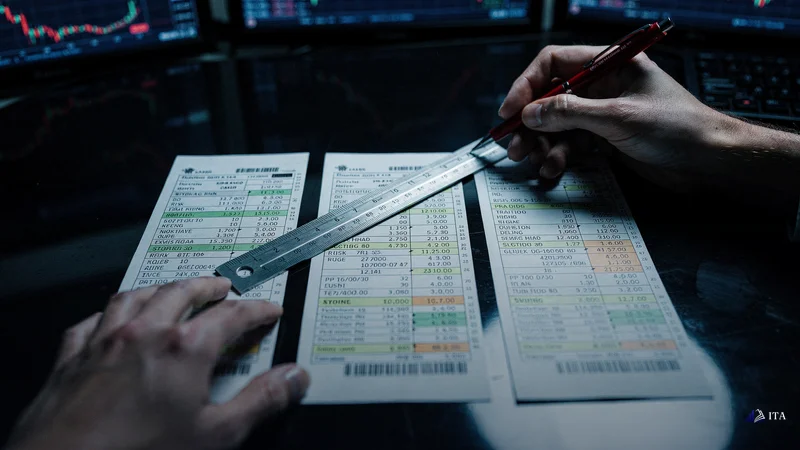
Position sizing calculators designed for funded accounts automatically incorporate daily loss limits, track cumulative exposure, and prevent boundary breaches that manual calculations often miss under pressure. Professional funded traders use specialised tools rather than basic retail calculators because prop firm constraints require real-time monitoring of multiple risk parameters simultaneously. The integration between calculator outputs and trading platforms determines execution efficiency. Modern calculators connect directly to MT5, automatically populating order tickets with calculated position sizes. This automation removes the emotional component from sizing decisions, a critical advantage when market volatility tempts overleveraging. Speed matters more than you think. When EUR/USD breaks a key level and you have 30 seconds to enter before the move accelerates, fumbling with manual calculations costs money. Automated sizing lets you focus on execution timing while the math handles itself.
Advanced Position Sizing Strategies for Sustained Growth
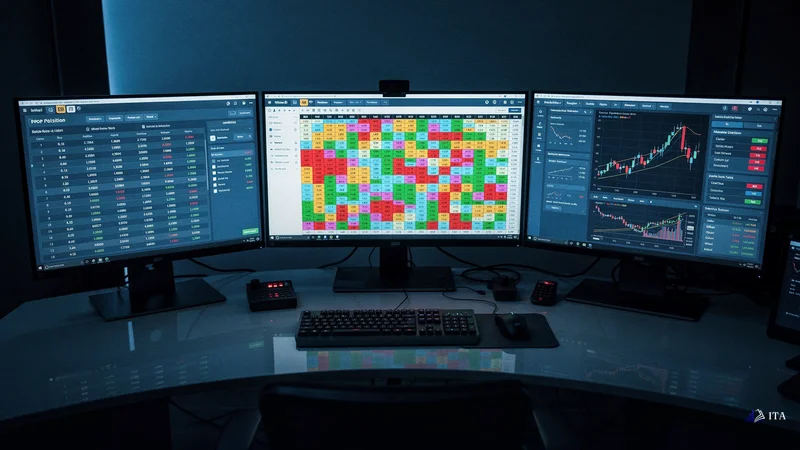
Static position sizing keeps you safe but limits growth. Advanced funded traders employ dynamic sizing based on market volatility, using Average True Range (ATR) to adjust position size inversely to market movement. When ATR spikes, indicating increased volatility, position sizes shrink automatically. This approach maintains consistent dollar risk despite changing market conditions. Scaling positions introduces another layer of sophistication. Rather than entering full size immediately, experienced traders build positions in thirds. This technique serves two purposes: it reduces impact from adverse entries and provides flexibility to adjust stops as price action develops. The key is pre-calculating total position size before entering the first scale, ensuring combined risk stays within daily limits. The temptation to increase leverage after winning streaks destroys more funded accounts than any other psychological trap. According to research by Odean, traders are approximately 50% more likely to sell winning positions than losing ones, but funded account data shows the opposite problem. Traders increase position size after wins, treating unrealized profits as risk capital. This behaviour accelerates when approaching profit targets, as traders push for quick achievement rather than consistent growth. The math is unforgiving: doubling position size after three wins means one loss wipes out all previous gains.
How ITA Equips Traders with Superior Position Sizing Tools
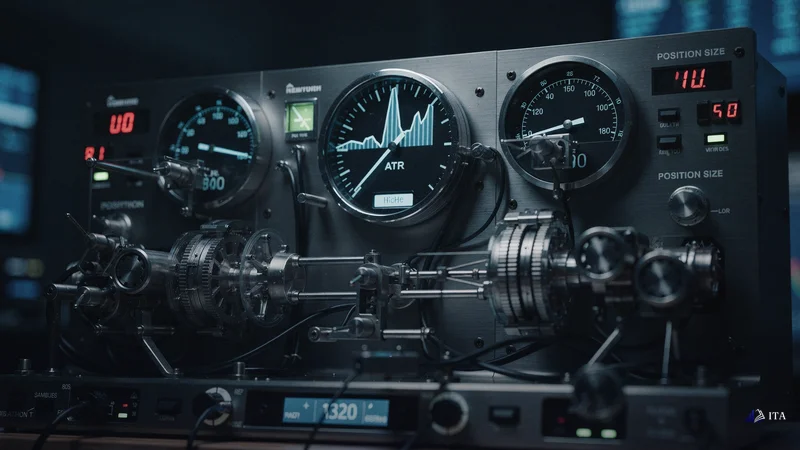
ITA equips traders with position sizing tools that treat risk management as infrastructure rather than tactical choice, based on analysis of thousands of funded account outcomes. Our methodology separates sustained success from rapid failure by providing traders with systematic approaches to position sizing that account for prop firm constraints and daily exposure limits. Our approach differs from typical prop firm education. While others teach generic percentage rules, ITA's methodology starts with institutional risk management principles, the same frameworks used by hedge funds managing billions. This means position sizing begins with portfolio-level risk budgets, not individual trade calculations. This systematic approach removes emotion from risk decisions. You don't have to remember rules or fight temptation. The system enforces discipline mechanically, which is exactly how institutional traders operate.
Common Position Sizing Mistakes That Lead to Account Breaches
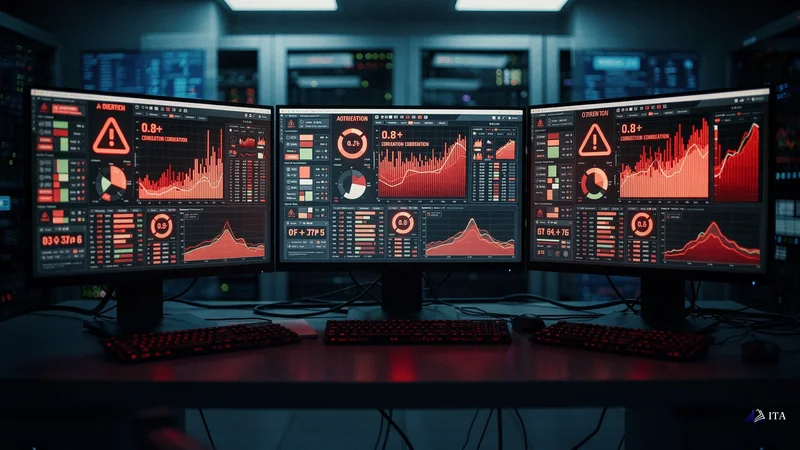
The most devastating position sizing mistake is ignoring daily drawdown limits whilst focusing solely on individual trade risk, leading traders to breach 3% daily limits despite calculating perfect 1% risk per trade. When traders take five simultaneous positions and market correlation turns against them, all positions lose together, violating prop firm rules regardless of proper individual trade risk management. Inconsistent risk per trade creates another path to failure. Monday sees 0.5% risks, Tuesday jumps to 2% after a win, Wednesday drops back to 1% after a loss. This variability makes it impossible to predict daily exposure. Professional funded traders maintain consistent position sizing regardless of recent results — the market doesn't care about your last trade. The failure to adjust for volatility causes more subtle but equally terminal problems. A 50-pip stop in quiet markets might represent normal fluctuation. The same 50-pip stop during news releases or major economic data becomes a coin flip. Traders who size positions identically across all market conditions eventually encounter the perfect storm, maximum position size meeting maximum volatility. Overlapping correlation represents the hidden killer. EUR/USD, GBP/USD, and AUD/USD often move together during risk-off events. Taking full position sizes in all three pairs doesn't triple your opportunity, it triples your correlation risk. When the dollar strengthens across the board, three "separate" trades become one massive loss.
Frequently Asked Questions
How do I calculate position size for a funded account with daily drawdown limits?
Start with your daily loss limit and divide by your maximum planned trades. For a $200,000 account with 3% daily limit ($6,000), planning four trades means $1,500 maximum risk per position. Then calculate lots using: risk amount ÷ (stop distance × pip value). This ensures you never breach daily limits regardless of individual trade outcomes.
Should I use 1% or 2% risk per trade in funded accounts?
Neither. The traditional 1-2% rule doesn't account for daily drawdown limits in funded accounts. With a 3% daily limit, three 1% losses breach your account. Instead, calculate from daily limits first, then work backwards. Your risk percentage becomes an output, not an input to the calculation.
What balance should I use for position sizing calculations in funded accounts?
Always use the initial account balance, never current equity. If you start with $100,000 and grow to $110,000, calculate position sizes from $100,000. Drawdown limits are calculated from initial balance, so treating profits as additional risk capacity creates a dangerous mismatch between your calculations and prop firm rules.
Can I increase position size after winning trades in funded accounts?
No. Increasing position size after wins is the fastest path to account breach. Funded traders who survive maintain consistent position sizing regardless of recent results. The market doesn't care about your last trade, and prop firm rules don't adjust based on your winning streaks.
Does ITA provide position sizing tools for funded account management?
Yes. At ITA, we provide proprietary position sizing tools integrated directly into our trading environment. These tools enforce risk discipline through hard limits and real-time exposure tracking. When daily drawdown approaches 2%, alerts trigger. At 2.5%, position sizing automatically reduces to prevent breaches.
Key Takeaways
- Calculate position size from daily drawdown limits first, then work backwards to stop placement — not the reverse retail approach.
- Use initial account balance for all calculations, treating profits as buffer rather than additional risk capacity in funded accounts.
- Limit daily trades to maximum three positions when facing 3% daily loss limits to prevent correlation-driven account breaches.
- Employ dynamic position sizing based on Average True Range — reduce size when ATR spikes to maintain consistent dollar risk.
- Build positions in thirds rather than full size entries to reduce adverse selection impact and maintain flexibility.
- Set maximum 0.5% risk per trade in funded accounts — the 1-2% retail rule accelerates prop firm failures.
- Use specialised funded account calculators that enforce daily limits and track cumulative exposure automatically rather than basic retail tools.
Start Your Trading Evaluation
Simulated funded accounts up to $800K. Up to 95% profit split.
Get Funded