
Overcoming Revenge Trading After Prop Firm Losses: The Science-Based Protocol
Learn the neuroscience behind revenge trading after prop firm losses and discover evidence-based protocols to break the cycle.
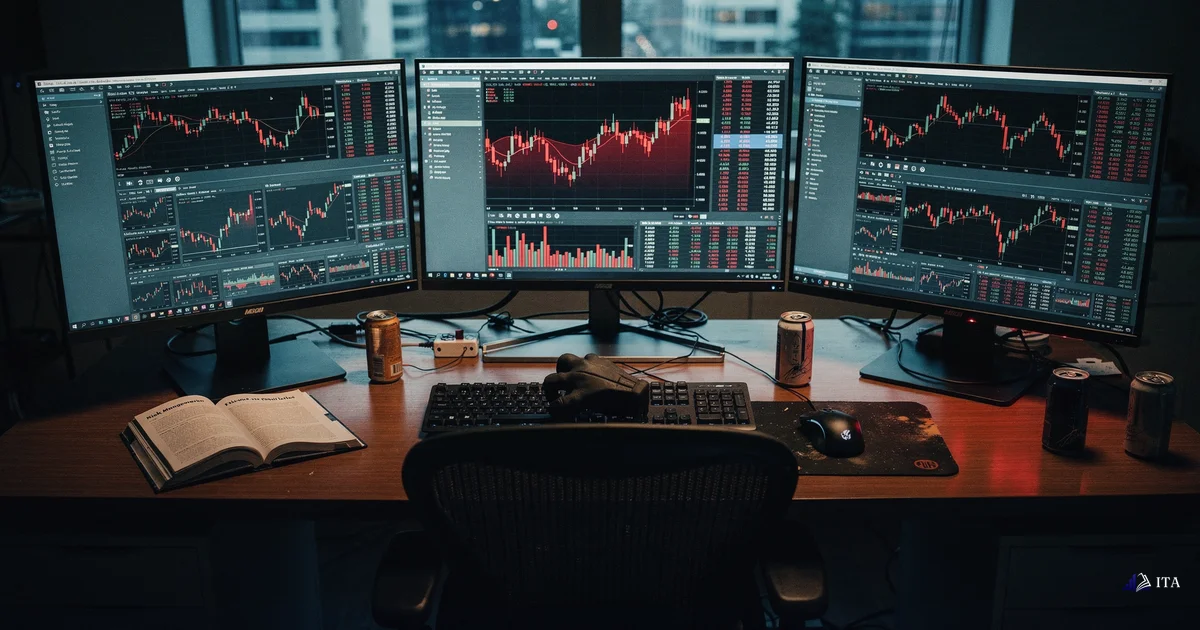

The Neuroscience of Trading Losses: Why Your Brain Betrays You
Trading losses activate your brain's threat detection system. This floods your bloodstream with cortisol. It suppresses the prefrontal cortex responsible for rational decision-making.
This neurochemical response transforms disciplined traders into impulsive risk-takers within seconds of closing a losing position. This biological hijacking explains why revenge trading remains the primary account killer in prop firms.
Recent data shows that 73% of all prop firm rule breaches are behavioural. Emotional overtrading. Revenge trading. Ignoring stops. Not strategy failures. Not market analysis errors. Pure neurochemistry overwhelming rational thought.
The 2:1 loss aversion ratio discovered by Kahneman and Tversky makes this worse. Your brain experiences losses roughly twice as intensely as equivalent gains. Lose $500? It feels like losing $1,000.
Your system screams to get back to breakeven, to make the pain stop. In a prop firm environment with strict drawdown limits, this urge intensifies. You're not just down money. You're down time, down opportunity, down pride.
The prop firm revenge trading epidemic isn't about traders who don't know better. It's about traders whose biology overrides what they know.
Look at the patterns. After a significant loss, funded traders consistently exhibit three behaviours:
- Sizing up instead of down
- Trying to "fix the day" before session close
- Abandoning their rules precisely when they need them most
One study found revenge trading works only about 20% of the time. The other 80%? Account termination. Our guide on Revenge Trading After Stop Loss covers this in more depth.
Yet traders keep doing it. Not because they're stupid. Because they're trying to solve a neurochemical problem with psychological tools.
The Prop Firm Revenge Trading Epidemic: Data and Patterns
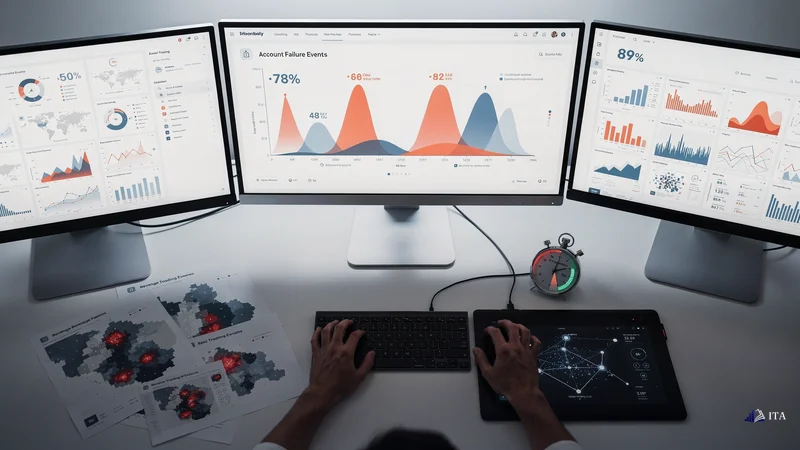
According to AI Prop Research (2026), 78% of account breaches occur within 48 hours of a significant loss. Revenge trading patterns are identifiable in 89% of these cases. The epidemic follows predictable patterns: increased position sizes, shortened time between trades, and systematic deviation from established risk parameters.
So what actually works? Not motivation. Not affirmations. Protocols.
The traders who survive prop firm challenges don't have stronger willpower. They have better systems. Systems that assume their brain will betray them and plan accordingly.
The immediate response protocol starts with recognition: you have a 30-second window of impaired judgment after any significant loss. During this window, you cannot trust your analysis, your instincts, or your decisions. This isn't weakness, it's biology.
The solution? Mandatory disconnection. Not a suggestion. Not a guideline. A hard rule: significant loss equals immediate 10-15 minute break from all screens. No analysis. No "just checking." Complete separation from the market.
This isn't running from the problem. This is letting your prefrontal cortex come back online.

The Immediate Response Protocol: Breaking the Revenge Cycle
The immediate response protocol breaks revenge cycles through predetermined actions. These bypass emotional decision-making entirely.
The most effective intervention is the two-loss rule: after two consecutive losses in any session, trading stops completely until the next day. This eliminates the opportunity for impulsive recovery attempts.
But the most powerful tool? Pre-commitment. Before you ever sit down to trade, your daily loss limit is set, automated, and non-negotiable. When that number hits, your platform locks. You can't revenge trade if you can't trade.
Recovery isn't about analysing the loss. It's about analysing your response to the loss.
The traders who consistently fund accounts don't journal their losing trades differently. They journal their behaviour after losing trades. They tag revenge trades explicitly. They track the gap between loss and next entry. They measure their adherence to protocols, not just their P&L.
Optimal review timing? Not immediately. The same neurochemical hijacking that drives revenge trading corrupts post-loss analysis.
Review losses the next day, when cortisol has normalized and you can see clearly. Focus on three elements:
- What was the market context?
- What was your mental state?
- What protocol did you follow or break?
The goal isn't to avoid future losses. It's to perfect your response to inevitable losses.
The Recovery Analysis Framework: Learning Without Triggering
Recovery analysis requires examining losses through three distinct categories:
- Strategy failures
- Risk management failures
- Behavioural failures
This framework prevents emotional analysis whilst maintaining the learning value of each losing trade. According to Frontiers in Psychology research (2023), over 70% of prop firm breaches fall into the behavioural category.
Most traders identify as "winners who sometimes lose." This identity makes every loss an existential threat. When you lose, you're not just down money. You're down identity. The urge to "win it back" isn't about the capital. It's about the self.
The funded traders who last? They identify differently. They're not winners. They're "rules-first risk managers." Their success isn't measured in daily P&L but in protocol adherence.
A day with two losses and perfect protocol execution? That's a win. A day with profits from revenge trades? That's a failure.
This isn't semantic games. Research on trader psychology shows that identity drives behaviour more than knowledge. You can know all the statistics about revenge trading and still do it if your identity demands you "win."
Reframe losses as cost of business, not personal failures. Every business has expenses. Yours are stop losses. The goal isn't zero expenses. It's controlled, planned, acceptable expenses that enable larger profits over time.
Our guide on Failed Prop Firm Trader Comeback Story covers this in more depth.
Technology is finally catching up to psychology.

Identity Reconstruction: From 'Win It Back' to 'Rules First'
Identity reconstruction transforms traders from loss-focused to process-focused. Instead of 'I must win this back,' you think 'I follow my rules regardless of outcomes.'
This psychological shift requires deliberate practice. View losses as operational costs rather than personal failures. This fundamentally changes how the brain processes negative trading outcomes.
Think of it as an external prefrontal cortex. When yours goes offline, the system's stays rational. Personalized risk profiles go further. The AI learns your specific triggers and adjusts in real-time.
Some traders revenge trade after two losses. Others after one large loss. Some in the morning, others at session close. The system learns your patterns and creates custom protocols.
This isn't admitting weakness. This is leveraging strength. The strongest traders aren't those who feel no urge to revenge trade. They're those who engineer their environment to make revenge trading impossible.
When the worst happens, when you breach an account, the response determines everything.
Most traders who blow a funded account do one of two things:
- Immediately buy another challenge (revenge trading at the account level)
- Quit forever (identity destruction)
Both responses miss the point.
Technology Solutions: AI and Automated Risk Management
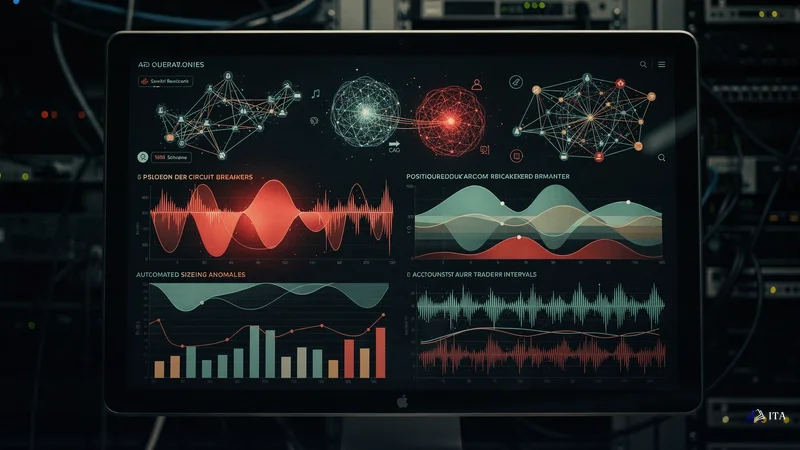
AI-driven behavioural monitoring systems track trading patterns beyond simple profit and loss. They identify revenge trading signatures through metrics like time between trades, position size variations, and deviation from baseline behaviour.
These systems implement automatic lockouts when revenge patterns emerge. This removes human emotion from the intervention process entirely.
Categorization matters because it determines the fix:
- Strategy failures need backtesting
- Risk failures need position sizing adjustments
- Behavioural failures need environmental changes and protocols
The mandatory reset period isn't punishment. It's protection. After an account loss, implement a minimum 7-14 day break before re-entering any challenge.
This isn't just about emotional recovery. It's about breaking the neurochemical pattern that links loss to immediate action.
When you do return, you don't return with the same setup. You return with enhanced safeguards: tighter daily loss limits, automated cutoffs, behavioural monitoring, and explicit revenge-trade protocols.
You're not the same trader who failed. You're an upgraded version who learned from the failure.
Our guide on Loss Aversion Psychology in Prop Firm Drawdowns covers this in more depth.
The path forward isn't about becoming emotionless. It's about becoming antifragile.
The traders who build long-term funded trading careers don't eliminate the revenge trading impulse. They build systems that assume the impulse will occur and protect against it. They treat their own psychology as a risk factor to be managed, not a weakness to be conquered.
Rebuilding After Account Loss: The Professional Recovery Protocol
Every protocol, every rule, every piece of technology serves one purpose: creating space between impulse and action. In that space, your prefrontal cortex can reassert control. In that space, discipline becomes possible.
The question isn't whether you'll feel the urge to revenge trade after your next loss. You will. The question is whether you've built the systems to protect yourself from yourself.
Your next loss is coming. Your amygdala will fire. Cortisol will spike. The urge to "fix it" will feel overwhelming.
But if you've implemented the protocols, the mandatory breaks, the two-loss rules, the pre-committed limits, the AI safeguards, that urge will crash against your systems and dissipate.
You'll have beaten biology with preparation. And that's how funded traders are actually made.
Frequently Asked Questions
Why is revenge trading so common after failing a prop firm challenge?
Revenge trading occurs because losses trigger a neurobiological response that floods your system with cortisol whilst suppressing the prefrontal cortex responsible for rational decision-making. Within 30 seconds of closing a losing trade, your judgment becomes measurably impaired, making disciplined decisions nearly impossible without proper protocols.
What does neuroscience say about how losses affect trading decisions?
Neuroscience research shows that trading losses activate the amygdala and trigger cortisol spikes, which suppress prefrontal cortex activity within seconds. This biological hijacking explains why 73% of prop firm rule breaches are behavioural rather than technical, as traders make impulsive decisions when their rational thinking is compromised.
How can I rebuild confidence after blowing a funded prop account?
Rebuilding confidence requires shifting your identity from 'winner who sometimes loses' to 'rules-first risk manager.' Implement a mandatory 7-14 day break, analyse your behavioural patterns rather than just trades, and return with enhanced safeguards including tighter loss limits and automated cutoffs to prevent future breaches.
What specific rules should I implement to prevent revenge trading in prop firm challenges?
Implement the two-loss rule: stop trading completely after two consecutive losses in any session. Set mandatory 10-15 minute breaks after any significant loss, use pre-committed daily loss limits with automated platform locks, and never analyse losses immediately after they occur when your judgment is impaired.
Are AI tools or automated risk controls effective at reducing revenge trading?
Yes, AI-assisted traders show approximately 45% lower drawdowns and fewer emotionally driven exits according to recent prop trading data. Automated risk controls remove human emotion from intervention by implementing lockouts when revenge patterns emerge, acting as an external prefrontal cortex when yours goes offline after losses.
Key Takeaways
- Recognise the 30-second window after losses when cortisol floods your system and rational judgment becomes measurably impaired.
- Implement mandatory 10-15 minute breaks from all screens after significant losses to let your prefrontal cortex come back online.
- Use the two-loss rule: after two consecutive losses in any session, trading stops completely until the next day.
- Set automated daily loss limits that lock your platform when hit — you cannot revenge trade if you cannot trade.
- Journal your behaviour after losing trades, not just the trades themselves, tracking adherence to protocols over P&L.
- Reframe your identity from 'winner who sometimes loses' to 'rules-first risk manager' focused on protocol adherence.
- Implement AI-driven behavioural monitoring systems that detect revenge trading patterns and trigger automatic lockouts before damage occurs.
Start Your Trading Evaluation
Simulated funded accounts up to $800K. Up to 95% profit split.
Get Funded