 ITA
ITANurse's Journey: From Night Shifts to Consistent Prop Firm Income
Discover how a nurse built consistent prop firm income by mastering risk management and disciplined trading routines around demanding hospital shifts.
Short answer
Discover how a nurse built consistent prop firm income by mastering risk management and disciplined trading routines around demanding hospital shifts. In a prop firm context this still sits under simulated-capital rules: fees buy access to the evaluation or funded environment, not a deposit of trading capital.
Simulated capital: prop firm evaluation and funded stages discussed here typically run on simulated accounts. Challenge fees pay for access to that environment; they are not a deposit of trading capital. ITAfx accounts are simulated capital.


Introduction: The Nurse's Path to Consistent Prop Firm Income
The call came at 3:47 AM.
Not from the hospital this time. From my trading platform.
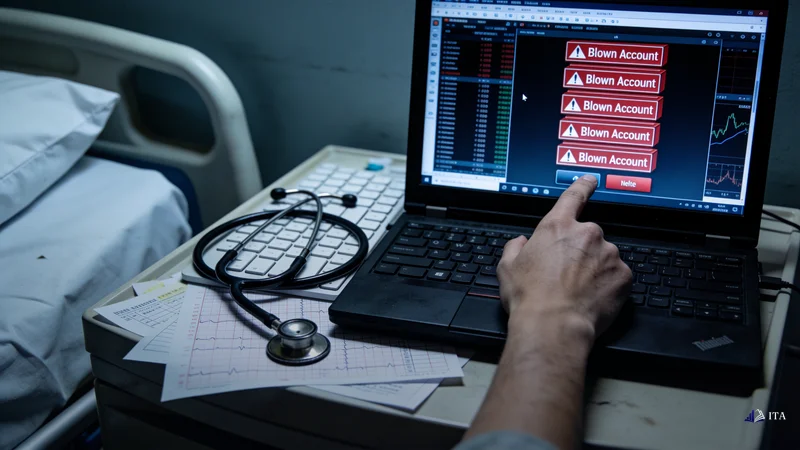
Margin call. Account blown. Again.
Adrian: When I first heard your story through the ITAfx community, what struck me wasn't the success, it was how familiar the beginning sounded. Walk me through that morning.
Sarah: I'd been up since 5 PM the previous day, working a double shift in the cardiac unit. Came home exhausted, saw the London session opening, and thought I'd "quickly" scalp a few trades before bed. Classic mistake.
Adrian: Let me be direct: how many accounts had you blown by that point?
Sarah: Three demo accounts and two small funded challenges. About $400 in evaluation fees, which doesn't sound like much until you're a single parent counting every dollar. But it wasn't really about the money, it was the pattern. Work myself to exhaustion at the hospital, come home wired from adrenaline, revenge-trade until 4 AM, blow the account, promise myself "never again." The pattern continued for months.
The origin story always starts the same way. Healthcare workers discover trading through social media, see the "laptop lifestyle" posts, think it's their escape route from night shifts and understaffing. They've got the discipline to handle 12-hour shifts and life-or-death decisions, surely they can handle a few charts?
The Origin Story: From Scattered Trading to Structured Discipline
Adrian: What made you different from the 96% who never make it past their first blown account?
Sarah: Honestly? I almost didn't. After that third blown challenge, I deleted everything. third-party platform, TradingView, even unfollowed all the trading accounts. Told myself to focus on picking up extra shifts instead. More predictable income, right?
Adrian: But something pulled you back.
Sarah: Three months later, I was covering a shift for a colleague who'd called in "sick." Found out later she wasn't sick, she'd passed a prop firm challenge and was in Mexico celebrating her first payout. Not life-changing money, but enough for a real vacation. First one in years.
That's when it clicked. She wasn't trying to escape nursing. She was supplementing it. Building something on the side with the same methodical approach we use for patient care.
Adrian: the skills that make great nurses, pattern recognition, protocol adherence, emotional regulation under pressure, are exactly what prop firms are looking for, though passing prop firm challenges is difficult and most attempts fail. But most nurses try to trade like retail cowboys instead of medical professionals.
Sarah: Exactly. I was treating trading like an emergency procedure when it should be like administering medication, calculated doses, strict protocols, documented outcomes.
The dark period lasted six months. Not because Sarah kept blowing accounts, she'd stopped trading entirely. The darkness was watching colleagues pick up overtime they didn't want, seeing the burnout in their eyes, knowing there had to be another way but being too scared to try again.
The Dark Period: When Overtrading Almost Ended the Dream
Sarah's dark period taught her the critical lesson: limiting trades to 4-5 high-probability setups weekly and risking only 0.5% per position transformed her from burning through funded accounts to maintaining consistent profitability across multiple six-figure accounts. The transition from healthcare's structured environment to forex's 24/7 markets triggered a dangerous pattern: opening 15-20 positions daily instead of waiting for high-probability setups. Within three months, she'd blown through two $50K funded accounts and was questioning whether trading was viable alongside her nursing shifts.

Sarah: I started treating it like I was back in nursing school. Bought a notebook, not a fancy trading journal, just a regular notebook from the dollar store. Drew columns: Date, Session, Setup, Result, Mistake. That's it. No complex spreadsheets.
Then I did something that felt crazy at the time. I decided I would only trade the Asian session. 8 PM to midnight my time, after my daughter was asleep, before my morning shifts. Four hours max. If I missed it, I missed it.
Adrian: Most people chase every session, every move.
Sarah: And most people fail. I realized I wasn't competing with full-time traders. I was building something different. A side income stream that worked with my life, not against it.
The real transformation came through position sizing. Sarah discovered what ITAfx's full funded-account trading rules emphasize: survival over glory. Instead of calculating forward from entry ("How much can I make?"), she started calculating backward from maximum drawdown ("How much can I afford to lose and still stay in the game?"). Our guide on Nurse Became Funded Trader Interview covers this in more depth.
Sarah: I wrote "6% MAXIMUM LOSS" in Sharpie on a sticky note and put it on my monitor. Every trade started with the same question: If this goes completely wrong, will I stay under 6% total drawdown?
Adrian: That's the shift most traders never make. They optimize for winning. You optimized for surviving.
The Turning Point: Mastering Risk Management and Trading Psychology
Sarah mastered trading psychology by creating a surgical-style pre-trade checklist that reduced her average loss from 2% to 0.4% per trade, enabling her to survive seven consecutive losses with only 2.8% total drawdown, the exact defensive approach that turned her trading profitable. She developed a systematic approach: assume maximum drawdown scenarios, protect capital first, then pursue profits. This meant limiting position sizes to 0.5% risk per trade and maintaining detailed logs of every decision, treating trading with the same clinical precision she applied to patient care.
She developed a pre-trade checklist, similar to the timeout procedures before surgery. Market context? Check. Clean setup according to her rules? Check. Position size calculated from maximum loss? Check. Mental state (not exhausted, not emotional)? Check.

If any box wasn't checked, no trade. Period.
Adrian: I built ITAfx because I saw too many talented traders fail not from lack of skill, but from lack of capital and proper risk frameworks. How long before you saw consistency?
Sarah: Four months of religious checklist use. My win rate actually dropped at first, from 60% to about 45%. But my average loss shrunk from 2% to 0.4% per trade. The math changed everything.
The breakthrough wasn't a winning streak. It was a losing streak, seven trades in a row stopped out. Total damage? 2.8% drawdown. In the old days, that streak would have triggered revenge trading and a blown account. This time, I closed the laptop and went to bed.
Adrian: That's discipline most retail traders never develop.
Sarah: When you've had to tell a family their loved one didn't make it, a stopped-out trade doesn't trigger the same emotional response. Perspective is everything.
The Current Method: Consistency Over Spectacular Payouts
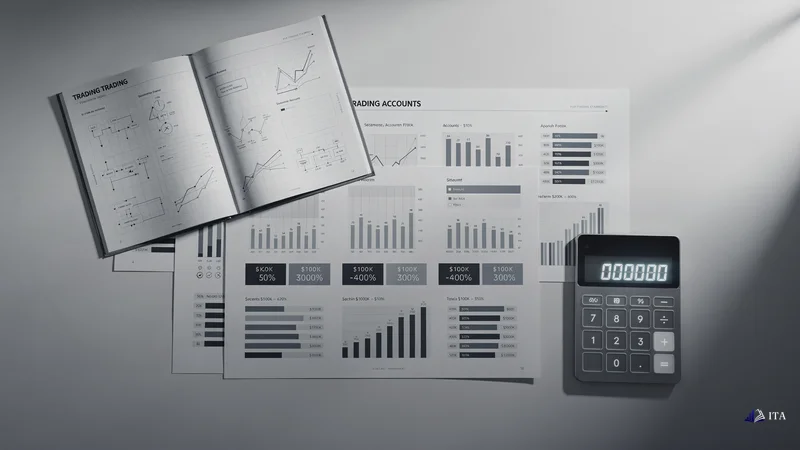
Sarah's current trading method prioritises consistency over spectacular returns through systematic income generation. She targets 3-5% monthly returns across multiple funded accounts ranging from $100K to $400K, focusing on sustainable growth rather than explosive gains. This approach generates steady income that complements her hospital salary without requiring her to abandon nursing entirely.
Adrian: Walk me through your current routine.
Sarah: Sunday night, I review the weekly calendar. Mark my shifts, my daughter's activities, and my available trading windows. Usually 3-4 sessions per week, always Asian session. I prep my levels Sunday afternoon, like meal-prepping for the week.
Monday through Thursday, if I'm not working nights, I trade 8 PM to midnight. One or two setups maximum. If nothing materializes in the first two hours, I close the charts. No forcing.
Adrian: The four-weeks-on, one-week-off model?
Sarah: Learned that from another funded trader. Trade for four weeks, then take a complete week off from charts. During that off week, I review my journal, adjust my approach if needed, and most importantly, live my life. Take my daughter to the park without checking my phone. Sleep without setting alarms for London open.
The numbers tell the story. Average monthly return: 3.7%. Largest drawdown in the past year: 4.2%. Number of blown accounts since implementing the protocol: zero.
Adrian: Let's do some rapid-fire questions from the community.
Rapid-Fire Q&A: Insights from a Funded Nurse Trader
Adrian: Best time to trade for night shift nurses who built consistent prop firm income?
Sarah: Forget London and New York. Asian session is your friend. Calmer, cleaner setups, fits perfectly between evening routine and sleep.
Adrian: Biggest mindset shift from nursing to trading?
Sarah: In nursing, you're taught to act fast and save everyone. In trading, doing nothing is often the best decision. Took me months to get comfortable with empty trading days.
Adrian: Risk per trade?
Sarah: Half a percent maximum, usually less. If I'm tired or stressed, I drop even lower. Your mental state is part of risk management.
Adrian: How do you handle FOMO when missing big moves during hospital shifts?
Sarah: I screenshot them and add them to my "Moves I'm Glad I Missed" folder. Seriously. Many of them reverse violently. The market's always there tomorrow.
This approach has helped me build the consistent prop firm income that many nurses seek as an alternative revenue stream.
Adrian's Reflection: Discipline Meets Capital
Adrian: Advice for healthcare workers considering prop trading?
Sarah: Start with the end in mind. You're not becoming a trader, you're building a secondary income stream. Big difference. Also, your first six months should be about risk management, not profit. Pass one challenge with strict rules before scaling up.
Adrian: How do you explain this to other nurses?
Sarah: I don't, usually. But when I do, I frame it like this: "Remember how we learned to start IVs? Hundreds of practice attempts before we got consistent? Trading's the same. Except the patient is your account, and keeping it alive is the only goal."
Adrian: That's the part most people miss.
When I created ITAfx's instant account model, it was exactly for people like Sarah. Talented, disciplined professionals who don't need another evaluation to prove they can follow rules, they do it every day in their careers. They need capital and a framework that aligns with their existing responsibilities.
Sarah's story isn't unique in its struggles, every funded trader has blown accounts, questioned themselves, wanted to quit. What's unique is the solution: stop trying to be a full-time trader when you're a full-time nurse. Be a professional who happens to trade, not a trader who happens to work in healthcare. Our guide on Success story of a trader who passed multiple covers this in more depth.
The nurses, teachers, and engineers who succeed in prop trading all share this trait: they integrate trading into their lives rather than trying to replace their lives with trading. They use the same systematic thinking that makes them excellent at their day jobs. They respect the process more than the profits.

Ready to get funded?
50% off instant accounts with code 50CRYPTO.
Get Funded →Frequently Asked Questions
How can a full-time nurse realistically fit prop firm trading around 12-hour shifts without burning out?
Focus on one trading session that fits your schedule, typically the Asian session (8 PM to midnight) works best for most nurses. Trade 3-4 sessions per week maximum, never when mentally exhausted from shifts. Use the four-weeks-on, one-week-off model to prevent burnout and maintain work-life balance.
What risk management rules are most important for nurses who want consistent prop firm income?
Risk only 0.5% maximum per trade, usually 0.3%. Set a hard 6% total drawdown limit and stick to it religiously. Calculate position size from maximum loss, not potential profit. If you're tired or stressed, drop to 0.2% risk, your mental state is part of risk management.
How long does it typically take for a new nurse-trader to become consistently profitable on funded accounts?
Most nurse-traders find consistency after 6-12 months of focused risk-management practice, starting with demo accounts while still working shifts. The first four months should focus entirely on risk management and rule-following, not profit. Consistency comes from discipline, not market prediction.
Which trading sessions work best for nurses working different hospital shifts?
Asian session (8 PM to midnight local time) works best for most nurses, it's calmer with cleaner setups and fits between evening routine and sleep. Avoid London and New York sessions if working day shifts. Never trade immediately after 12-hour shifts when mentally exhausted.
Are single-digit monthly returns on larger funded accounts more sustainable than trying to double smaller personal accounts?
Yes, targeting 3-5% monthly returns on $100K-$400K funded accounts is far more sustainable than attempting 20%+ on small personal accounts. The math works better: 3% of $400K equals $12,000 monthly versus risking your own capital for smaller absolute gains.
Ready to get funded?
Instant accounts, simulated capital, rules published before you pay. 50% off with code 50CRYPTO.
Get Funded →