 ITA
ITANFP Trading: What NOT to Do and How to Prepare for Key Releases
Master NFP trading by avoiding critical mistakes. Learn how to prepare for Non-Farm Payrolls with strict risk management and proven strategies.
Short answer
Master NFP trading by avoiding critical mistakes. Learn how to prepare for Non-Farm Payrolls with strict risk management and proven strategies. In a prop firm context this still sits under simulated-capital rules: fees buy access to the evaluation or funded environment, not a deposit of trading capital.
Simulated capital: prop firm evaluation and funded stages discussed here typically run on simulated accounts. Challenge fees pay for access to that environment; they are not a deposit of trading capital. ITAfx accounts are simulated capital.


The NFP Release: Why It Moves Markets and Traps Traders
Non-Farm Payrolls measures the net change in US employment excluding farm workers, released monthly by the U.S. Bureau of Labor Statistics at 8:30 AM EST on the first Friday. This single employment figure can move EUR/USD by 100 pips in seconds because it serves as the Federal Reserve's primary labour market indicator for monetary policy decisions.
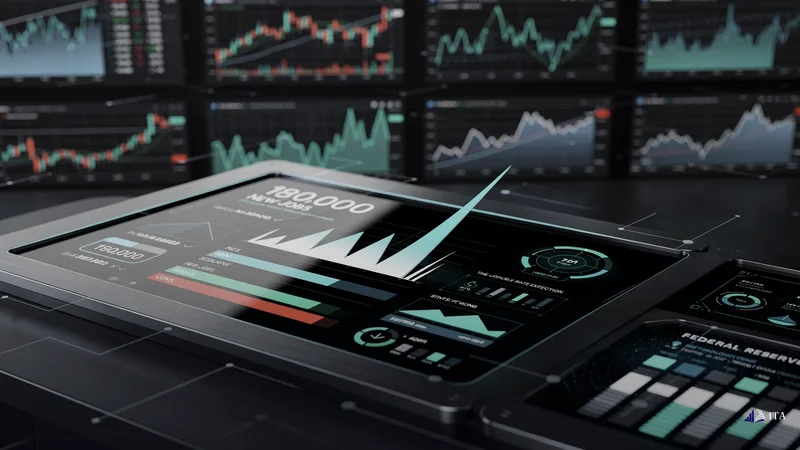
NFP's Role in Monetary Policy Expectations
When NFP beats expectations by 50,000 jobs, traders don't just see employment growth. They see the Fed's next move. Strong employment means the economy can handle higher rates. Weak employment signals potential cuts. This isn't speculation, it's mechanical. The Fed has dual mandate: maximum employment and price stability. NFP directly feeds the first half. Every pip move on NFP day represents millions of dollars repositioning based on shifted rate expectations. The number itself matters less than how far it deviates from consensus.
How NFP Creates Extreme Market Volatility
NFP volatility isn't random, it's structural. In the 60 seconds before release, liquidity providers pull their orders. Spreads on EUR/USD can widen from 0.2 pips to 5 pips instantly. Market makers step back, leaving an order book that's tissue-thin. When the number hits, algorithms fire simultaneously, creating price gaps rather than movements. Trading Stats data shows the median range for NFP days on the Nasdaq 100 exploded from 166.9 points in 2021 to 397.0 points in 2025. That's not volatility, that's a different market structure entirely.
Common Pitfalls of Trading the Initial NFP Spike
The initial spike is where retail traders die. Not metaphorically, financially. Many professional traders consciously avoid trading in the first 5-15 minutes because what looks like a trend is often a liquidity hunt. Price shoots up 80 pips on a strong number, retail traders chase, then it reverses 120 pips in the next candle. The spread during this chaos can eat 10-15% of your position instantly. Slippage means your stop at 1.1050 fills at 1.1020. That carefully calculated 1% risk becomes 3% realized loss. The spike isn't the trade, it's the trap.
But understanding why NFP creates this chaos is only half the battle. The real damage happens in the decisions traders make before the release even arrives.
NFP Trading Mistakes: What NOT to Do Before, During, and After the Release
NFP trading mistakes follow a predictable pattern that destroys disciplined traders who abandon their rules for potential massive wins on release day. Profitable traders who've maintained discipline for weeks or months often breach their risk management protocols when NFP Friday arrives, leading to blown accounts through impulsive decisions driven by the report's volatility potential.
Avoiding the Gamble: Don't Trade Blindly on the Number
"Strong number = USD up" seems logical until you realize the market already priced in expectations. If consensus expects +200K jobs and we get +250K, that's not necessarily bullish, it might be disappointment if whisper numbers were +300K. Trading blind means entering positions based on the headline without understanding what was already priced. The real error: treating NFP like roulette where you bet red or black. Crash Course To Become an NFP Expert emphasizes mapping scenarios before the release, strong beat, mild beat, in-line, mild miss, strong miss, with specific levels and reactions for each. Without this map, you're not trading; you're gambling.
The Danger of Overleveraging and Large Positions
NFP's average 200-pip range tempts traders to capture "just 50 pips" with larger positions. If EUR/USD normally moves 60 pips daily and NFP brings 200 pips, why not triple your position size? Because NFP doesn't move in straight lines. That 200-pip range often means 100 pips up, then 150 pips down, then 50 pips up again. Expert guidance emphasizes reducing leverage for NFP trading, often to 1:10 or lower. A standard 1% risk becomes 10% when leverage amplifies both the move and the spread costs. The math is unforgiving: a 50-pip stop with 5-pip spread means you need 55 pips profit just to break even. At 10x normal position size, one stop-out erases two weeks of gains.
Why Chasing the First Spike Leads to Losses
The first spike is algorithmic, not directional. When NFP prints, machines react in microseconds while your brain is still processing the number. By the time you click buy, you're entering at the extreme. NFP Trading: Strategies and Tips for Forex Traders lists chasing the spike among the top mistakes. The psychology is predictable: you see EUR/USD rocket from 1.0850 to 1.0930 in 30 seconds and fear missing the move to 1.1000. But that first spike often marks the high. Institutional traders aren't chasing, they're fading. While retail buys the news, professionals sell the fact. The spike exhausts itself against liquidity clusters, then reverses violently.
Never Change Your Plan Impulsively: Stick to Discipline
The screen flashes. Price gaps. Your stop is hit but your platform shows you're still in the trade, slippage processing. Panic sets in. Do you close at market? Double down? Widen the stop? This is where traders make their worst decisions: changing the plan in the heat of the moment. The trader who planned to risk $500 suddenly justifies $2,000 because "it's NFP." The systematic approach crumbles under adrenaline. Discipline isn't about perfect entries, it's about following your pre-determined rules especially when every instinct screams otherwise. Our guide on Currency Correlation Analysis for Funded Trading covers this in more depth.
These mistakes compound because they feed on each other. Overleveraging makes you vulnerable to the spike. Chasing the spike puts you offside immediately. Being offside triggers impulsive decisions. The cascade ends with an empty account and a harsh lesson. But there's a better way.
Strategic NFP Preparation: Your Pre-Release Checklist
Professional NFP trading starts 48 hours before the release, not 5 minutes. While retail traders scramble at 8:25 AM, institutional desks have already mapped every scenario, calculated position sizes, and identified key levels. Here's the exact preparation framework that separates survivors from statistics.

Fundamental Analysis: Forecasting Scenarios and Market Expectations
Start with the consensus forecast, but don't stop there. If economists expect +175K jobs, dig deeper. What's the range of estimates? If they span +125K to +225K, the market has uncertainty priced in. Tight ranges like +170K to +180K suggest a bigger move on any surprise. Check the unemployment rate and average hourly earnings forecasts too, NFP is three releases in one. Map your scenarios: strong beat (+250K+), mild beat (+200-250K), in-line (+150-200K), mild miss (+100-150K), strong miss (sub-100K). For each scenario, identify which currency pairs react strongest. EUR/USD for pure dollar plays, USD/JPY for risk sentiment, gold for inflation hedges.
Technical Analysis: Pre-Marking Key Levels and Triggers
Before NFP, charts reveal where the real battles happen. Mark yesterday's high and low, these become magnets during volatile releases. Identify the weekly pivot points; price often pins to these levels post-NFP. Plot major moving averages on the 1-hour chart, the 50 and 200 become dynamic support/resistance during trends. Don't predict direction; identify trigger points. If EUR/USD breaks above 1.0950 post-NFP, where's the next resistance? If it drops below 1.0850, what support levels could hold? Our Top Strategy to Trade Non-Farm Payroll (NFP) Data emphasizes waiting for retracements to these pre-marked levels rather than chasing initial moves.
Risk Management: Setting Maximum Loss and Position Sizing
Here's where discipline becomes mathematical. Before markets open on NFP Friday, calculate your maximum acceptable loss, not per trade, but for the entire day. If your account is $10,000 and you're willing to risk 2% on NFP day, that's $200 total. Not per position, total. Now work backwards. If you plan two trades with 50-pip stops each, position size must account for potential slippage. A 50-pip stop might fill at 60 pips in NFP conditions. Add spread costs. That $200 risk budget might mean 0.15 lots instead of your normal 0.25 lots. Capping risk per trade around 1-2% of account equity becomes even more critical when volatility triples.
Platform Readiness: Understanding Spreads and Slippage
Your platform becomes your enemy during NFP if you're unprepared. Log in 30 minutes early, servers crash when everyone connects at 8:25 AM. Check your broker's NFP spread policy. Some widen EUR/USD to 20 pips; others maintain 5 pips but increase slippage. Place test orders on demo to see execution during normal conditions. Ensure one-click trading is enabled but protected, accidental clicks during NFP can be expensive. Have backup internet ready; losing connection with open positions during NFP is a nightmare. Most importantly, know your broker's margin call policy. NFP spikes can trigger temporary margin breaches even if price reverses seconds later.
This preparation transforms NFP from gambling to probabilistic trading. You still can't predict the number, but you're ready for whatever it brings. Which leads to the question: how exactly do you trade once the chaos begins?

Proven NFP Trading Strategies: Beyond the Initial Chaos
The professionals trading NFP profitably year after year share one trait: they don't trade the news, they trade the market's digestion of the news. Here are the exact strategies that work, refined by thousands of NFP releases and millions in managed capital.

The Pullback Strategy: Entering on Retracements
The pullback strategy waits for the market to show its hand, then enters on the retracement. NFP releases, price spikes 80 pips in one direction, then pulls back 30-40 pips as early traders take profits. This pullback is your entry. Wait for the initial reaction to NFP, then enter on a retracement in the direction of the fundamental surprise. If NFP beats strongly and EUR/USD drops from 1.0900 to 1.0820, wait for the bounce to 1.0850-60. Enter short there with stops above the pre-NFP high. Your target: the initial spike low and beyond. This strategy works because it aligns with institutional reloading, big players scale into positions, creating multiple pullback opportunities.
Trading the NFP Drift: Waiting for Sustainable Trends
The NFP drift might be the market's worst-kept secret that retail traders ignore. Skip the immediate spike and trade the 'NFP drift', the more orderly trend that often develops 2, 3 hours after the release. The first hour is dominated by algorithms and retail emotion. But 2-3 hours later, funded account moves. Institutional traders have digested the data, compared it to Fed expectations, and begun positioning for the next weeks. The drift often moves further than the initial spike but with far less volatility. Entry comes from 15-minute or 1-hour chart patterns forming clear trends. A strong NFP might see EUR/USD spike down 80 pips, recover 40 pips, then drift down another 120 pips over the next 4 hours.
Avoiding the First 5-15 Minutes: The Professional's Approach
The boldest strategy is often doing nothing. Professional traders treat the first 5-15 minutes as untradeable. Spreads are widest, slippage highest, and false moves most common. They watch, analyze, but don't click. This isn't passive, it's strategic. While others chase ghosts, professionals identify real levels. They see where the spike exhausted, where volume clustered, which levels held. When they enter after 15 minutes, they trade with cleaner spreads, clearer direction, and better risk/reward. The missed "opportunity" of the first spike becomes the avoided disaster that keeps them profitable long-term.
Scenario Planning: Adapting to Strong Beat, Miss, or In-Line Data
Every NFP outcome requires a different approach. Strong beat (+250K+ vs +175K expected): Dollar typically strengthens, but watch for "sell the fact" if markets expected a beat. Trade USD strength against currencies with dovish central banks (EUR, JPY). Mild beat/in-line: Often the most dangerous, no clear direction. Wait for range breaks rather than forcing trades. Strong miss (sub-100K vs +175K expected): Dollar weakens, but context matters. During Fed hiking cycles, bad news can be good news (delays hikes). Trade the second reaction, not the first. The key: having these scenarios mapped before the release. When NFP prints, you're executing a plan, not forming one.
These strategies work because they respect what NFP really is, not a single trade opportunity but a market regime shift that plays out over hours. Speaking of regime shifts, let's address how funded traders navigate NFP within prop firm rules.
How ITAfx Supports Disciplined NFP Trading
ITAfx supports disciplined NFP trading through structured risk management frameworks that prevent impulsive decisions during high-volatility releases. The platform's drawdown limits and professional trading guidelines help funded traders maintain discipline when NFP volatility creates revenge trading temptations that could end their funded journey.
Institutional Risk Management Principles for Volatile Events
ITAfx's 6% maximum loss and 3% daily loss rules force the discipline that retail traders lack. You can't "YOLO" NFP when breaching 3% daily loss terminates your account. This isn't restrictive, it's protective. The rules mirror how institutional desks operate: hard stops on daily P&L during event risk. When you trade an ITAfx funded account up to $400K, you're incentivized to think in percentages, not pips. A 50-pip stop on a $200K account at conservative leverage might risk 0.5%, well within limits. The framework naturally pushes you toward the reduced leverage that NFP demands.
Access to Flexible Capital for Strategic Opportunities
The beauty of funded account during NFP: you're not risking grocery money. With ITAfx's instant account model, you can access accounts from $50K to $400K without evaluation delays. This psychological edge matters. When you're not trading scared money, you make better decisions. You can afford to skip the chaotic first spike because you're not desperate for the "big win" to pay bills. The 95% profit split means when you do capture that post-NFP drift perfectly, the rewards are substantial. More importantly, the simulated environment lets you practice NFP strategies without funded account at risk during the learning phase.
Community Insights for NFP Preparation
Trading NFP in isolation amplifies every mistake. Within ITAfx's community, funded traders share pre-NFP analysis, key levels, and post-release observations. This isn't about copying trades, it's about collective wisdom. When five experienced traders all mark 1.0950 as key resistance, that level gains significance. The community becomes your sanity check: if you're planning to risk 5% on NFP while everyone else scales down, that disconnect prompts reflection. Real-time discussions during the release help maintain discipline when your screen is flashing and adrenaline peaks.
The institutional framework, flexible capital access, and community support create an environment where NFP becomes a planned event rather than a gambling opportunity. But questions remain for traders preparing for their first professional NFP approach.
Conclusion: Master NFP by Mastering Discipline
NFP doesn't destroy accounts through complexity, it destroys them through psychology. Every blown stop, every revenge trade, every overleveraged position starts with the same thought: "This time is different." But the data tells the opposite story. The traders who survive NFP year after year aren't the ones who predict the number perfectly. They're the ones who respect the chaos.
The mechanical difference is startlingly simple. Amateurs trade the announcement. Professionals trade the aftermath. While retail traders chase the first 30-second spike with maximum leverage, institutional traders wait 2-3 hours for the NFP drift. They've learned what the data confirms: the initial move is noise, the sustained move is signal.
Your next NFP preparation starts now, not at 8:25 AM on the first Friday. Map your scenarios tonight. Calculate position sizes that respect the volatility. Mark key levels on clean charts. Most importantly, decide what you won't do: you won't chase spikes, you won't override your stops, you won't let a monthly data release undo months of disciplined trading.
The market will always have another NFP, another opportunity. But you only have one account. Protect it with the same institutional discipline that ITAfx's framework demands. When you master the patience to skip the gamble and trade the opportunity, NFP transforms from account killer to consistent edge. The question isn't whether you can predict the number, it's whether you can control yourself when everyone else loses control.
Ready to trade NFP with institutional discipline and proper capitalization? Explore how ITAfx's funded accounts up to $400K provide the framework and flexibility for strategic event trading. Apply for your funded account today.
Ready to get funded?
50% off instant accounts with code 50CRYPTO.
Get Funded →Frequently Asked Questions
What time exactly is NFP released and on which platforms can I see it first?
NFP releases at 8:30 AM EST on the first Friday of each month from the U.S. Bureau of Labor Statistics. Economic calendars on Forex Factory, Investing.com, and Bloomberg all display the release within 1-2 seconds. The key isn't being first, institutional algorithms will always be faster, but being prepared with your scenarios mapped.
Should I hold positions through NFP or close everything before?
Professionals generally close positions before NFP unless they're specifically positioned for the event. Holding through NFP turns calculated trades into lottery tickets. The volatility can hit stops through slippage even if your direction proves correct. If you must hold, reduce position size by 75% minimum and widen stops beyond the expected volatility range.
What's the difference between trading NFP on forex pairs versus indices?
Forex pairs (especially USD crosses) react directly to the employment data's impact on Fed policy. Indices like S&P 500 show a more complex reaction, good employment data might mean economic strength (bullish) or faster rate hikes (bearish). Gold often moves inversely to the dollar but can spike on uncertainty. Start with major forex pairs for cleaner NFP correlation.
How do I know if the market has already priced in the NFP expectations?
Check the price action 24-48 hours before NFP. If EUR/USD has already dropped 150 pips on "strong NFP expectations," the actual release might see "sell the fact" even on good numbers. Compare current price to weekly open, significant pre-NFP moves suggest expectations are partially priced. Also monitor bond yields; rising yields before NFP indicate hawkish positioning.
Is it better to use pending orders or market orders during NFP?
Pending orders face massive slippage during NFP, your buy stop at 1.0950 might fill at 1.0980. Market orders give you control but require perfect timing. The professional approach: wait for the initial chaos to pass, then use market orders at your pre-identified levels. If you must use pending orders, place them far from current price with wider stops to account for slippage.
Key Takeaways
- Avoid the first 15 minutes after NFP release when spreads widen to 20 pips and slippage destroys calculated risk.
- Reduce leverage to 1:10 or lower during NFP, normal volatility triples and stops fill 10-20 pips beyond your target.
- Map five scenarios before release: strong beat, mild beat, in-line, mild miss, strong miss with specific levels for each.
- Trade the NFP drift 2-3 hours post-release when institutional money creates sustained trends beyond initial algorithmic spikes.
- Cap total NFP day risk at 2% of account equity across all positions to prevent single-event account destruction.
- Use pullback strategy: wait for initial spike, then enter on 30-40 pip retracement in direction of fundamental surprise.
- Monitor consensus range width, tight estimates like 170K-180K suggest bigger moves on any deviation from expectations.
Ready to get funded?
Instant accounts, simulated capital, rules published before you pay. 50% off with code 50CRYPTO.
Get Funded →