 ITA
ITAHerding Mentality: Why Funded Traders Fail (And the Fix) in Prop Firms
Uncover the psychological trap of herding mentality in forex prop firms. Learn why funded traders fail and implement a practical protocol to build.
Short answer
Uncover the psychological trap of herding mentality in forex prop firms. Learn why funded traders fail and implement a practical protocol to build. In a prop firm context this still sits under simulated-capital rules: fees buy access to the evaluation or funded environment, not a deposit of trading capital.
Simulated capital: prop firm evaluation and funded stages discussed here typically run on simulated accounts. Challenge fees pay for access to that environment; they are not a deposit of trading capital. ITAfx accounts are simulated capital.

Key Takeaways
- Implement risk caps below firm limits, if your prop firm allows 5% daily drawdown, hard-code 2% maximum to prevent crowd-induced position sizing.
- Journal complete trade analysis before opening any social platform, document entry, stop, target, and reasoning with timestamps as psychological anchors.
- Use submarine protocol during trading hours, surface for market information only during three predetermined five-minute windows to avoid noise.
- Track psychological deviation percentage in post-market reviews, if it exceeds 20%, you're too exposed to crowd influence and groupthink.
- Recognize that mirror neurons fire automatically when observing others' trading behaviour, creating unconscious impulses to match their risk-taking patterns.
- Avoid prop firm Discord channels during market hours, the most consistent funded traders treat trading like a solo sport, not team activity.
The Trap Nobody Warns You About
Prop firm communities create a psychological trap that destroys individual trading performance through collective decision-making pressure. You passed your first challenge trading alone with clean execution and disciplined risk management, following your tested edge. Then you joined the firm's Discord server.
Within three weeks, your funded account was breached.
This isn't a story about lacking discipline or abandoning your trading plan. It's about something far more insidious: how your brain's ancient tribal wiring hijacks your risk decisions when you're surrounded by other traders. The research is unequivocal, and the implications for funded trading are devastating.
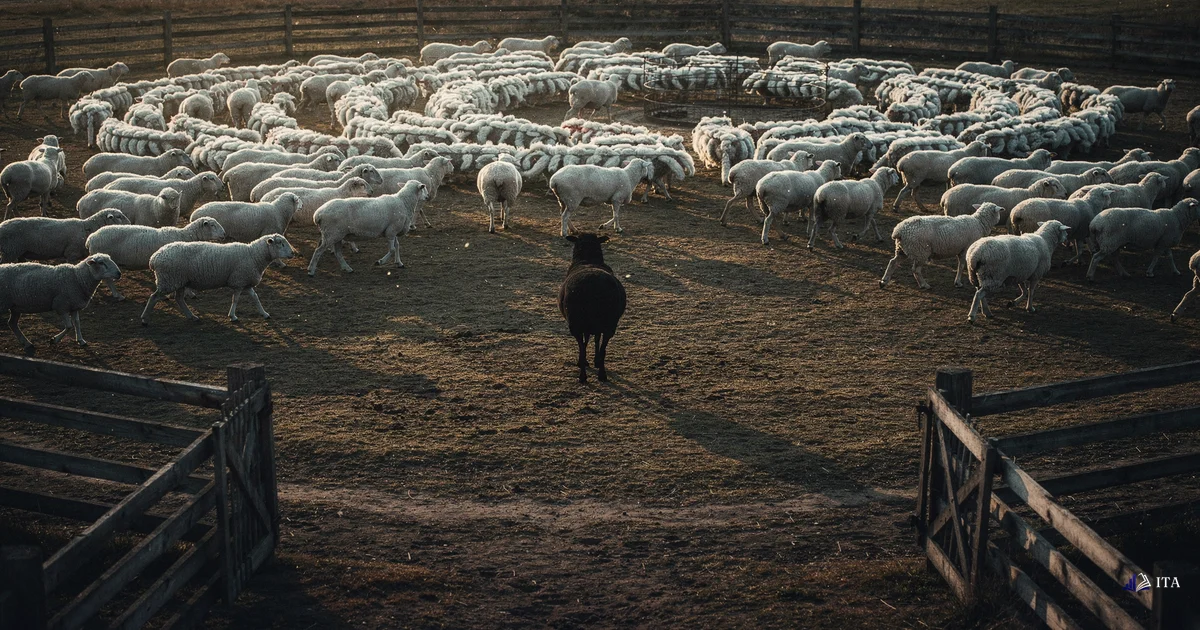
Herding mentality in forex prop firms isn't about consciously copying trades. It's about unconscious behavioural contagion. When you see "Just hit my profit target!" messages flooding the chat, when the leaderboard shows aggressive traders banking massive days, when everyone's discussing the same EUR/USD setup, your brain doesn't process this as information. It processes it as social pressure.
The mechanism is brutally simple. Your mirror neurons fire when observing others' trading behaviour, creating an automatic impulse to match their risk-taking. You don't decide to increase position size after seeing others' profits. Your brain does it for you, below the threshold of conscious awareness. Research from the IMF's experimental study with financial professionals proves even experienced traders abandon their own analysis to follow the crowd. Our guide on How to Handle Losing Streaks in Funded Accounts covers this in more depth.
This creates three specific failure patterns in prop environments. First, position sizing creep, you unconsciously match the risk levels you perceive others taking. Second, trade frequency acceleration, the constant activity in community channels triggers overtrading. Third, stop-loss erosion, seeing others "diamond hand" losing positions weakens your exit discipline.
The Neuroscience of Crowd Risk
Crowd psychology triggers neurological responses that override individual risk assessment in trading environments. Behavioural finance research reveals why prop firm communities amplify herding. Some academic analyses of forex markets have found herding effects across major currency pairs, intensifying during volatile periods, exactly when prop firm traders need independent thinking most. The problem compounds because of what researchers call "uninformative feedback." Some research on retail forex trading suggests that when performance feedback appears random (as daily P&L swings do), traders paradoxically increase risk rather than reduce it. In prop firm environments, where you're watching dozens of traders' results in real-time, this noisy feedback creates a risk-escalation spiral. Your prefrontal cortex, responsible for rational planning, can become less effective when social proof contradicts your strategy. Some brain imaging research suggests the amygdala (fear/greed centre) can override executive function when we perceive ourselves moving against the group. You experience this as FOMO, but neurologically it may be a survival instinct misfiring in a modern context.
The Day Everyone Saw the Same Trade
Herding mentality in forex prop firms can destroy multiple funded accounts simultaneously when traders follow identical setups. This psychological phenomenon affects up to 70% of retail traders, according to behavioral finance research (IMF Working Paper, 2008).
On a Tuesday morning, the setup looked perfect. EUR/USD formed a clear ascending triangle on the H4, right at a major support level. One influential trader in the Discord posted their analysis. Within minutes, dozens of traders discussed entry points. The crowd dynamics took over.
Early entrants posted screenshots of green positions. The leaderboard showed several traders already up 2-3% for the day. More pile in. Position sizes increase, nobody wants to miss the move others are catching. The chat erupts with rocket emojis and "LFG" messages.
Then the triangle failed. EUR/USD plummeted through support, triggering a cascade of stop-losses. But here's where herding mentality in forex prop firms turned a manageable loss into account destruction: seeing others holding positions, traders moved their stops. Watching the chat messages, they added to losing positions.
The chat sentiment shifted from euphoria to desperate hope. By London close, multiple funded accounts were breached Not because the setup was wrong (failed patterns happen). They breached because every trader made the same psychological errors simultaneously, amplified by watching each other.
This herding behavior demonstrates why independent analysis matters in prop firm trading. Traders who avoid social trading channels tend to perform better in challenge phases. The Institutional Trading Academy (ITA) emphasizes developing individual decision-making frameworks to combat this exact phenomenon.
Key warning signs of herding mentality:
• Multiple traders discussing the same setup
• Position sizing based on others' success
• Moving stops due to social pressure
• Adding to losers because "everyone else is holding"
Recognizing these patterns early can prevent the cascade effect that destroys prop firm accounts. When you see unanimous agreement on a trade setup, consider it a contrarian signal rather than confirmation.
Building Your Anti-Herd Protocol
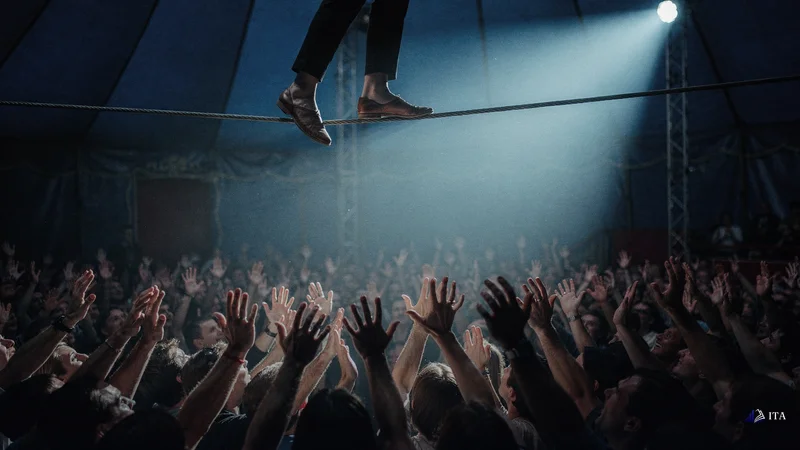
Anti-herd protocols require structural changes to trading routines, not willpower alone. Breaking free from crowd influence demands systematic approaches targeting specific psychological vulnerabilities. The protocol has three components, each targeting a specific vulnerability.
First, implement pre-emptive risk caps below firm limits. If your prop firm allows 5% daily drawdown, hard-code 2% as your maximum. This isn't conservatism, it's a buffer against crowd-induced position sizing. When everyone's risking more, your lower ceiling prevents unconscious matching. Use platform settings to enforce this mechanically.
Second, create trade isolation through journaling before exposure to others' ideas. Document your complete analysis, entry, stop, target, and reasoning, before opening any chat or social platform. Time-stamp it. This creates an anchor point your brain can reference when social pressure builds. The key: journal the trade before you take it, not after.
Third, minimize social input during market hours. This means Discord closed, Telegram muted, Twitter logged out. Check community channels once daily, after market close. Your edge comes from your analysis, not from consensus. The most consistent funded traders treat trading like a solo sport, not a team activity.

Daily Practices That Preserve Independence
Trading independence requires deliberate daily practices that isolate decision-making from crowd influence. Your pre-market routine determines whether you trade your plan or the crowd's emotions. Start with complete analysis in isolation, charts, levels, scenarios mapped without external input.
During trading hours, implement the "submarine protocol", you surface for information only at predetermined times. Set three five-minute windows for checking broader market sentiment. Outside these windows, you're underwater, no chat, no social media, no leaderboards. This isn't about missing opportunities; it's about missing the noise that derails your process.
Post-market review focuses on deviation analysis. Compare your executed trades against your pre-market plan. Every deviation gets categorized: technical (setup changed) or psychological (influenced by others). Track the percentage of psychological deviations. If it exceeds 20%, you're too exposed to crowd influence.
The uncomfortable truth is that your greatest edge in prop firm trading isn't a strategy or indicator. It's the ability to think independently when everyone around you is thinking the same thing. The crowd is always wrong at the moments that matter most, major tops, bottoms, and the trades that breach accounts.
ITAfx traders who maintain consistent profitability share one trait: they trade in psychological isolation even while part of a community. They use the firm's resources without absorbing its groupthink. They celebrate others' wins without chasing their trades.
Your funded account survival depends on recognizing a simple reality: in a world where information is instant and universal, the edge has shifted from what you know to how independently you can act on it. The herd will always exist. Your job isn't to fight it or join it, it's to observe it from a distance while executing your own plan. Our guide on Head and Shoulders Pattern Forex covers this in more depth.
The next time you feel that pull to match what others are doing, remember: the most expensive trades in prop firm history weren't bad analysis. They were good setups that everyone saw at the same time.
Ready to get funded?
50% off instant accounts with code 50CRYPTO.
Get Funded →Frequently Asked Questions
How does herd mentality specifically manifest in forex prop firm environments?
Herd mentality in prop firms appears as unconscious behavioural contagion through community channels. Traders see others' profits, leaderboard positions, and trade discussions, triggering mirror neuron responses that automatically influence position sizing and risk decisions. This creates three failure patterns: position sizing creep, trade frequency acceleration, and stop-loss erosion when watching others hold losing positions.
Why do funded traders fail even with proven strategies?
Many traders with backtested edges still fail due to psychological errors, not strategy flaws. Behavioural observations suggest that even experienced professionals can abandon their own analysis to follow crowd behaviour. In prop environments, tight daily loss limits mean a few crowd-influenced mistakes can breach accounts quickly, regardless of strategy quality.
What role do Discord groups and social media play in prop trader failures?
Social platforms amplify herding through constant exposure to others' trading activity. Screenshots of profits, rocket emojis, and 'diamond hands' messages create psychological pressure to match perceived risk levels. The NBER study shows that noisy feedback from watching others' results paradoxically increases risk-taking rather than promoting caution, leading to account breaches.
How should prop traders structure risk to avoid herd-driven decisions?
Implement pre-emptive risk caps below firm limits - if the prop firm allows 5% daily drawdown, hard-code 2% maximum. Risk only 0.25-1% per trade with maximum 3-5 trades daily. Create trade isolation by documenting complete analysis before exposure to community channels. These mechanical limits prevent unconscious matching of others' risk levels.
Do prop firm leaderboards help or hurt trader performance?
Leaderboards typically hurt performance by creating social comparison pressure. Seeing aggressive traders banking large daily gains triggers FOMO and position sizing creep. The most consistent funded traders treat trading as a solo activity, checking community channels only once daily after market close to avoid real-time psychological influence during trading hours.
Start Your Trading Evaluation
Simulated funded accounts up to $400K. Up to 95% profit split.
Get Funded