 ITA
ITAFrom Construction Worker to Funded Trader: Your Blueprint for Success
Discover how former construction workers transition to funded trading. Learn the mindset shifts, risk management, and practical steps to build.
Short answer
Discover how former construction workers transition to funded trading. Learn the mindset shifts, risk management, and practical steps to build. In a prop firm context this still sits under simulated-capital rules: fees buy access to the evaluation or funded environment, not a deposit of trading capital.
Simulated capital: prop firm evaluation and funded stages discussed here typically run on simulated accounts. Challenge fees pay for access to that environment; they are not a deposit of trading capital. ITAfx accounts are simulated capital.


The Dream vs. The Reality: Why Trading Attracts Blue-Collar Workers
Trading attracts blue-collar workers because it promises consistency without the physical toll. The appeal is straightforward: whilst construction demands early mornings, aching backs, and calloused hands for modest wages, trading appears to offer unlimited earning potential from behind a computer screen.
Trading offers clear benefits: Work from anywhere. No physical toll. Unlimited earning potential.
For construction workers watching their bodies break down year after year, the appeal is magnetic. Trade the hard hat for a laptop. Exchange the job site for a home office. Build wealth instead of buildings.
The skills seem transferable too. Construction workers understand risk, one wrong move with heavy machinery can end a career. They follow strict protocols because lives depend on it. They show up every day, regardless of weather or mood. They measure twice, cut once. Surely these traits translate to trading success?
Yet construction workers who transition to trading without proper capitalisation and methodology fail at the same rate as everyone else. 97% of those who day-traded >300 days lost money; only 0.4% earned more than a bank teller.
The hard hat doesn't grant immunity from these statistics. The problem isn't discipline. It's not work ethic. It's something far more fundamental that the obvious answer completely misses.
The Real Problem: Beyond Strategy, It's Psychology and Capital
Construction workers fail at trading not from lack of discipline but from insufficient capital forcing them to take excessive risks, which triggers stress responses that override their normally methodical approach.
Consider the typical journey: after years of saving, a construction worker opens a trading account with $500 to $5,000. It feels like serious money, perhaps a month's wages. But in trading terms? It's a mathematical trap.
With such limited capital, generating meaningful income requires massive risks. To make $1,000 from a $5,000 account demands a 20% return. Achieving that consistently means overleveraging, tight stops that get hunted, and emotional decisions that compound into account destruction.
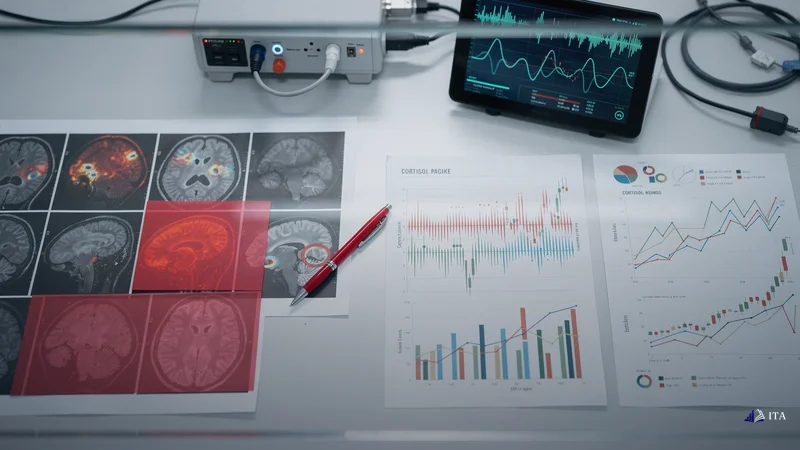
The psychological cascade is predictable. On a London trading floor, cortisol levels in traders rose significantly with result variance and market volatility. For a construction worker accustomed to predictable hourly wages, the wild swings of profit and loss trigger stress responses that impair decision-making.
The same person who methodically follows safety protocols on a construction site starts revenge trading after a loss. They double down on losing positions. They abandon their plan when emotions peak.
The mindset infiltrates even the most disciplined minds when small accounts face large dreams. A construction worker earning $60,000 annually needs their $5,000 account to return 1,200% just to replace their salary. The maths is impossible, but desperation makes traders attempt it anyway.
They increase position sizes, remove stop losses, and trade during news events. Anything to accelerate returns. The account inevitably implodes.
Evidence and Framework: What Science Says About Trading Success
Scientific evidence shows that construction workers experience the same physiological stress responses to trading losses as any other trader, with measurable spikes in cortisol and heart rate that impair decision-making regardless of background. When money is at risk, the body responds with measurable stress markers that affect everyone, regardless of their day job.
Studies of professional traders document heart rate spikes during volatile periods. They show elevated cortisol that can shift risk preferences. They record skin conductance changes that correlate with market movements.
These aren't signs of weakness. They're human responses to uncertainty. A construction worker's nervous system reacts to trading losses the same way a banker's does.
The difference lies not in the person but in the environment and capital structure. What actually separates successful traders isn't immunity to these responses but systems to manage them.
Institutional traders don't succeed because they feel less stress. They succeed because they trade with adequate capital, follow strict protocols, and aren't trying to pay their mortgage from next week's trades.
The research also highlights the power of what psychologists call noncognitive skills: grit, self-control, and adaptability. These traits, abundant in construction workers, only translate to trading success when paired with proper capitalisation.
A disciplined approach with $500 still loses to mathematics. But that same discipline with a $200,000 funded account can generate sustainable income through conservative, systematic trading.
Institutional trading floors don't hire based on market predictions or complex strategies. They hire traders who can follow rules. They seek those who manage risk mechanically. They want people who execute a process repeatedly without deviation.
These are exactly the skills construction workers use daily. But only when given institutional-grade capital do these skills generate institutional-grade results.

A Practical Protocol: Your Step-by-Step Transition to Funded Trading
To transition from construction to funded trading, apply your existing systematic approach to three core areas: calculate position sizes mechanically (0.5% risk per trade), maintain fixed trading hours like job site schedules, and document every trade as thoroughly as construction paperwork. It's about adapting the systematic approach you already use in construction to the trading environment.
Mastering risk management becomes your foundation, just as a solid foundation supports every structure you build. In construction, you'd never start framing before the concrete cures. In trading, you calculate position size before considering entry points.
The formula is mechanical: with a $200,000 funded account and 0.5% risk per trade, you're risking $1,000. If your stop is 50 pips on EUR/USD, that's 2 standard lots. No emotion, no guessing. Pure calculation, like determining load-bearing requirements.
Building a trading routine mirrors the consistency of job site schedules. You don't show up to construction work "when you feel like it". You arrive at the designated time regardless of weather or mood. Apply this same discipline to trading.
Set specific hours for market analysis, entry execution, and review. A funded trader managing $400,000 might trade just the London or New York session. They take 3-5 high-probability setups weekly. Quality over quantity, like the difference between rushed work and craftsmanship.
Journaling every trade serves the same function as construction documentation. On a job site, you document materials used, measurements taken, and problems encountered. Your trading journal tracks entry rationale, position size calculations, emotional state, and outcome.
Over time, patterns emerge. Maybe you consistently lose money trading after 2pm. This mirrors how construction accidents spike during afternoon fatigue. The data guides adjustments to your process.
The mechanical nature of this protocol strips away the gambling mindset that destroys small retail accounts. You're not trying to double your funded account this month. You're following a process that generates consistent returns over time.
The Actionable Challenge: Starting Your Journey with Prop Firms
The prop firm model solves the capitalisation problem that breaks most construction-worker traders. Instead of risking your savings in a $5,000 account, you prove your discipline in an evaluation environment and gain access to significant capital.
Choosing the right prop firm requires the same due diligence as selecting construction materials. ITAfx offers instant funded accounts up to $400,000 with no evaluation required on certain account types. Other firms require passing challenges that test your consistency over time.
Match the firm's rules to your trading style. If you prefer swing trading with wider stops, ensure the drawdown limits accommodate this approach.
Navigating evaluation challenges parallels completing construction certifications. You wouldn't attempt electrical work without proper certification. Don't attempt funded trading without understanding the rules.
Daily loss limits, maximum drawdown, and consistency requirements aren't obstacles. They're the framework that ensures long-term success. A typical challenge might require 8% profit while staying within 5% daily and 10% maximum drawdown.
These aren't arbitrary numbers but risk parameters that professional traders follow.
Scaling from a $50,000 to $400,000 funded account happens through proven consistency, not aggressive trading. Each payout demonstrates your reliability. Each month of steady returns builds your track record.
Like advancing from apprentice to journeyman to master craftsman, your trading capital grows with demonstrated skill. The construction worker who spent years perfecting their craft understands this progression intuitively.
The numbers work at scale: A 3% monthly return on $400,000 generates $12,000. This represents solid income without the physical toll of construction work. This isn't fantasy but the documented reality for disciplined traders who approach prop firms as a professional opportunity rather than a lottery ticket.

Perspective Shift: From Laborer to Institutional-Minded Trader
The shift from laborer to institutional-minded trader requires adopting a professional mindset that treats trading as skilled work, not escape. This shift means applying construction's discipline, systematic approach, and respect for proper tools to market analysis and risk management.
Embracing the process means accepting that trading success, like construction mastery, develops over years, not weeks. You didn't become a skilled tradesperson overnight. You won't become a consistently profitable trader overnight either.
But unlike construction, where your earning potential peaks with physical capacity, trading rewards discipline and process adherence indefinitely. A 65-year-old trader with sound risk management outperforms a 25-year-old gambling on momentum.
The role of mentorship and community mirrors the apprenticeship model in construction. Just as you learned from experienced tradespeople, connecting with successful funded traders accelerates your development.
They've made the mistakes, refined the process, and can guide you past common pitfalls. ITAfx's trading community includes traders from similar backgrounds who've successfully made this transition.
Redefining success shifts from chasing monthly windfalls to building sustainable systems. In construction, you take pride in work that stands the test of time. Apply the same standard to trading.
Success isn't one profitable month but twelve consecutive months of disciplined execution. It's not about the biggest win but the consistency of returns.
When you can look back at a year of trading journals showing mechanical position sizing, controlled drawdowns, and steady growth, you've built something more valuable than any single trade: a professional trading business.
This shift in perspective changes trading from an escape fantasy into a legitimate career built on the same principles that made you successful in construction: showing up, following proven processes, and letting compound results speak louder than promises.

Conclusion: Build Your Trading Future, Brick by Disciplined Brick
The path from construction worker to funded trader isn't paved with complex strategies or market predictions. It's built on the same foundation that makes buildings stand: proven processes, quality materials, and patient craftsmanship.
You've spent years perfecting a trade that demands precision, discipline, and unwavering adherence to safety protocols. These aren't just job skills. They're the exact traits that separate successful funded traders from the 97% who fail.
The difference isn't in you. It's in applying these skills to an environment with adequate capital and proper risk controls. The prop firm model offers what retail trading never could: institutional-grade capital that makes conservative trading profitable.
When 3% monthly returns on $400,000 generate meaningful income, you stop gambling and start building. Each trade becomes a carefully measured component of a larger structure, not a desperate attempt to escape your current situation.
Your transition starts with a single decision: stop trying to trade your way out of construction with a small account and start building a trading career with the same methodical approach that's served you for years.
Ready to get funded?
50% off instant accounts with code 50CRYPTO.
Get Funded →Frequently Asked Questions
Can a construction worker really become a funded trader?
Yes, construction workers possess many skills that translate directly to trading success: discipline, systematic thinking, and risk awareness. The key difference is using adequate capital through prop firms rather than small retail accounts that create mathematical impossibilities.
What's the main reason construction workers fail at trading?
The primary issue isn't lack of discipline but undercapitalisation combined with emotional volatility. Trading a $5,000 account while trying to replace a $60,000 salary requires impossible returns that lead to overleveraging and account destruction.
How much capital do you need to trade professionally?
Professional trading requires institutional-scale capital. A $200,000 funded account allows for conservative 3% monthly returns ($6,000) without overleveraging. Small retail accounts mathematically force traders into high-risk gambling scenarios that consistently fail.
What psychological challenges do construction workers face in trading?
Trading can trigger measurable stress responses in some individuals, such as elevated cortisol and heart rate changes. Construction workers accustomed to predictable hourly wages often struggle with profit and loss volatility, leading to revenge trading and abandoning systematic approaches.
How do prop firms solve the capitalisation problem for blue-collar workers?
Prop firms provide access to significant trading capital ($200,000-$400,000) after proving consistency in evaluation challenges. This eliminates the small-account death spiral and allows conservative strategies to generate meaningful income through proper position sizing and risk management.
Key Takeaways
- Construction workers fail at trading not due to lack of discipline, but because undercapitalisation forces overleveraging and emotional decisions.
- With adequate capital like a $200,000 funded account, construction discipline translates directly into systematic trading success through mechanical risk management.
- Prop firms solve the capitalisation trap by providing institutional-grade capital where 3% monthly returns generate meaningful income without gambling.
- Apply construction's systematic approach to trading: calculate position size before entry, maintain consistent schedules, and document every trade like job site records.
- Choose prop firms based on rule compatibility with your trading style, ensuring drawdown limits accommodate your preferred position sizing and timeframes.
- Scale from evaluation to larger funded accounts through proven consistency, treating each payout as certification of your professional trading reliability.
- Transform from escape fantasy to professional career by embracing trading as skilled work requiring years of development, not overnight success.
Ready to get funded?
Instant accounts, simulated capital, rules published before you pay. 50% off with code 50CRYPTO.
Get Funded →