 ITA
ITAFailed Prop Firm Trader Comeback Story: The Psychology Behind Your Worst Losses
Discover the psychology behind failed prop firm challenges and a 5-step protocol for traders to engineer a comeback. Learn the protocol disciplined traders use to recover from failed challenges.
Short answer
Discover the psychology behind failed prop firm challenges and a 5-step protocol for traders to engineer a comeback. Learn the protocol disciplined traders use to recover from failed challenges. In a prop firm context this still sits under simulated-capital rules: fees buy access to the evaluation or funded environment, not a deposit of trading capital.
Simulated capital: prop firm evaluation and funded stages discussed here typically run on simulated accounts. Challenge fees pay for access to that environment; they are not a deposit of trading capital. ITAfx accounts are simulated capital.
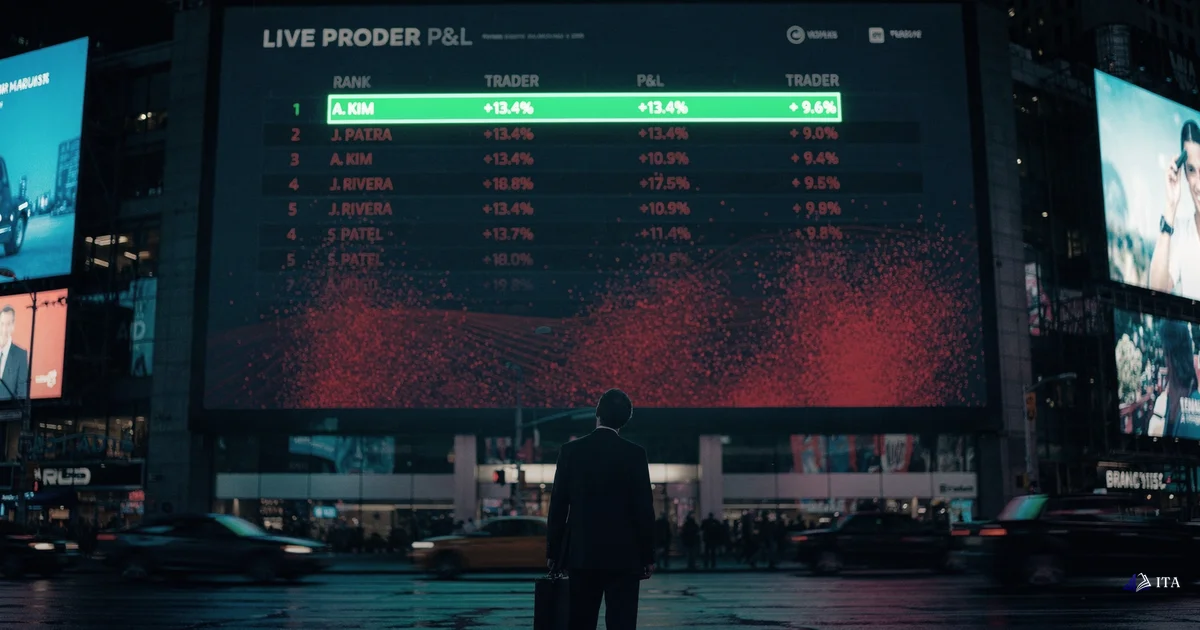

The Psychological Trap: Why Most Prop Traders Fail
The traders who eventually succeed treat blown challenges differently. They don't see them as expensive mistakes to forget. They see them as behavioural data worth analysing. And that shift, from emotional victim to clinical researcher, changes everything.
Most failed prop firm challenges follow a predictable psychological pattern. It starts with overconfidence after a few winning trades. You've backtested your strategy, you know it works, so you increase position size "just this once" to accelerate profits. The market moves against you. Instead of accepting the loss, you double down, literally. Now you're not trading your plan; you're trading your ego.
The behavioural finance term for this is "loss aversion," and it's hardwired into human psychology. As Odean's landmark study in The Journal of Finance (1998) demonstrated, traders are 50% more likely to sell a winning position than a losing one. We'd rather risk everything than admit we're wrong.
In prop firm challenges, this manifests as specific behaviors: oversizing positions after losses, removing stop losses when price approaches them, switching strategies mid-evaluation, and revenge trading after a red day. In practice, daily drawdown breaches account for a large share of liquidations in prop firm challenges. Nearly half of all failures happen because traders can't stop digging when they're in a hole.
The Science Behind It: Behavioral Finance in Prop Trading
But there's a deeper psychological trap at work. The prop firm model itself triggers our worst trading instincts. You've paid for the challenge. There's a time limit. Profit targets loom. Other traders on Discord are posting their certificates. Every day you don't trade feels like wasted opportunity. Every loss feels like stolen money. The evaluation becomes a pressure cooker for poor decisions.
The science behind these failures is well-documented. Prospect theory, developed by Kahneman and Tversky, shows that humans feel losses approximately twice as intensely as equivalent gains. In trading, this translates to holding losers too long and cutting winners too short, the exact opposite of what profitable trading requires.
Add cognitive biases like confirmation bias (seeing only evidence that supports your position) and overconfidence bias (believing your win rate is higher than it actually is), and you have a recipe for account destruction. These aren't character flaws. They're human nature. And until you build systems to counteract them, they'll sabotage every funded account you touch. Our guide on How to pass prop firm challenge covers this in more depth.
Consider one trader's brutal honesty about his failed challenges. After passing Phase 1 with steady 0.5% daily gains, he hit Phase 2 with newfound confidence. Day one: up 2%. Day two: gave it all back trying to "maintain momentum." Day three: increased position size to "catch up." Day four: account blown. The pattern repeated across three different firms, burning through over $4,000 in challenge fees.

Real Trading Scenario: A Failed Trader's Brutal Account
A prop firm trader's comeback story reveals the critical shift that changes everything. What turned his failed challenges around wasn't a new strategy or indicator. It was a simple spreadsheet that tracked more than just trades.
He started recording emotional states alongside market data. Every entry included account balance before trade, emotional rating (1-10), reason for entry, and whether rules were followed. The data revealed patterns invisible in the moment.
His trading journal revealed that most losses occurred during periods of high emotional stress Average loss on "revenge trades" was 3.4 times larger than planned risk. Win rate when following rules: 54%. Win rate when breaking rules dropped to just 23%.
This is the shift successful traders make after failed challenges. They stop seeing blown evaluations as failures. Instead, they start seeing them as expensive but valuable data sets. Each terminated evaluation becomes a post-mortem opportunity.
The questions that matter: What specific behaviors led to the breach? What emotional state preceded the worst decisions? What market conditions triggered overtrading?
The comeback protocol isn't about trading better. It's about failing better.

The Comeback Protocol: A 5-Step Framework for Recovery
Step one: reframe failure as data collection. Every blown challenge contains precisely the information you need to pass the next one. But only if you document it. Create a "failure forensics" spreadsheet. For each failed evaluation, document: exact breach point, emotional state before breach, rules broken, market conditions, and lessons learned. Patterns will emerge.
Step two: implement institutional-grade risk management. industry practice found that traders without backtested strategies have a 92% failure rate, compared to 35% for those using validated systems. But here's the key: institutional risk management means risking less than 0.75% per trade, not the 1-2% most retail traders use. At 0.75% risk per trade, even a brutal losing streak leaves room to recover; at 2% risk, a handful of consecutive losses can end the challenge. For the full framework, see From blown accounts to consistent prop firm withdrawals.
Step three: journal for behavioural volatility, not just performance. Track your emotional state before, during, and after each trade. Rate your confidence level, stress level, and adherence to rules. You're not looking for perfect trades, you're looking for consistent behaviour. Accounts using systematic approaches pass 2.3 times more frequently than purely discretionary traders. Our guide on Comeback Story covers this in more depth.
Step four: build a daily pre-trade routine for mental preparation. Elite athletes don't just show up and perform. They have pre-game rituals that prime their mental state. Your trading day should begin the same way: review your rules, check your emotional state, and commit to your risk parameters before opening a single chart. If you're not in the right headspace, don't trade. The market will be there tomorrow.

Daily Practice: Building Discipline and Resilience
Step five: embrace the long game. Only a small fraction of traders consistently withdraw earnings from prop firms. But those who do share one trait: they think in months and years, not days and weeks. They're not trying to pass a challenge. They're building a sustainable trading business.
The daily practice of building discipline starts with scheduled breaks after losses. Institute a "circuit breaker" rule: after any loss exceeding 1% of account balance, mandatory 30-minute break. After two consecutive losses, stop trading for the day. This isn't weakness, it's systematic prevention of behavioural volatility.
Equally important is rebuilding confidence through small wins. After a failed challenge, don't immediately buy another one. Trade micro lots on a personal account. Prove to yourself you can follow rules when money isn't the motivator. Build a track record of 50 consecutive trades following your plan, regardless of outcome. Only then are you ready for another evaluation.
The path from serial challenge failure to funded trader isn't about finding a better strategy. It's about becoming a better decision-maker under pressure. Every blown account taught you exactly what not to do. That education cost thousands. Don't waste it by repeating the same patterns.

Conclusion: Your Funded Account Starts with a Resilient Mindset
Your failed prop firm trader comeback story doesn't end with the blown account. It begins there.
Every funded trader who's receiving lasting consistency has one thing in common: they treated their failures as data, not disasters. They analyzed their blown challenges with the same precision they'd analyze a chart pattern. They found the behavioral triggers. They built protocols. They turned emotional reactions into mechanical responses.
The difference between the 93% who never see a payout and the 7% who do isn't talent or strategy. It's the willingness to dissect failure without ego.
Your next evaluation isn't about proving you can trade. It's about proving you've learned from every stop loss you moved, every position you oversized, every revenge trade you took. The market will test those exact weaknesses again.
When you're ready to apply these lessons with a funded account, explore ITA's instant account approach. No multi-phase challenges. Just you, the protocols you've built, and up to $400K in simulated capital to prove your transformation is real.
Ready to get funded?
50% off instant accounts with code 50CRYPTO.
Get Funded →Frequently Asked Questions
Why do most funded traders fail their first prop firm challenge?
Most funded traders fail due to psychological factors, not strategy flaws. According to Prop Firm Bridge Education (2026), 87-95% fail their first attempt primarily due to oversizing positions, removing stop losses, and revenge trading. These behaviours stem from loss aversion and overconfidence bias, not technical incompetence.
How many prop firm challenges do traders typically fail before getting funded?
Data shows traders often fail 3-8 challenges before success, with some attempting 40+ evaluations. industry practice reports that traders without systematic approaches have a 92% failure rate. The key difference isn't attempt number but implementing disciplined risk management protocols.
What specific psychological mistakes lead to blown prop firm accounts?
The most common psychological mistakes include oversizing after losses, removing stop losses when price approaches them, switching strategies mid-evaluation, and revenge trading after red days. industry practice found that daily drawdown breaches account for 45% of all prop firm challenge failures.
How can a trader rebuild confidence after failing multiple prop firm evaluations?
Rebuild confidence through systematic data collection and small wins. Trade micro lots on personal accounts to prove rule-following ability without financial pressure. Document 50 consecutive trades following your plan regardless of outcome. Only then attempt another evaluation with proven behavioural consistency.
What risk management rules help prevent breaching prop firm drawdown limits?
Risk less than 0.75% per trade and implement stricter personal daily loss limits than firm rules. At 0.75% risk, a long losing streak still leaves you inside the loss limits. Institute circuit breaker rules: mandatory 30-minute break after any 1% loss, stop trading after two consecutive losses.
Key Takeaways
- Document every blown challenge with emotional state, rules broken, and breach triggers, patterns reveal exactly what destroys accounts.
- Risk maximum 0.75% per trade instead of 1-2%, institutional risk management keeps any single losing streak far from the loss limits.
- Implement mandatory 30-minute breaks after any 1% loss and stop trading after two consecutive losses to prevent behavioral volatility.
- Track emotional ratings before trades on 1-10 scale, losses cluster when emotional intensity runs high, log your state before every trade.
- Build 50 consecutive rule-following trades on micro lots before attempting another prop firm challenge to prove systematic discipline.
- Focus on behavioral consistency over profit targets, accounts using systematic approaches pass 2.3 times more frequently than discretionary trading.
- Apply institutional protocols at ITA's instant account platform to bypass evaluation pressure and prove your transformation with up to $400K.
Start Your Trading Evaluation
Simulated funded accounts up to $400K. Up to 95% profit split.
Get Funded