 ITA
ITAFrom Code to Capital: How One Engineer Built a Funded Trading Career
Discover how Marcus Chen transformed from software engineer to funded forex trader, earning a second $100K funded account in 18 months through systematic discipline and prop firm.
Short answer
Discover how Marcus Chen transformed from software engineer to funded forex trader, earning a second $100K funded account in 18 months through systematic discipline and prop firm. In a prop firm context this still sits under simulated-capital rules: fees buy access to the evaluation or funded environment, not a deposit of trading capital.
Simulated capital: prop firm evaluation and funded stages discussed here typically run on simulated accounts. Challenge fees pay for access to that environment; they are not a deposit of trading capital. ITAfx accounts are simulated capital.
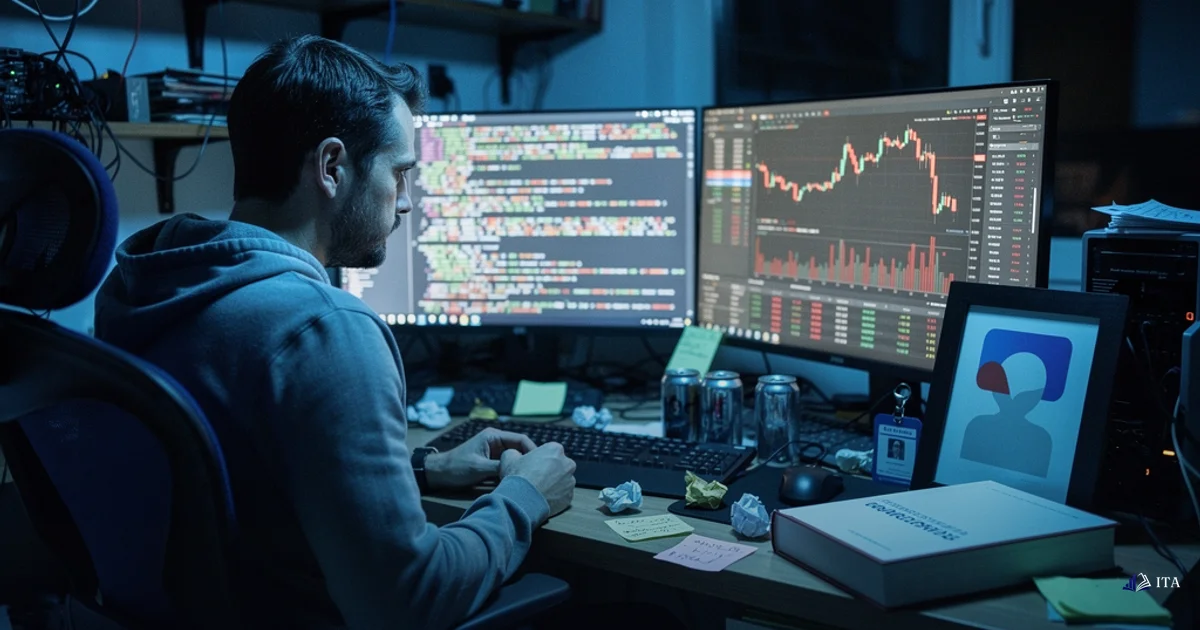

The Origin: Why Engineers Make Natural Traders
Adrian: Marcus, you went from writing code at a FAANG company to running two $100K funded accounts in 18 months. That's exactly the kind of engineer turned funded forex trader interview our readers are searching for. Many engineers who try trading struggle to keep their first account within their early months. What made you different?
Marcus: Honestly? I almost joined that statistic. My first six months were a disaster. I thought I could outsmart the market with pure technical analysis.
Adrian: Tell me about that initial struggle.
Marcus: I did what every engineer does, treating the market like a technical problem to solve. Built this elaborate Python system with 14 indicators, machine learning models, the works. Backtested beautifully. Down 40% in two months. The complexity that made me successful in engineering became my biggest weakness in trading.
Adrian: Here's what nobody tells you: the market isn't a coding problem. It's a discipline problem. When did you figure that out?
Marcus: After I nearly quit. I'd burned through $8,000 of my own money trying to "optimize" my way to profits. My wife found me at 3 AM staring at charts, completely lost. She said something that changed everything: "You're not debugging code, Marcus. You're debugging yourself." That moment shifted my entire perspective on what trading really requires.
Adrian: The origin story matters here. Why did an engineer at a top tech company even start trading forex?
Marcus: The numbers speak volumes about why engineers gravitate toward funded trading. As an engineer at a major tech company, I was making good money but felt trapped in the corporate structure. I saw trading as a way to leverage my analytical skills while building something independent. The irony is that my engineering background almost killed my trading career before it started.
Adrian: How so?
Marcus: Engineers love complexity. We build systems, optimize algorithms, chase perfection. But successful trading is about simplicity and consistency. I had to unlearn years of engineering habits. The breakthrough came when I stopped treating the market like a problem to solve and started treating it like a business to manage. This engineer turned funded forex trader interview exists because I learned that lesson the hard way.
The Dark Period: When Systems Fail
Marcus: Silicon Valley burnout, honestly. I was making $280K a year but working 80-hour weeks. Trading felt like freedom, work from anywhere, no meetings, no sprints. Plus, I thought my engineering background would give me an edge. Turns out, it was almost a disadvantage at first.
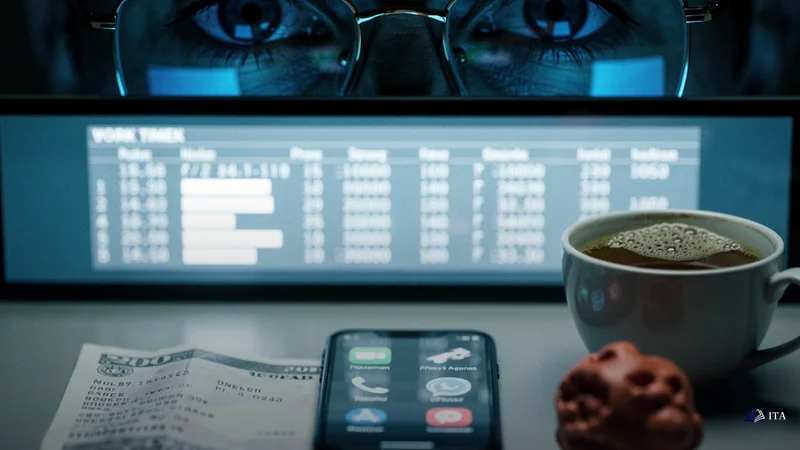
Marcus: Engineers are trained to add features, not remove them. We think more data equals better decisions. In trading, more data often equals more noise. I had to unlearn a decade of engineering instincts.
Adrian: Let's talk about the dark period. You mentioned losing $8,000. Walk me through those months.
Marcus: Pure hubris. I started with a $10,000 account, thinking I'd double it in three months. My system had 47 different entry conditions. Forty-seven! I was taking 15-20 trades a day, constantly tweaking parameters. Every loss meant adding another filter, another indicator. Classic overengineering.
The worst part? I was profitable on paper. My backtests showed 73% win rate. But trading destroyed me. Slippage, emotions, overtrading, everything the backtest couldn't capture.
Adrian: That's the part most people miss. Backtests assume you're a robot. You're not.
Marcus: Exactly. By month four, I was down to $2,000. I'd wake up at 4 AM for London open, trade until New York close, then spend evenings "improving" my system. My health tanked. My marriage was strained. I was solving the wrong problem.
The Turning Point: Less Is More
Adrian: What was the turning point?
Marcus: Two things happened in the same week. First, I found a funded trader interview where this guy said he only uses two indicators and trades maybe twice a week. I thought he was lying. Second, I calculated my actual stats: 287 trades, average loss $28, but my winning trades only averaged $31. I was grinding myself into dust for a 10% edge.
Adrian: Let me be direct: most traders never do that calculation. They focus on win rate, not expectancy.
Marcus: That calculation broke me. All that complexity for $3 of edge per trade? I shut down my system that day. Took two weeks off completely. When I came back, I started from zero.
Adrian: Describe "zero."
Marcus: One pair: EUR/USD. One timeframe: 4-hour. Two indicators: 20 EMA and ATR for stops. That's it. No machine learning, no complex entries. Just: Is price above or below the moving average? Is there a clear structure break? If yes to both, I take the trade.
Adrian: From 47 conditions to 2. That's... dramatic.
The Method: Engineering Discipline Applied to Trading
Marcus: My win rate dropped to 42%. My profitability doubled.
Adrian: Results. Not promises. Show me the actual method.
Marcus: Every Sunday, I mark key levels on the weekly chart. During the week, I check the 4-hour chart three times: London open, New York open, and before close. If price breaks structure near a key level with the trend, I enter. Stop at 1 ATR, target at 3 ATR. No exceptions.
Position sizing is pure math: 1% risk per trade, calculated from my funded account drawdown limit backwards. If my stop is 50 pips and I'm risking $500, position size is 1 lot. No discretion.
Adrian: The numbers. Walk me through your progression.
Marcus: Started with a $25K challenge in January 2025. Passed in six weeks. Eight trades total. Got funded in March. First payout: $1,847. Nothing life-changing, but it proved the concept.
Scaled to a $100K account by June. Consistent monthly payouts. Added a second $100K account in September.

The Numbers: Real Performance Data
Adrian: I built ITAfx because traders need capital, not complexity. Your story proves that. Let's do rapid fire. Ready?
Adrian: Biggest trading mistake?
Marcus: Thinking complexity equals edge.
Adrian: Best trading day?
Marcus: Made $4,200 on a single FOMC trade. One position, perfect setup.
Adrian: Worst trading day?
Marcus: Lost $1,800 trying to "make back" a loss. Broke every rule.
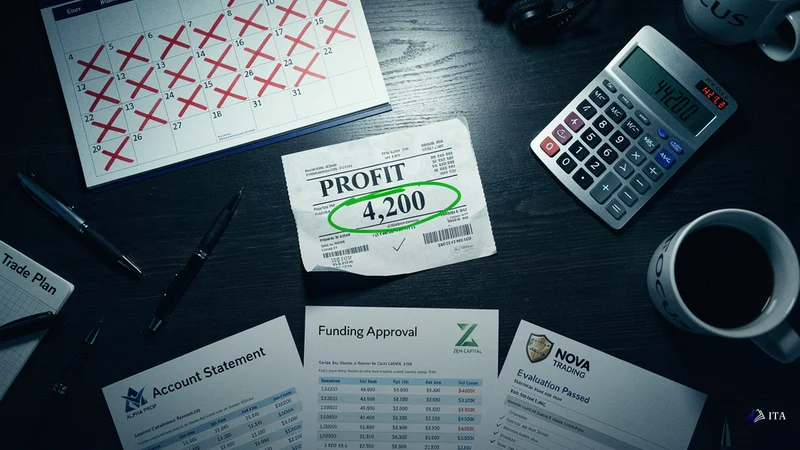
Rapid Fire: The Technical Details
Adrian: Hours per day trading now?
Marcus: 45 minutes. 15 minutes per session, three times daily.
Adrian: Percentage of days you don't trade?
Marcus: About 60%. No setup, no trade.
Adrian: One piece of advice for engineers starting trading?
Marcus: Your first system should fit on an index card. If it doesn't, you're overengineering.
Adrian: What would you tell yourself six months into that losing streak?

The Advice: What Marcus Learned the Hard Way
Marcus: Stop debugging the market. Start debugging your behavior. The market's not broken. Your approach is.
Adrian: Future plans?
Marcus: Scaling without breaking what works. I'm approved for $400K total funding across four accounts. Goal is $100K profit in 2026. But slowly. No rushing.
Adrian: That discipline. That's what separates funded traders from retail dreamers.
Marcus: One more thing. That elaborate Python system I built? I turned it into a trade journal. It tracks my behavior, not the market. Turns out that's the only algorithm that matters.
Adrian: There it is. The best traders aren't predicting the market. They're managing themselves.
Marcus still works full-time at his tech job. He trades 45 minutes a day and makes more than most retail traders who stare at screens for 12 hours. The difference isn't the strategy. It's the simplicity.
The Future: Scaling Without Breaking
At ITA, we fund traders like Marcus every week. Not because they have complex systems or perfect win rates. Because they understand that trading is about discipline, not degrees.
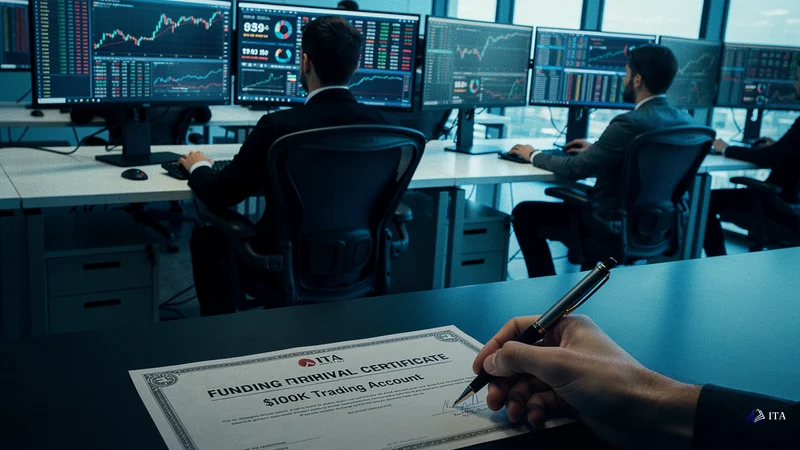
Ready to simplify your way to funding? Apply at ITAfx.com/get-funded.
Ready to get funded?
50% off instant accounts with code 50CRYPTO.
Get Funded →Frequently Asked Questions
How do engineers become successful forex traders?
Engineers succeed in forex by applying systematic thinking and discipline rather than complex algorithms. The key is simplifying strategies to 2-3 core rules, focusing on risk management over win rates, and treating trading as a behavioral problem rather than a technical one. Most successful engineer-traders use simple setups with strict position sizing rules.
What monthly return is realistic for a funded forex trader?
Realistic monthly returns for funded traders range from 3-8% of account size. Professional traders typically target 5-6% monthly gains with proper risk management. Returns above 10% monthly are unsustainable long-term and usually indicate excessive risk-taking that leads to account violations.
How long does it take to become profitable in forex trading?
Most traders require 2-3 years to achieve consistent profitability in forex trading. The learning curve includes mastering risk management, developing discipline, and finding a simple strategy that fits your schedule. Engineers often progress faster due to systematic thinking but still need time to develop emotional control.
How do traders pass funded account challenges?
Successful challenge completion requires strict adherence to drawdown limits, consistent position sizing at 1% risk per trade, and patience to wait for high-probability setups. Most passing traders take 8-15 trades total during the challenge period, focusing on quality over quantity with simple trend-following strategies.
What trading strategies do coders use in forex?
Successful coding professionals typically use simple trend-following systems with 2-3 indicators maximum. Common approaches include price action around key levels, moving average breakouts with ATR stops, and systematic position sizing. Complex algorithmic systems often fail in trading due to execution and psychological factors.
Start Your Trading Evaluation
Simulated funded accounts up to $400K. Up to 95% profit split.
Get Funded