
Economic Calendar for Forex Trading: Complete Guide 2026
Master economic calendar analysis for forex trading. Learn to read Previous-Forecast-Actual data, manage risk around news events, and build systematic.
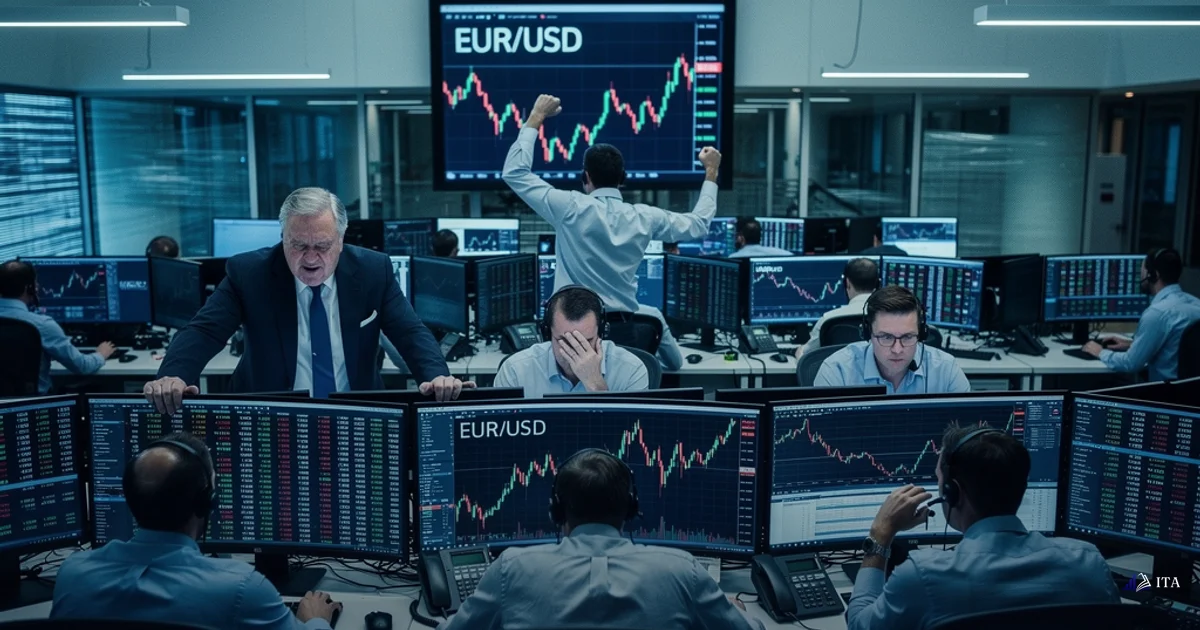

What Is an Economic Calendar?
Last Tuesday at 08:30 EST, EUR/USD spiked 47 pips in under sixty seconds. By 08:32, it had reversed completely, trapping thousands of retail traders who chased the initial move. The catalyst? US Core CPI printed 0.2% versus the 0.3% forecast. A seemingly minor miss that institutional desks had positioned for days in advance.
This happens every single day in forex markets. Economic data releases create violent price swings that seem random to most traders but follow predictable patterns for those who understand how to read an economic calendar properly. Here's the difference between the majority of consistently profitable traders and everyone else: they don't avoid these events. They hunt them.
Think about it. Most forex education treats the economic calendar as a defensive tool. A list of times to avoid trading. Close positions before NFP. Widen stops around FOMC. Stay flat during CPI. This risk-averse approach makes logical sense, which is precisely why it's incomplete. When everyone exits, someone else enters. When retail traders run from volatility, institutional flow creates opportunity.
The economic calendar isn't just a schedule of data releases. It's a roadmap of institutional positioning. Every high-impact event on that calendar represents a moment when the market reprices based on new information. The traders who profit consistently have learned to read not just what's coming, but how the market is likely to react based on the relationship between three critical numbers: Previous, Forecast, and Actual.
How to Read Economic Calendar Impact Levels
An economic calendar displays macroeconomic data releases with their scheduled times, affected currencies, and market impact ratings. Modern platforms like Forex Factory, FXStreet, and Trading Economics stream this data in real-time, showing the Previous value (last release), Forecast (analyst consensus), and Actual (live data) for hundreds of indicators across global economies. But here's what most traders miss: the calendar itself is just data. The edge comes from understanding how markets price information. We break this down further in SPY Weekly Outlook May 2026.
Open any major economic calendar. You'll see events colour-coded by impact level. Red for high, orange for medium, yellow for low impact. These ratings reflect historical volatility patterns. A red event like US Non-Farm Payrolls routinely moves major pairs 30-50 pips within minutes. But impact levels tell only part of the story. The real signal is in the deviation.
Professional traders focus on the spread between forecast and actual values. What's known as the "surprise factor." A high-impact event that meets expectations often produces minimal movement. A medium-impact event with significant surprise can trigger larger moves than NFP. This is why blindly avoiding all red events or trading every data release fails. The calendar shows you when markets might move. Understanding surprise dynamics tells you which direction and how far, Prop Firms Allowing News Trading: The Inside Scoop for Traders. For the full framework, see Week Ahead.
The best economic calendar platforms share core features but differ in execution. Forex Factory remains the retail standard with its clean interface and active forums. FXStreet adds technical analysis overlay. Trading Economics provides the deepest historical data. At Institutional Trading Academy, our traders typically run multiple calendars simultaneously. Forex Factory for the community sentiment, Trading Economics for the data depth, and their broker's calendar for exact millisecond timing.
Best Economic Calendar Platforms for Forex Traders
But platform selection matters less than process. The traders who pass our instant account evaluations don't just check the calendar randomly. They follow a systematic routine that transforms scheduled events into trading opportunities. This routine breaks down into three phases: weekly planning, daily preparation, and session-specific execution.
Every Sunday, successful traders map the entire week's high-impact events. They identify clustering. When multiple red events hit within hours. They note central bank speakers, whose unscheduled comments can move markets as violently as data. They mark "super days" when CPI, retail sales, and major earnings coincide, expanding ranges to 1.5-2x normal. This isn't about memorisation. It's about context. Knowing Wednesday has three red events changes how you trade Monday and Tuesday.
The daily routine sharpens focus to the next 24 hours. Pre-London, traders review overnight developments. Did Asian data surprise? Are futures pointing to risk-on or risk-off? They mark exact event times in their platform and set alerts 15 minutes before each release. Most critically, they identify the "path of least resistance." If EUR/USD sits at major support heading into ECB, the risk/reward skews bullish on any positive surprise, What Is A Prop Firm In Forex? Unlocking the Secrets of Forex Trading.
Session-specific preparation happens in the final hour before major releases. This is when professionals calculate scenarios: if NFP beats by more than 50k, where does USD likely trade? If it misses by more than 75k? They identify key technical levels that might accelerate moves. If EUR/USD breaks 1.0850 on strong US data, stops above 1.0875 could fuel another 30 pips. They size positions for the volatility. A typical day might risk 1% per trade. Before CPI, that drops to 0.5%.
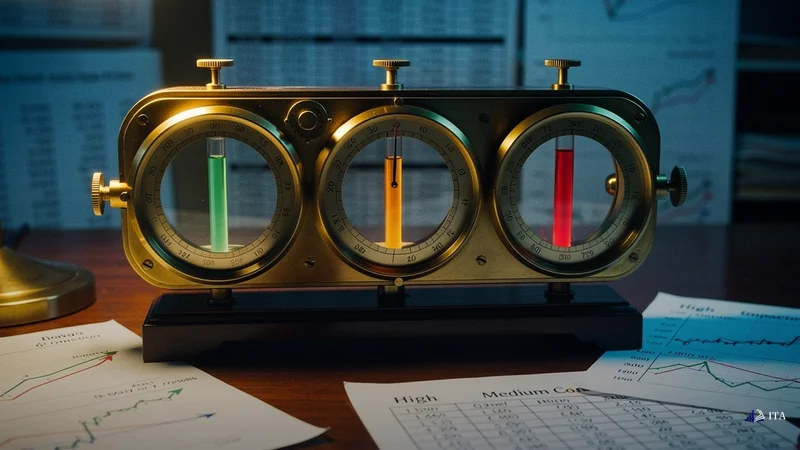
Building Your Daily Economic Calendar Routine
This systematic approach to using an economic calendar forex trading guide reveals why most retail traders fail around news events. They react to surprises instead of anticipating them. They trade the first spike instead of waiting for confirmation. Most damaging of all? They maintain normal position sizes into abnormal volatility.
When CPI creates 80-pip ranges in minutes, a standard 20-pip stop becomes lottery ticket. Professional traders understand that economic calendar forex trading requires adapting position sizes to match event volatility.
Professional risk management around news events follows three core principles that differentiate institutional thinking from retail gambling. First, position sizing adjusts to expected volatility. If average hourly range doubles around an event, position size halves. This maintains consistent monetary risk regardless of pip movement.
Second, the "buffer zone" rule prohibits new entries within 5 minutes before or after high-impact releases unless running specific news strategies. This simple rule eliminates most stop-hunting casualties. Third, and most overlooked: professionals distinguish between holding through news and trading news.
Holding through requires wider stops and smaller sizes. Trading news demands precise entry triggers and predetermined exit levels. Mixing these approaches? Using normal stops while trying to catch news spikes? That creates the retail graveyard visible in every broker's aggregate positioning data, Liquidity in Trading: A Practical Guide for Funded Accounts.
Here's the expensive mistake traders make. They focus solely on the event timing while ignoring the broader context. Economic data rarely exists in isolation.
When US CPI releases alongside major bank earnings, the interaction multiplies volatility. When ECB speaks during thin Asian liquidity, technical levels break more easily. The calendar shows individual trees. Profitable traders see the forest.

Risk Management Around News Events
But here's where the real edge emerges. In what institutional desks call "trading the surprise factor." The formula is deceptively simple: (Actual − Forecast) / Forecast × 100. A 2% surprise in either direction typically triggers trending moves. A 5% surprise often marks intraday extremes. But the second-order thinking is what separates professionals from amateurs.
When NFP forecasts 180k and prints 165k, that's a -8.3% surprise. Retail traders sell USD immediately. But institutional flow often waits for the "revision game." Last month's number gets revised up by 20k, partially offsetting the miss. The initial USD sellers get squeezed. Price reverses. The traders who understood the complete picture positioned for the second wave, not the first spike.
High-probability surprise scenarios follow patterns. Manufacturing data surprises to the downside in the first month of quarters as companies adjust inventory. Central bank officials turn hawkish in the final meetings before summer breaks. US data beats forecasts more frequently in Q4 as holiday hiring boosts numbers. These aren't guarantees. They're probability skews that inform position sizing and directional bias.
Advanced economic calendar strategies move beyond simple "fade the news" approaches. The news straddle strategy involves placing pending orders above and below current price minutes before release, catching the breakout regardless of direction. But execution demands precision. Orders must sit outside the typical "stop hunt" zones, usually 15-20 pips from market price. Trail stops aggressively because most news moves exhaust within 15-30 minutes.

Trading the Surprise Factor
The "fade the initial reaction" setup targets V-reversals common in thin liquidity. When UK GDP surprises but cable spikes into major resistance, institutional sellers often emerge. The setup requires confluence. Surprise in one direction but technicals favouring the other. Entry comes not on the spike but on the first pullback that fails to make new highs. Stop above the spike high, target the pre-news level.
Correlation trading exploits relationships between related releases. When German CPI surprises higher, Eurozone CPI often follows. When Chinese PMI beats, AUD/USD typically strengthens over the next 48 hours. These aren't same-day trades but position adjustments based on probability shifts. If German inflation runs hot, reduce EUR shorts before Eurozone data. The calendar becomes a chess match, each move setting up the next.
The integration between economic calendar awareness and technical analysis creates the complete trading approach used by funded traders at ITA. Support and resistance levels mean nothing in isolation. They gain significance based on upcoming events. Major resistance at 1.0900 in EUR/USD matters more with ECB minutes pending. If dovish, that resistance holds. If hawkish, stops above 1.0900 fuel acceleration.
Time-based analysis adds another dimension. Most economic data releases at specific times. 08:30 EST for US, 02:00 EST for UK, varying for others. These create "time pivots" where price must decide direction. When time pivots align with technical levels and pending news, probability of significant moves increases. The traders who map these confluences in advance position for explosive moves while others wonder why markets suddenly accelerated.

Advanced Economic Calendar Strategies
Volume confirmation completes the trinity. Economic surprises without volume follow-through often reverse. When NFP beats but volume remains below average, the move lacks institutional participation. When CPI misses and volume spikes, funded account is repositioning. Modern platforms overlay volume directly on calendars, showing which events attracted genuine institutional interest versus retail noise.
At Institutional Trading Academy, we see this integration daily. Traders who pass our instant account challenges don't just understand technical analysis or fundamental events. They merge both into a coherent strategy. They know that a ascending triangle means little without considering next week's FOMC. They understand that NFP surprises create opportunities precisely because most traders fear them.
The transformation from defensive calendar checking to offensive opportunity hunting marks the evolution from retail to professional thinking. The calendar stops being a list of dangerous times and becomes a schedule of institutional repricing events. Each release represents a moment when new information enters the market, creating inefficiencies that prepared traders exploit.
This isn't about predicting economic data. Even institutional economists struggle with accuracy. It's about understanding market mechanics. When consensus expects one outcome and receives another, price must adjust. The adjustment rarely happens smoothly. It overshoots, reverses, tests levels, and eventually finds equilibrium. Traders who understand this dance position themselves to profit from the volatility others fear.
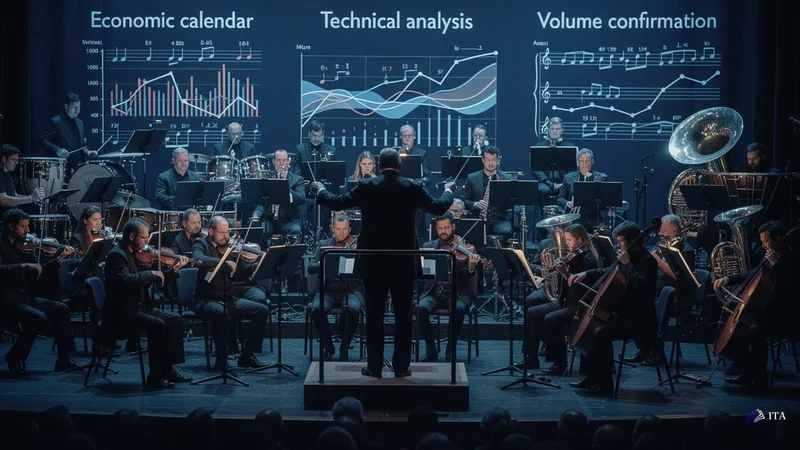
Economic Calendar Integration with Technical Analysis
The uncomfortable truth is that profitable trading requires engaging with market volatility, not avoiding it. The economic calendar provides a schedule of when that volatility will occur. The surprise factor tells you its likely magnitude. Technical analysis shows you where price might react. Proper risk management keeps you in the game when wrong. Combine these elements systematically, and the calendar transforms from threat to opportunity.
Every funded trader at ITA runs this process. Not because we mandate it, but because the market rewards it. They check the calendar not to hide from news but to hunt the opportunities others miss. They calculate position sizes based on expected volatility. They map technical levels that gain importance around events. Most importantly, they understand that in markets, information is edge only when you know how to use it.
The economic calendar will show you when markets move. Understanding the mechanics of price discovery tells you why they move. Integrating both with disciplined risk management shows you how to profit from those moves. the majority of profitable traders checking calendars before trading aren't avoiding risk. They're calculating opportunity. The question isn't whether you'll use an economic calendar. It's whether you'll use it defensively like retail traders or offensively like the institutions.
Your next trade awaits. The calendar shows when. Your preparation determines the outcome.
Frequently Asked Questions
Which economic indicators are the most important for forex traders?
Non-Farm Payrolls (NFP), Consumer Price Index (CPI), and central bank interest rate decisions generate the largest currency moves. According to Trading Economics data, these three events routinely create 30-50 pip spikes in major pairs within minutes of release. GDP, retail sales, and manufacturing PMI follow as secondary drivers.
How do I read the Previous, Forecast, and Actual columns on an economic calendar?
The Previous shows last month's data, Forecast shows analyst consensus, and Actual shows the real-time release. The key is calculating surprise factor: (Actual − Forecast) / Forecast × 100. A 2% surprise typically triggers trending moves, while 5% surprises often mark intraday extremes in currency pairs.
Should I avoid trading during major news releases or use specific news trading strategies?
Professional traders engage with news volatility rather than avoiding it. The buffer zone rule prohibits new entries within 5 minutes of high-impact releases unless running defined news strategies. Position sizing should halve when expected volatility doubles, maintaining consistent monetary risk regardless of pip movement.
What are the best economic calendar tools for forex traders in 2026?
Forex Factory remains the retail standard with clean interface and active forums. Trading Economics provides the deepest historical data and surprise calculations. FXStreet adds technical analysis overlay. Professional traders typically run multiple platforms simultaneously for community sentiment, data depth, and precise timing.
How do surprise vs consensus expectations impact short-term currency moves?
Market reaction depends more on deviation from forecast than absolute numbers. When US unemployment forecasts 3.5% but prints 3.2%, that positive surprise triggers immediate USD strength. The formula (Actual − Forecast) / Forecast × 100 shows surprise magnitude, anything above 2% typically generates trending moves in affected currency pairs.
Key Takeaways
- Focus on the surprise factor: calculate (Actual - Forecast) / Forecast × 100 — deviations above 2% typically trigger trending moves.
- Reduce position sizes by 50% during high-impact events to maintain consistent monetary risk despite doubled volatility ranges.
- Apply the buffer zone rule: avoid new entries within 5 minutes before or after red events unless running specific news strategies.
- Trade correlation patterns: when German CPI surprises higher, position for similar Eurozone data moves within 48 hours.
- Map weekly event clusters on Sundays — identify super days when multiple red events coincide, expanding ranges to 1.5-2x normal.
- Use news straddle strategy: place pending orders 15-20 pips from current price before releases to catch breakouts either direction.
- Distinguish holding through news from trading news — each requires different stop placement and position sizing approaches completely.
Start Your Trading Evaluation
Simulated funded accounts up to $800K. Up to 95% profit split.
Get Funded