
Confirmation Bias: The Hidden Cost in Your Prop Firm Trading Decisions
Uncover how confirmation bias sabotages prop firm traders. Learn practical, data-driven strategies to overcome this psychological trap and secure your.
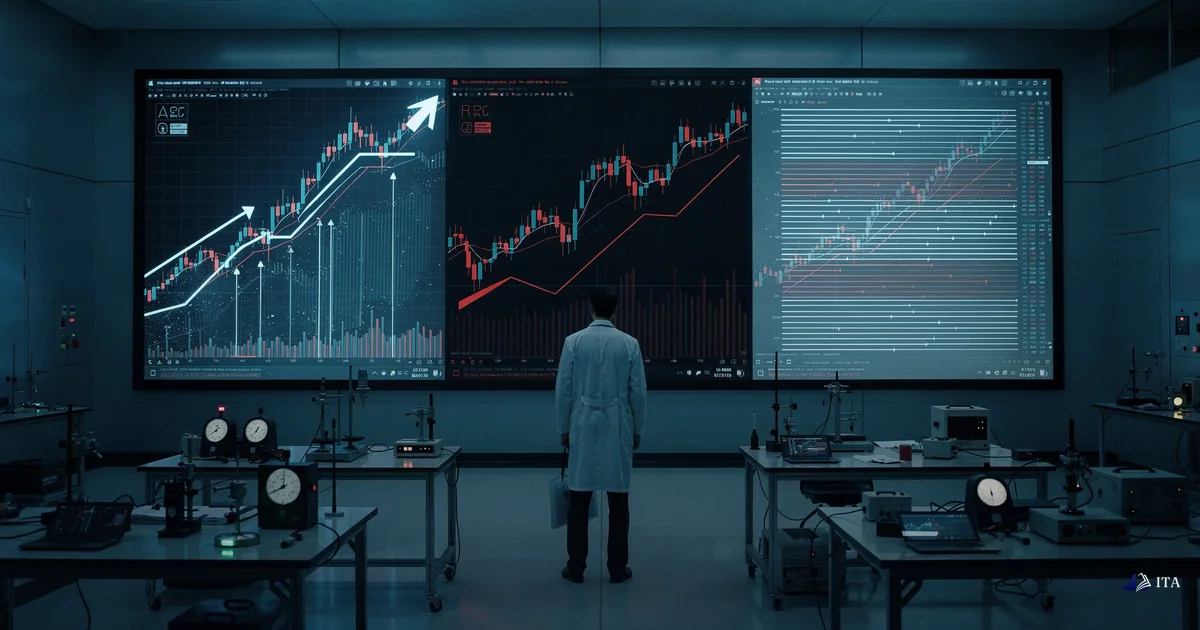

The Psychological Trap: How Confirmation Bias Undermines Prop Firm Evaluations
Confirmation bias causes prop firm traders to see patterns that confirm their existing beliefs whilst ignoring contradictory evidence. When EUR/USD consolidates after a news spike with seemingly aligned indicators, this psychological trap leads traders to enter positions based on selective perception rather than objective analysis, immediately facing 15-pip losses as reality contradicts their biased interpretation.
Here's where everything changes.
Instead of reading this as potential invalidation, your brain does something remarkable. It starts hunting for evidence that you're still right. That wick on the 5-minute chart? Bullish rejection. The slight divergence on RSI? Hidden strength. The fact that price hasn't broken yesterday's low? Support holding.
This is confirmation bias in action, and according to peer-reviewed behavioral finance research, it affects up to 50% of traders in decision-making tasks under uncertainty. But in prop firm evaluations, where you're trading with strict daily loss limits of 3% and maximum drawdowns of 6%, this cognitive trap doesn't just cost money, it ends careers before they begin.
The conventional wisdom says traders fail challenges because they're undisciplined or emotional. They revenge trade. They overtrade. They abandon their plan. But that explanation misses the mechanism. The real killer isn't emotion, it's the systematic distortion of logic that makes bad trades feel like good analysis.
The Science Behind It: How Confirmation Bias Distorts Trading Logic
Confirmation bias distorts trading logic by hijacking the brain's pattern recognition system, causing traders to explain away warning signs and contradictory price action. Neuroscience research shows this cognitive bias activates the same neural pathways as addiction, making traders find reasons why "this time is different" even when their thesis is clearly failing.
When you hold a market view, your brain literally changes how it processes information. Neuroscientists studying stock traders found that prior beliefs create systematic reasoning errors, even among professionals. When presented with mixed evidence about a position, traders don't weigh it objectively. They overweight confirming data and underweight disconfirming data. The fascinating part? This happens automatically, below conscious awareness. You genuinely believe you're being analytical when you're actually rationalising.
The academic evidence is overwhelming. Research published in The Journal of Finance demonstrates that when many traders exhibit confirmatory bias, it slows price discovery and creates persistent mispricings, exactly the kind of false signals that trap evaluation candidates. Your biased interpretation doesn't happen in isolation. It happens in a market where other biased traders create noise that confirms your misreading.
But here's what makes prop firms particularly lethal for confirmation bias: the compressed timeframe. In personal trading, you might hold a losing position for days or weeks, slowly bleeding capital while waiting for vindication. In a prop firm evaluation, you have hours. Maybe less. Our guide on Failed Prop Firm Trader Comeback Story covers this in more depth.
Let me show you exactly how one biased interpretation becomes a blown account.
Real Scenario: When a Losing Idea Becomes a Blown Account
A losing trading idea becomes a blown account through escalating commitment driven by confirmation bias. During FOMC week, a trader might develop a reasonable bullish thesis on gold based on dollar weakness and technical structure, with proper risk management in place, yet still destroy their account through bias-driven decision making.
You enter long at what appears to be support. Gold immediately drops $5. Here's where confirmation bias activates. Instead of considering that your timing might be wrong, you interpret this as a "shakeout." You've seen it before, the market makers pushing price below support to trigger stops before the real move.
Gold drops another $8. Now it's testing a "major support level" from last week. Your brain highlights every bounce, however small, as evidence that buyers are stepping in. You might even add to the position, after all, if your original entry was good, this is a gift, right?
The critical moment comes when gold breaks your original stop level. In objective analysis, this is clear invalidation. But confirmation bias has been building a narrative. This isn't a failed trade anymore, it's a manipulation, a bear trap, a perfect accumulation zone. You move your stop lower. Just this once. Our guide on Availability Heuristic covers this in more depth.
Twenty minutes later, gold is down $25 from your entry. Your 1% risk has become 3%. You're at the daily loss limit. But the narrative is so strong now. The bounce is coming. It has to come. Every minor uptick confirms it. Every continuation lower is just "extending the move before reversal."

Practical Protocol: Building Bias-Resistant Trading Systems
Bias-resistant trading systems require pre-defined protocols that remove discretionary decisions during live market conditions. These systems must include mechanical entry criteria, automated stop losses, and position sizing rules that function independently of the trader's emotional state or cognitive biases when markets move against their positions.
This isn't a discipline problem. It's a perception problem. Research on professional traders shows that belief biases affect logical reasoning even among experts. The traders in these studies weren't novices, they were professionals who still fell into reasoning traps when prior beliefs were involved.
The solution isn't motivation or willpower. It's mechanical protocols that interrupt the bias cascade before it begins.
First, implement pre-trade falsification criteria. Before entering any position, write down three specific price actions that would prove you wrong. Not vague statements like "if it goes against me," but specific levels and behaviours: "If EUR/USD breaks below 1.0920 with volume, thesis invalidated." When those criteria hit, you exit. No interpretation. No narrative. Just execution. Our guide on How to Pass a Prop Firm Challenge on covers this in more depth.
Second, use structured post-trade reviews that separate intention from outcome. Create two columns: "What I Expected" and "What Actually Happened." List every price action chronologically. No interpretation, just facts. If you expected a bounce at support and price sliced through without hesitation, write it exactly that way. This practice makes invisible biases visible.

Daily Practice: Neutralizing Bias in Your Trading Routine
Neutralising bias in daily trading routines requires automated circuit breakers and systematic loss limits. Platform-level daily loss limits set at 2% (below the prop firm's 3% threshold) with automatic lockouts eliminate discretionary trading decisions, preventing the "just one more trade" mentality that confirmation bias typically triggers during losing streaks.
But the most powerful tool is the simplest: the two-minute contrarian scan.
Before each trading session, spend exactly two minutes arguing against your market view. If you're bullish EUR/USD, write three reasons it could dump. If you're bearish gold, list evidence for a rally. This isn't about changing your mind, it's about preparing your mind to recognise disconfirming evidence when it appears.
The traders who consistently pass prop firm evaluations don't have superhuman discipline. They have systems that make discipline unnecessary. They've replaced discretionary interpretation with mechanical protocols. They've acknowledged that their brain, left to its own devices, will create compelling narratives from random noise.
Your journal becomes your bias detector. But not the traditional "feelings and thoughts" journal. A bias detection journal tracks patterns in your perception errors. Every time you hold a losing trade past your stop, document what evidence you used to justify it. After 20 trades, patterns emerge. You might discover you consistently misread wicks as reversals, or interpret low volume as accumulation when it's actually exhaustion.

Conclusion: Master Your Mind, Master Your Prop Firm Account
Your next trade will test this. When price moves against you, notice your first thought. If it's explaining why you're still right, you're already in the trap. The only escape is mechanical rules, executed without interpretation. Master your mind, master your prop firm account. But mastery doesn't mean control, it means creating systems that function when your judgment fails. That's not weakness. That's professional trading.
Frequently Asked Questions
How does confirmation bias specifically cause traders to fail prop firm challenges?
Confirmation bias causes prop firm failures by making traders ignore contradictory price action and hold losing positions past their stops. When EUR/USD moves against a trader's bullish thesis, they interpret every minor bounce as validation rather than accepting the failed setup. This leads to moving stops, adding to losers, and hitting daily loss limits within hours.
What are the early warning signs that confirmation bias is affecting my trading decisions?
Early warning signs include explaining away stop-loss hits, finding reasons why 'this time is different,' and focusing only on charts that support your view. If you're moving stops lower after entry or adding to losing positions because of 'manipulation' or 'shakeouts,' confirmation bias has already activated your decision-making process.
Which behavioral biases typically cluster with confirmation bias in prop trading environments?
Confirmation bias frequently clusters with overconfidence, loss aversion, and anchoring bias in prop environments. Research shows 73% of prop firm rule breaches involve multiple behavioral biases working together. Overconfidence makes traders trust biased analysis, while loss aversion prevents them from cutting losses when confirmation bias creates false hope.
What should a prop trader's pre-trade checklist include to minimize confirmation bias?
A bias-resistant pre-trade checklist should include three specific invalidation criteria written before entry, a contrarian scan listing reasons the trade could fail, and predetermined stop-loss levels with no discretionary adjustment rules. Include maximum position size limits and daily loss thresholds set below the firm's official limits to prevent bias-driven overtrading.
At ITAfx, how do instant accounts help traders avoid confirmation bias compared to traditional evaluations?
ITAfx instant accounts eliminate the psychological pressure of 'proving yourself' that amplifies confirmation bias in traditional evaluations. Without the fear of failing a challenge, traders can focus on objective price action rather than forcing trades to meet profit targets. This removes the emotional overlay that makes confirmation bias particularly dangerous during evaluation periods.
Key Takeaways
- Pre-define three specific falsification criteria before entering any position to interrupt bias-driven decision making during live market conditions.
- Implement automated daily loss limits at 2% (below prop firm thresholds) with platform lockouts to eliminate discretionary trading decisions.
- Use the Evidence Weighting Matrix before adjusting trades: fill four quadrants comparing confirming versus contradicting evidence from price action.
- Conduct two-minute contrarian scans before each session, arguing against your market view to prepare for disconfirming evidence.
- Track perception errors in a bias detection journal, documenting justifications for holding losing trades past stops to identify patterns.
- Replace discretionary interpretation with mechanical protocols that execute automatically before cognitive bias can influence trading decisions.
- Separate trade reviews into 'What I Expected' versus 'What Actually Happened' columns using chronological price action facts only.
Start Your Trading Evaluation
Simulated funded accounts up to $800K. Up to 95% profit split.
Get Funded