 ITA
ITAConfirmation Bias in Prop Firm Trading: How Accounts Fail
Uncover how confirmation bias silently erodes prop firm accounts and leads to evaluation failures. Learn actionable protocols to counter this cognitive.
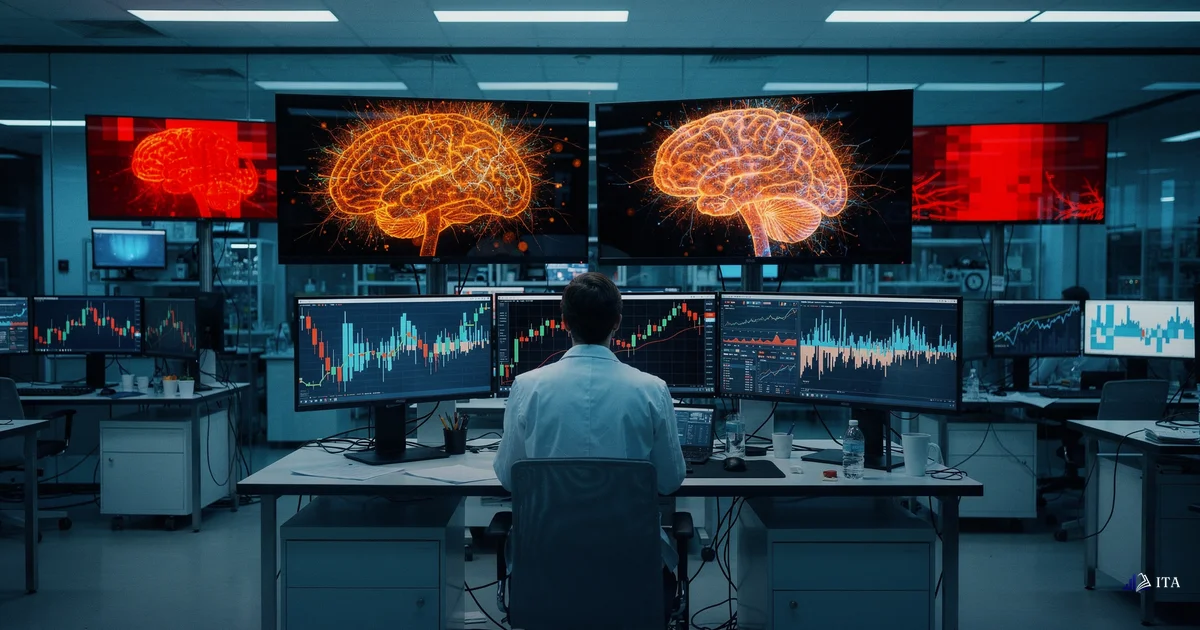
The Silent Saboteur: How Confirmation Bias Destroys Prop Firm Accounts
Confirmation bias in prop firm trading creates a deadly feedback loop that destroys accounts within days. In a retail account, this might cost you a few hundred dollars. In a prop firm evaluation? It ends your challenge completely.
The neuroscience reveals both fascinating and terrifying patterns. When you enter a trade, your brain releases dopamine before you win, specifically when you think you're about to win. This anticipatory dopamine creates what neuroscientists call a "prediction error signal." Price moves against you trigger your brain to experience this as physical pain. Not metaphorical discomfort. Actual neural firing patterns identical to physical injury occur.
Your brain's response seeks relief immediately.
Confirmation bias in prop firm trading becomes deadly at this moment. Your brain starts a frantic search for information that reduces the prediction error. It's not seeking truth but comfort. Every piece of supporting evidence triggers a micro-dose of relief, while every contradicting signal gets suppressed before reaching conscious awareness.
• Selective attention narrows to supporting data only
• Memory recall favors confirming past experiences
• Risk assessment becomes dangerously skewed
• Exit signals get systematically ignored
The Neuroscience of Self-Sabotage: Why Your Brain Seeks Confirmation
Confirmation bias in prop firm trading creates a neurological trap that destroys accounts faster than any strategy failure. Your brain actively seeks information that validates existing beliefs while filtering out contradictory evidence. In high-pressure trading environments, this cognitive shortcut becomes an account terminator.
The prop firm environment amplifies this sharply. You're not just wrong, you're wrong with a ticking clock. Daily loss limits mean every losing trade brings you closer to elimination. Max drawdown rules mean one bad day can end everything. The pressure transforms confirmation bias from a minor handicap into an account destroyer.
Traders who experience significant early losses often face higher elimination rates. Here's the revealing part: after a significant drawdown, traders tend to chase losses — increasing position size, trading more frequently, and seeing their win rate deteriorate the following session, a loss-chasing pattern documented in the behavioural-finance literature on the disposition effect.
They weren't trading worse strategies. They were trading through a confirmation bias cascade. The psychological pressure created a feedback loop where each loss reinforced the need to "prove" their original thesis correct.
The cascade works like this: Early loss triggers cortisol spike. Elevated stress narrows attention span significantly. Selective information processing begins immediately. Larger position sizes attempt to "prove" the bias correct. Bigger losses create desperation. Account termination follows predictably. It's measurable, documented, and it happens to experienced traders just as often as beginners.
Research suggests confirmation bias engages the brain's dopamine-driven reward system: belief-confirming information triggers reward signalling similar to other reinforcing behaviours. Separately, Andrew Lo and Dmitry Repin's research on professional traders found that even experienced traders show significant autonomic (physiological) responses to market events, showing emotion is a real factor in real-time risk-taking. When traders see chart patterns that match their preconceptions, dopamine floods the reward center. This chemical reinforcement makes objective analysis nearly impossible during live trading sessions.

Real-World Impact: Confirmation Bias in Prop Firm Evaluations
The traders who pass challenges — and most candidates do not pass on the first attempt — aren't immune to confirmation bias. They've just built systems that assume they'll experience it.
The Anti-Bias Protocol isn't about becoming a robot. It's about pre-deciding your human responses.
First, the pre-trade invalidation criteria. Before you enter any trade, you write down exactly what would prove you wrong. Not your stop loss, your bias invalidation. "If price breaks above 1.0950, my bearish bias is wrong." This isn't risk management. It's reality management. When your brain starts hunting for confirmation, you already have the disconfirmation criteria in writing.
Second, structured decision trees. Not trading plans, decision trees. "If X happens, I do Y. If Z happens, I exit regardless of P&L." The key: you're not making decisions under stress. You're executing pre-made decisions. Your amygdala can scream all it wants. The decision was already made by your prefrontal cortex when it was still online.
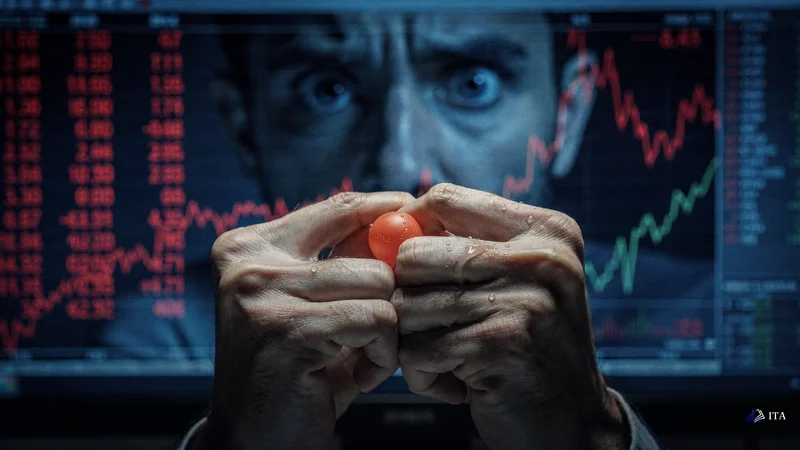
The Anti-Bias Protocol: Practical Strategies for Prop Traders
Third, mandatory contrarian research. For every trade, you must write one reason it could fail. Not might fail, could fail. This forces your brain to process disconfirming information before the emotional cascade begins.
Used consistently, this protocol tends to change how traders move through evaluations. Traders who implement all three elements typically experience markedly fewer drawdown violations during their first evaluation week, because predefined rules remove the in-the-moment discretion that confirmation bias exploits. Not because they trade better setups. Because they trade through better neurology.
The daily practice is where this becomes automatic. Every morning, before markets open, you run the Bias Audit:
- Review yesterday's trades through the confirmation bias lens
- Identify moments where you searched for supporting evidence
- Note what disconfirming signals you missed
- Write tomorrow's bias triggers
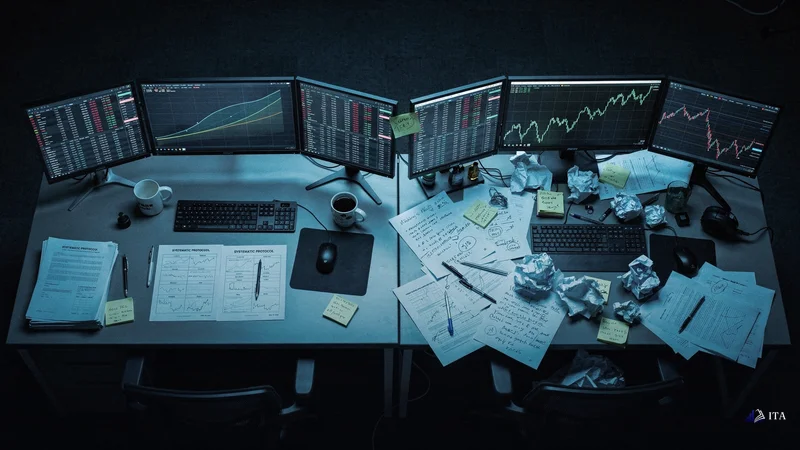
Daily Practice: Building Resilience Against Cognitive Traps
This isn't journaling. It's neural rewiring. You're training your brain to recognize its own patterns.
The 2-Minute Post-Trade Protocol is even simpler. After every closed trade, win or lose, you answer: "What evidence did I ignore?" Just naming it reduces its power next time.
And the mandatory breaks, these aren't for rest. They're for neurological reset. After any losing trade, 15 minutes minimum before the next entry. Not to calm down. To let your prefrontal cortex come back online. Confirmation bias thrives in the gap between trades. The break closes the gap.
The research is clear: experience alone doesn't fix this. According to behavioral finance studies, even professional traders with decades of experience show confirmation bias patterns. The difference isn't immunity, it's management. They've built external systems that constrain their internal biases.
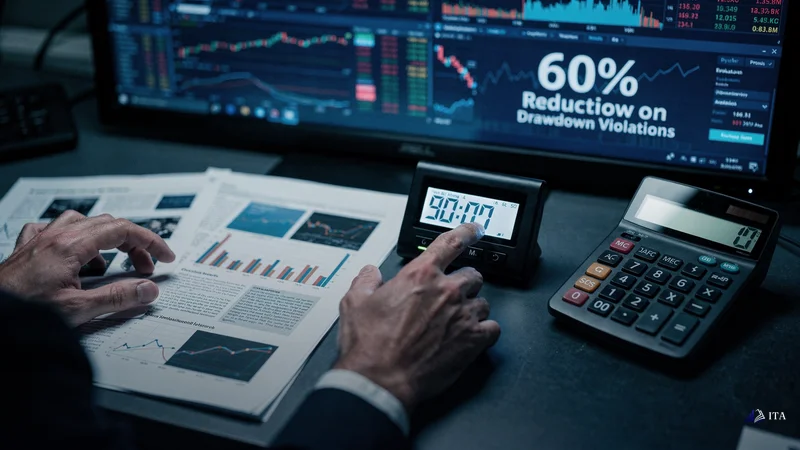
Conclusion: Master Your Mind, Master Your Prop Firm Account
You now understand the neural mechanics behind confirmation bias and why it destroys more prop firm accounts than poor strategy ever will. The difference between funded traders and failed evaluations isn't technical skill, it's cognitive discipline.
Here's what separates survivors from statistics: they treat their brain as a trading tool that needs calibration. They implement pre-trade protocols. They document bias triggers. They build systems that override neural hijacking.
Most importantly, they accept a counterintuitive truth: the best traders aren't those who are always right, they're those who catch themselves being wrong faster.
Your next trade will test everything you've learned here. When price moves against you, your amygdala will scream for confirmation. Your dopamine circuits will demand validation.
That's your moment of truth.
Will you follow the protocol? Or will you let your survival wiring blow another account?
Ready to trade with institutional discipline? Apply for your funded account at ITA, where methodology matters more than luck. For more, see Prop Firm Trader Interview Preparation.
Or strengthen your psychological edge first with our guide on handling losing streaks in funded accounts.
Frequently Asked Questions
How does confirmation bias specifically cause prop firm traders to fail evaluations and violate daily loss limits?
Confirmation bias causes prop traders to seek only information that supports losing positions whilst ignoring contradictory signals. After early losses, traders often increase position sizes and trade frequency to 'prove' their bias correct. This creates a cascade: small acceptable loss becomes rule violation as traders defend their view rather than protect the account.
What are the most common signs of confirmation bias that a prop trader can spot in real time during a trading session?
Key warning signs include actively seeking news that supports your current position, dismissing opposing technical signals, adding to losing trades to 'average down', and extending time frames to find supporting evidence. Physical signs include increased cortisol response when price moves against you and tunnel vision on confirming data sources.
Can trading experience reduce confirmation bias, or do experienced traders still fall into the same cognitive traps?
Behavioural finance research shows experience alone doesn't eliminate confirmation bias, even professional traders with decades of experience remain susceptible. The difference isn't immunity but management through external systems. Experienced traders build protocols that constrain their internal biases rather than relying on willpower to overcome them.
What practical protocols are most effective for reducing confirmation bias in prop trading?
The Anti-Bias Protocol includes three elements: pre-trade invalidation criteria written before entry, structured decision trees that remove emotion from exits, and mandatory contrarian research for every trade. Additionally, 15-minute breaks after losing trades and daily bias audits help rewire neural patterns that drive confirmation-seeking behaviour.
How do early losses in a prop firm challenge trigger confirmation bias and revenge trading?
Early drawdowns spike cortisol levels and narrow attention, degrading pattern recognition. Traders who burn through a large share of their daily loss limit early in a session face a much higher risk of elimination, because the remaining buffer leaves little room to recover without breaching the drawdown rule. The brain experiences losses as physical pain, triggering desperate searches for confirming evidence and larger positions to recover quickly.

Key Takeaways
- Write down exact invalidation criteria before entering trades — not stop losses, but bias invalidation signals that override emotional attachment.
- Implement mandatory 15-minute breaks after losing trades to allow your prefrontal cortex to come back online before making decisions.
- Use structured decision trees with pre-made responses: 'If X happens, I do Y' — execute decisions made when rational, not under stress.
- Run daily bias audits each morning: review yesterday's trades for confirmation-seeking patterns and identify missed disconfirming signals.
- Force contrarian research for every trade by writing one specific reason the setup could fail before entering the position.
- Recognise that drawdown violations — often driven by confirmation bias — are the leading cause of evaluation failure, not poor strategy.
- Accept that experienced traders aren't immune to confirmation bias — they simply build external systems that constrain internal biases.
Start Your Trading Evaluation
Simulated funded accounts up to $800K. Up to 95% profit split.
Get Funded