
Best Time to Trade Gold (XAU/USD) for Prop Firm Traders in 2026
Discover the optimal trading hours for XAU/USD in prop firm environments. London-New York overlap delivers peak liquidity and volatility for funded.

Why Session Timing Matters for Prop Firm Gold Traders
Session timing determines prop firm gold trading success because volume patterns create predictable volatility windows that separate profitable traders from the 96% who fail to withdraw earnings. Industry data shows that only about 4% of prop challenge participants ever withdraw earnings
Because knowing when to trade is only half the equation. The real edge comes from understanding why these sessions create such different market behaviour, and building strategies that exploit these specific conditions.
Let's start with what actually happens at 12:00 UTC. London has been open for five hours. European banks have established their positions. Asian flows have been absorbed. Then New York enters, not just retail traders waking up, but institutional desks with completely different mandates. London trades gold as a currency hedge. New York trades it as a commodity, tied to real yields and dollar dynamics. When these two perspectives collide, they create predictable patterns.
The overlap doesn't just bring volume — it brings conflicting order flow that creates the precise type of volatility prop firm traders need. Not the random chop of Asian hours that triggers stop-losses in both directions. Not the one-directional moves of standalone sessions that reverse violently. Instead, you get what CME Group data confirms: over 80% of daily gold futures volume concentrated during regular US trading hours, creating sustained moves with natural pullbacks.
The London-New York Overlap: Peak Performance Window (12:00-16:00 UTC)
This is where the London-New York overlap reveals its true advantage. Between 12:00 and 16:00 UTC, gold respects technical levels with unusual precision. Support and resistance zones that get sliced through during Asian hours suddenly hold. Fibonacci retracements work. Moving averages act as dynamic support. The reason isn't mystical, it's mechanical. When institutional traders dominate the flow, they trade from the same playbooks, creating self-fulfilling technical behaviour.
But the London session alone, 07:00 to 16:00 UTC, offers something equally valuable: reliability. While the overlap provides the highest volatility, London provides the highest probability setups. Specifically, the Asian range breakout. Here's why this matters for prop firm risk management.
During Asian hours (00:00-07:00 UTC), gold typically consolidates in a 15-25 point range. Low volume, wide spreads, algorithmic market-making. Then London opens, and institutional traders need to establish positions. They can't do this without breaking the overnight range. The World Gold Council notes this pattern in their liquidity analysis — the transition from Asian consolidation to London directional movement happens with statistical regularity. Our guide on Forex Trading Sessions covers this in more depth.
For a prop firm trader managing a $200,000 funded account with 3% daily drawdown ($6,000), this creates an optimal risk-reward scenario. The Asian range provides a clear stop-loss level. The London breakout provides the directional bias. Position sizing becomes mathematical: if the Asian range is 20 points and your stop is just beyond it (25 points), you can trade 2. 4 lots while risking less than 1% of the account. When London breaks that range, the average excursion is 45-60 points — giving you 2:1 to 3:1 reward-to-risk.

London Session: The Breakout Specialist (07:00-16:00 UTC)
The London session (07:00-16:00 UTC) specialises in breakout patterns as European institutional flow creates the day's directional bias before American markets open. This four-hour window establishes gold's primary trend direction, setting up the framework that New York volume will either confirm or reject.
The profitable traders don't trade the news — they trade the reaction to the news. They wait for the initial spike, the liquidity grab, the stop-hunt. Then they enter on the retracement, trading in the direction of the post-news orderflow. This isn't gambling on direction. It's exploiting the predictable behaviour of institutional traders who must adjust positions based on new economic data.
The Asian session tells a completely different story. Between 00:00 and 07:00 UTC, gold enters what institutional traders call "the chop zone. " Spreads widen to 15-20 cents. Volume drops by roughly 70% compared to London hours. Most critically, the character of price movement changes. Instead of trending moves with pullbacks, you get what looks like a random walk — up 10 points, down 12, up 8, down 11. Our guide on Forex Market Hours and Session Overlap covers this in more depth.
For prop firm traders, this presents a lethal combination. Wide spreads mean you're starting each trade with a larger loss. Low volume means slippage on stops. But the real killer is the false breakout frequency. During Asian hours, gold breaks and fails technical levels at nearly twice the rate of London hours. That "perfect" support level that held three times during London? It'll get spiked through by 5 points at 03:00 UTC, trigger your stop, then reverse back above it.

New York Session: Volume and Volatility Peak (12:00-21:00 UTC)
This brings us to the institutional framework that ties everything together: the Asia-London-New York progression. Professional gold traders don't pick one session, they use each session for a specific purpose within a larger strategy.
Phase 1 - Asia (00:00-07:00 UTC): Range definition. Don't trade — observe. Mark the high and low. Calculate the range width. This becomes your volatility expectation for London.
Phase 2 - London (07:00-12:00 UTC): Direction testing. Trade the range breakout, but with specific rules. Wait for the first 30 minutes of London to establish. Enter only on a retest of the broken Asian extreme. Stop goes beyond the opposite extreme. Target is 2x the Asian range.
Phase 3 - New York (12:00-16:00 UTC): Confirmation and extension. If London established direction, New York typically extends it. But trade smaller size. Yes, volatility is highest, but so is the reversal risk around news. Use 50% of your London position size, but wider targets — 3-4x the Asian range.

Asian Session: The Consolidation Period (00:00-07:00 UTC)
The Asian session (00:00-07:00 UTC) operates as gold's consolidation period, where thin liquidity and reduced institutional participation create range-bound conditions unsuitable for momentum strategies. During these seven hours, gold typically trades within tight ranges as major financial centres remain closed.
The technical tools that support this session-based approach aren't complex, they're precisely chosen for each phase. During the overlap, three indicators provide the essential framework:
The 21-period EMA acts as your trend filter. Not because it's magical, but because institutional traders use it. During the overlap, price respects this average with unusual consistency. Above it, look for longs on pullbacks. Below it, shorts on rallies.
RSI helps time entries, but not how most traders use it. During the overlap, RSI extremes (above 70, below 30) actually signal continuation potential, not reversal. Why? Because institutional trending moves push indicators to extremes and keep them there. The entry comes when RSI pulls back from the extreme while price holds above/below the 21 EMA.
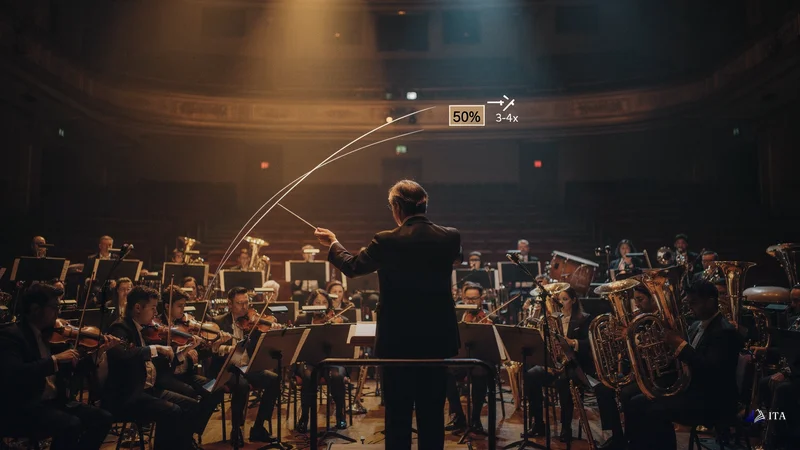
Institutional Framework: Asia-London-New York Strategy
The Asia-London-New York institutional framework operates on sequential momentum transfer, where each session's closing sentiment influences the next session's opening bias. This three-stage progression creates predictable flow patterns that professional traders exploit through session-specific position management.
But the real edge comes from correlation monitoring. During the overlap, gold's correlation with the dollar index intensifies. A breakdown in EUR/USD often precedes a gold rally by 5-15 minutes as traders rotate from currency hedges to commodity plays. Professional traders don't just watch gold, they watch the entire macro complex.
At ITAfx, funded traders who succeed with gold share one common trait: they've stopped trying to trade all day. They've accepted that gold offers a 4-6 hour window of optimal conditions, and they've built their entire approach around exploiting that window. They're not checking charts at 3 AM hoping for a setup. They're not revenge trading after an Asian session stop-out. They show up for the London open, trade through the overlap, and then close their platform.
The math supports this focused approach. If you trade only during the overlap, you're active 20 hours per week. If you can average 30-40 points captured per day (realistic given 100+ point daily ranges), that's 150-200 points weekly. On a $200,000 funded account trading 2 lots, that's $3,000-4,000 weekly, well within prop firm consistency rules while respecting drawdown limits.

Technical Tools for Session-Based Gold Trading
Session-based gold trading requires technical tools calibrated to each period's volatility characteristics, with Average True Range (ATR) serving as the primary position sizing mechanism. During Asian hours, gold's 14-period ATR typically measures 8-12 points, expanding to 20-30 points during the London-New York overlap.
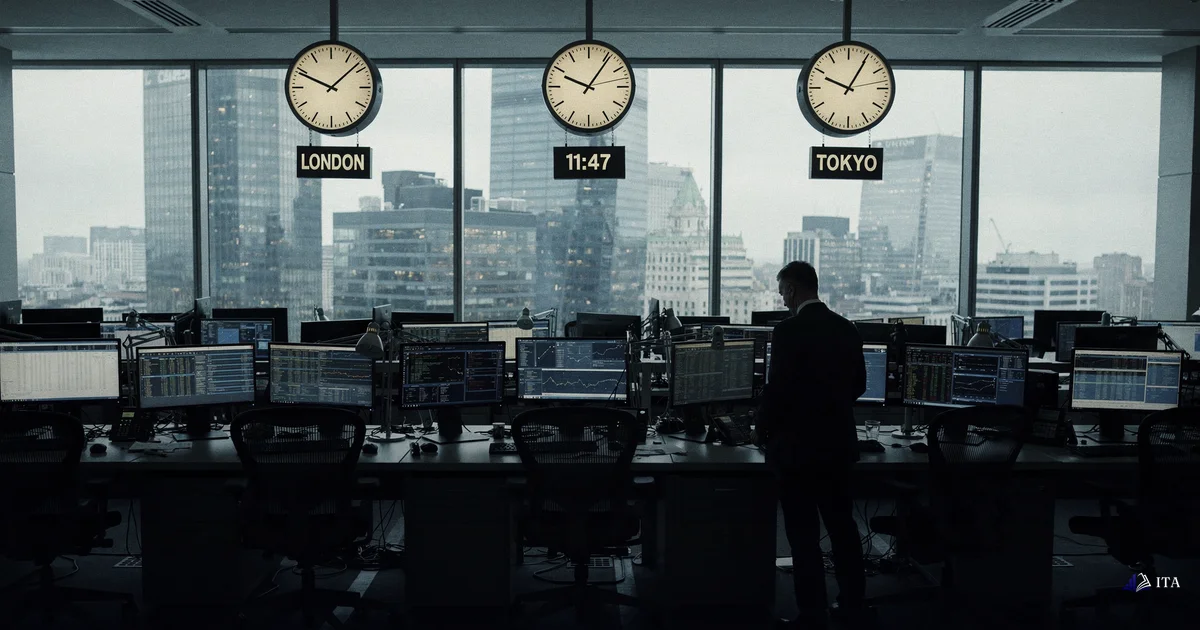
As we close, let's return to that trader waiting at 11:47 UTC. In thirteen minutes, their edge begins. Not because they have a secret indicator or inside information. But because they understand that gold isn't really one market. It's three markets, and only one of them offers the conditions that prop firm success requires: tight spreads, institutional flow, technical reliability, and volatility contained within risk parameters.
The uncomfortable truth is that profitable gold trading in prop firms isn't about finding more setups or trading more hours. It's about trading less, but trading the right less. The London-New York overlap from 12:00 to 16:00 UTC isn't just the best time to trade gold. For traders serious about withdrawing profits rather than funding challenges, it's the only time that mathematically makes sense.
The market will be there tomorrow at 12:00 UTC. The same transformation will occur. The same edge will exist. The question isn't whether the opportunity is real — the data proves it is. The question is whether you'll keep fighting the Asian chop at 3 AM, or whether you'll join the 4% who've learned to show up when the real game begins.
Frequently Asked Questions
What is the best time to trade gold (XAU/USD) for prop firm traders?
The London-New York overlap (12:00-16:00 UTC) is the optimal window for prop firm gold trading. During this period, spreads tighten from 15-20 cents to 5-8 cents, slippage drops, and volatility becomes orderly enough to hit profit targets while respecting technical levels and prop firm drawdown limits.
Why should prop firm traders avoid trading gold during Asian hours?
Asian hours (00:00-07:00 UTC) feature low volume, wide spreads of 15-20 cents, and choppy price action prone to false breakouts. Gold breaks technical levels at nearly twice the rate during Asian hours compared to London, making it unsuitable for meeting prop firm profit targets without overtrading.
How does the London session benefit gold trading strategies?
The London session (07:00-16:00 UTC) specialises in breakout patterns as European institutional flow establishes the day's directional bias. It offers the most reliable Asian range breakouts, with institutional traders creating self-fulfilling technical behaviour that makes support and resistance levels more predictable for prop firm risk management.
What position sizing works best for XAU/USD during high-volume sessions?
For a $200,000 funded account with 3% daily drawdown, if the Asian range is 20 points with a 25-point stop, you can trade 2. 4 lots while risking less than 1% of capital. When London breaks the range with average 45-60 point moves, this provides 2:1 to 3:1 reward-to-risk ratios.
At ITAfx, what are the key rules for trading XAU/USD on funded accounts?
ITAfx funded traders must respect daily drawdown limits (typically 3%) and overall account protection rules. Successful gold traders focus exclusively on the London-New York overlap window, use proper position sizing based on volatility, and avoid overtrading during low-volume Asian sessions to maintain consistency requirements.
Key Takeaways
- Trade gold during the London-New York overlap (12:00-16:00 UTC) when spreads tighten to 5-8 cents and institutional flow creates orderly volatility.
- Use the Asian session (00:00-07:00 UTC) for range definition only — mark highs and lows but avoid trading during this low-volume chop zone.
- Position size mathematically using Asian range width: if range is 20 points, stop at 25 points allows 2.4 lots on $200K account risking 1%.
- Monitor EUR/USD correlation during overlap periods as breakdowns often precede gold rallies by 5-15 minutes through institutional rotation flows.
- Apply the 21-period EMA as trend filter during overlap hours when institutional traders create consistent price respect around this moving average.
- Target 2-3x Asian range for London breakout trades and 3-4x range for New York extension moves with reduced position sizing.
- Avoid trading gold outside London-New York hours — focus on 4-6 hour optimal window rather than attempting 24-hour chart analysis.
Start Your Trading Evaluation
Simulated funded accounts up to $800K. Up to 95% profit split.
Get Funded