 ITA
ITARecord High Markets: The Psychology Behind Trading at All-Time Peaks 2026
Navigate record high markets with psychological resilience. Understand FOMO, fear, and greed, and apply a science-backed protocol for disciplined trading.
Short answer
Navigate record high markets with psychological resilience. Understand FOMO, fear, and greed, and apply a science-backed protocol for disciplined trading. In a prop firm context this still sits under simulated-capital rules: fees buy access to the evaluation or funded environment, not a deposit of trading capital.
Simulated capital: prop firm evaluation and funded stages discussed here typically run on simulated accounts. Challenge fees pay for access to that environment; they are not a deposit of trading capital. ITAfx accounts are simulated capital.
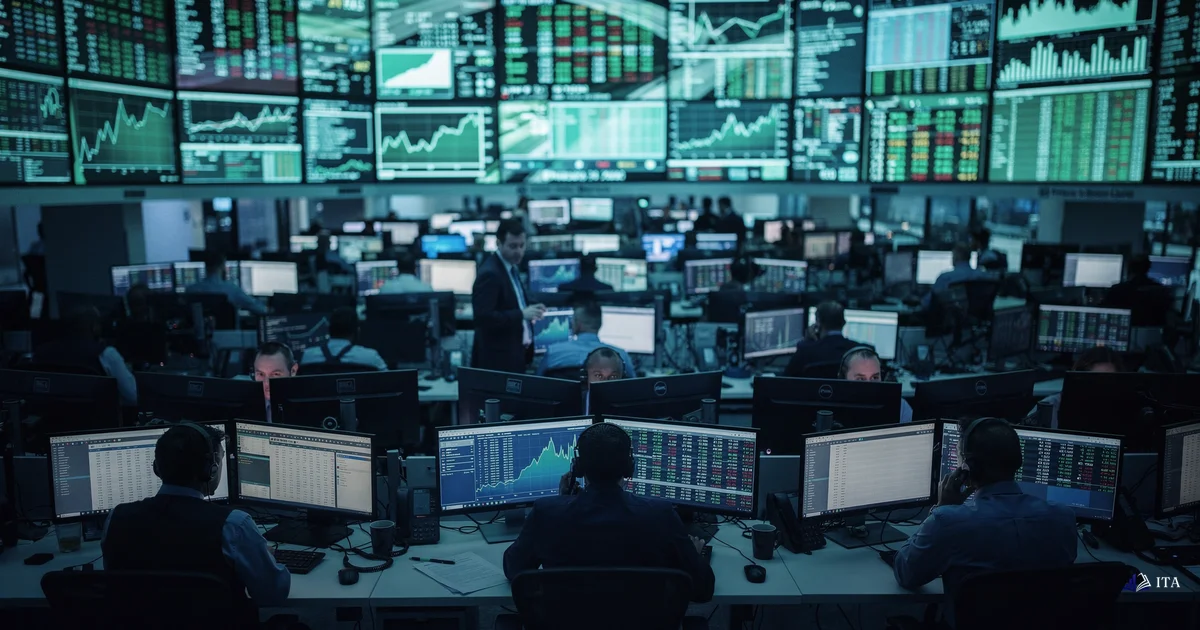

The Psychological Trap of Record High Markets
Picture this: the S&P 500 breaks 7,000 for the first time. Your screen flashes green. Your heart rate spikes. And in that moment, every disciplined bone in your body wants to do something, anything, except follow your plan.
You're not alone. Right now, as markets push into uncharted territory, millions of traders are experiencing the same physiological hijacking. The question isn't whether you feel it. The question is why your brain treats a number on a screen like a survival threat.
Here's what nobody tells you about record highs: they're mathematically ordinary. According to Fidelity's analysis of S&P 500 data from 1926 to 2023, the index hits a new all-time high in roughly 30% of all months. That's nearly one in three. Markets spend almost half their time within 5% of record levels. Yet every time we approach one, traders act like they're witnessing a once-in-a-lifetime event.
The disconnect between statistical reality and psychological experience reveals something profound about how we're wired. Your brain doesn't process "S&P 7,000" as a data point. It processes it as a threat boundary, a cliff edge where the rules might suddenly change.
The Neuroscience Behind Trading Decisions at Market Peaks
This is where the neuroscience gets interesting. When record high markets push into unprecedented territory, your amygdala, the brain's alarm system, activates before your prefrontal cortex can run the numbers. In milliseconds, your body floods with the same stress hormones our ancestors produced when spotting predators. Heart rate elevates. Pupils dilate. Attention narrows.
Coates and Herbert (2008, PNAS) found that traders' cortisol levels rose with both market volatility and the variance of their trading results, and Lo and Repin (2002) showed that traders with the strongest physiological stress responses tended to perform worse. It's not that they forgot their strategy. Their bodies literally overrode their minds.
But here's the revelation that changes everything: this isn't a bug in your programming. It's a feature. Your brain treats record highs as threats because, in evolutionary terms, unprecedented events usually were threats. The rustling bush you'd never heard before. The unfamiliar silhouette on the horizon. For 200,000 years, "new" meant "dangerous." See Liquidity in Trading for more.
Now transpose that ancient wiring onto modern markets. When the S&P approaches 7,000, your limbic system doesn't see a number. It sees the unknown. The unknown triggers every survival instinct you have: freeze (paralysis), flight (selling too early), or fight (overtrading). Record high markets trading psychology operates at this primal level, where rational analysis meets ancient fear responses.
This trading psychology at record highs creates predictable patterns. Your decision-making speed deteriorates. Risk assessment becomes skewed. Pattern recognition fails precisely when you need it most.
Real Trading Scenarios: Navigating Euphoria and Skepticism
Record high markets trading psychology creates unique challenges for traders. Experimental research on overconfidence (Glaser & Weber, 2007) shows that more confident traders trade more frequently, and Barber and Odean (2000) found that this excess trading lowers net returns It's not knowledge that breaks discipline, it's arousal. The more activated your nervous system becomes, the more impulsive your decisions turn. This connects directly to Candlestick Patterns for Beginners.
Let me show you how this plays out in real scenarios. January 2026: the S&P kisses 7,000 after a 16% run in 2025. Financial media explodes with "bubble" warnings. Your Twitter feed alternates between "generational buying opportunity" and "top is in." Every fiber of your being screams that you need to act NOW.
Here's what's actually happening: social comparison circuits in your brain are firing overtime. When you see others banking profits or calling tops, mirror neurons activate as if you're experiencing those outcomes yourself. The fear of missing profits battles the fear of buying the top. This creates a neurological storm that makes clear thinking nearly impossible. We break this down further in Trading Psychology for Funded Accounts.
The AI rally of 2026 provides a perfect laboratory for this phenomenon. Tech stocks surge upward by substantial margins year-to-date. Every day brings fresh highs. The pattern is so strong it feels inevitable, which is precisely when your brain sounds maximum alarm. Not because the trade is wrong, but because certainty itself triggers threat detection. Markets aren't supposed to go straight up consistently. When they do, your unconscious assumes the rules have broken down completely.
Key Behavioral Triggers in Record High Markets Trading Psychology
- Social comparison overload: Mirror neurons fire when observing others' trading outcomes
- Certainty paradox: Strong patterns trigger threat detection rather than confidence
- Arousal-based impulsivity: Nervous system activation overrides analytical thinking
- FOMO versus crash fear: Competing emotional circuits create decision paralysis

A Practical Protocol for Disciplined Trading at Record Highs
This is why even experienced traders abandon their plans at extremes. It's not weakness, it's biology. The same pattern-recognition system that kept your ancestors alive now sabotages your trading. You're not fighting the market. You're fighting 200,000 years of evolution.
So here's the protocol that actually works, based not on motivation but on neuroscience. First, accept that your initial reaction to record highs will always be wrong. Always. Your brain cannot help but treat new territory as threatening. Expecting otherwise is like expecting not to flinch when someone claps near your face.
Instead, build systems that assume this reaction. Before you trade, run a physiological check: are your shoulders tense? Breathing shallow? Jaw clenched? These bodily signals arrive before conscious thoughts. If you're activated, you're already compromised. See Backtesting Trading Strategies for more.
The solution isn't to calm down, it's to create distance between arousal and action. Set a mandatory buffer: no trades within 30 minutes of a significant breakout. Use that time to write, physically write, what you're seeing and feeling. This engages your prefrontal cortex and creates a circuit breaker between stimulus and response.
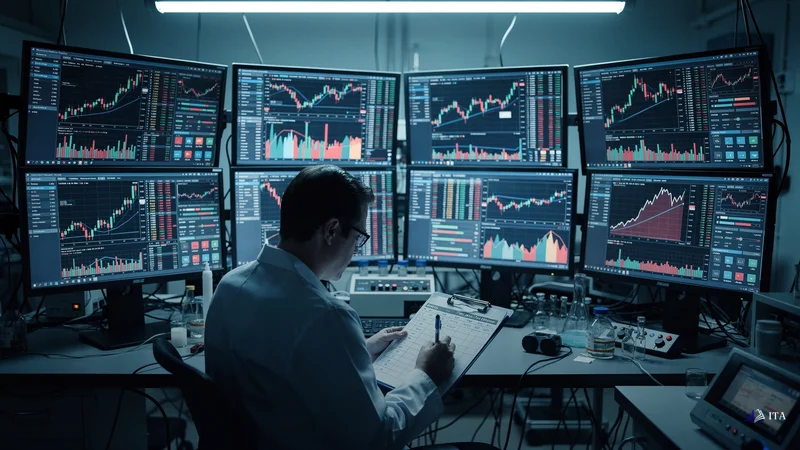
Cultivating Daily Psychological Resilience for Market Extremes
Your position sizing should inversely correlate with your excitement. The more certain you feel, the smaller your position. This isn't conservatism, it's a hedge against your own neurology. When everything screams "all in," your maximum position should be 50% of normal size.
Time horizons matter more than entries. Define your holding period before you trade, not after. Are you trading the next hour? Day? Week? Your brain processes these timeframes differently. Without a defined exit timeline, every tick becomes an emergency requiring immediate response.
Daily psychological resilience isn't built through affirmations, it's built through process. Start each session by reviewing trades from exactly one year ago. This grounds your perspective in market continuity rather than the exceptionalism of the moment. Markets hitting highs is normal. Your brain treating it as abnormal is also normal. Both can be true.
Create physical anchors for discipline. A specific playlist that only plays while trading. A timer that enforces breaks every 45 minutes. These environmental cues help your nervous system distinguish trading mode from reactive mode.

Conclusion: Master Your Mind, Master the Markets
Master your biology first. The markets will still be there when your prefrontal cortex comes back online.
Ready to get funded?
50% off instant accounts with code 50CRYPTO.
Get Funded →Frequently Asked Questions
How should traders manage FOMO when the stock market is at record highs?
FOMO management requires physiological awareness, not willpower. Set a mandatory 30-minute buffer between market breakouts and trades, physically write down your observations to engage the prefrontal cortex, and reduce position sizes when excitement peaks. The goal isn't eliminating FOMO but creating distance between emotional arousal and trading decisions.
Do record highs in the S&P 500 statistically predict a market crash?
No. Historical data shows that forward returns after all-time highs are comparable to other entry points, so record levels are not reliable crash predictors Since 1950 the S&P 500 has closed at an all-time high on roughly 7% of trading days, making new records a normal feature of rising markets.
How do fear and greed physically affect traders' decision-making during strong rallies?
Strong market moves can trigger measurable spikes in cortisol and adrenaline, elevating heart rate and narrowing attention. Higher physiological arousal is often associated with worse trading performance. The amygdala activates before rational analysis, flooding the body with stress hormones that override disciplined decision-making and encourage impulsive actions.
Why do retail investors tend to trade more after big gains or during record runs?
Behavioral finance concepts suggest investors can become overconfident after recent gains, leading to increased trading frequency. Social comparison circuits activate when seeing others profit, triggering FOMO and risk-seeking behaviour. This neurological response to success paradoxically can reduce net returns despite the initial positive outcomes that triggered it.
What are practical risk-management strategies for entering positions when markets are at all-time highs?
Use inverse position sizing, reduce trade size as excitement increases. Define holding periods before entry, not after. Set predetermined entry levels using technical support zones rather than chasing breakouts. Track physiological activation levels (1-10 scale) before trades to identify when emotional arousal compromises decision quality.
Key Takeaways
- Accept that your initial reaction to record highs will always be wrong, your brain treats new territory as threatening.
- Set a mandatory 30-minute buffer before trading significant breakouts to create distance between arousal and action.
- Use inverse position sizing: the more certain you feel about a trade, the smaller your position should be.
- Track your physiological activation level (1-10) before each trade, high arousal equals poor performance regardless of market conditions.
- Define your holding period before entering trades, not after, without timeline clarity, every tick becomes an emergency.
- Create physical anchors like specific playlists or timers to distinguish disciplined trading mode from reactive impulses.
- Review trades from exactly one year ago daily to ground your perspective in market continuity rather than moment exceptionalism.
Start Your Trading Evaluation
Simulated funded accounts up to $400K. Up to 95% profit split.
Get Funded